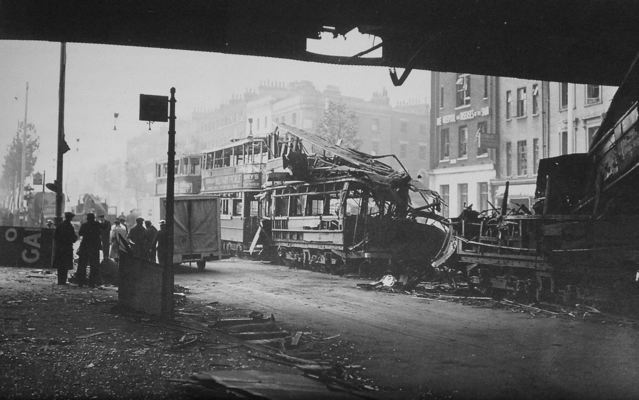
Blackfriars Road, October 25th 1940
During a daylight raid on 25th October 1940 a huge bomb landed on the Blackfriars Road destroying some trams which were trying to temporarily shelter from the onslaught. As the photograph shows us it was obviously to no avail. On the other side of the road, on the corner with Union Street, a building, known originally as the Surrey Chapel but subsequently as the Blackfriar’s Ring, was also very badly damaged.
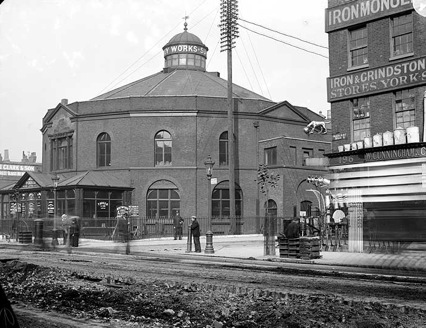
The Surrey Chapel around 1900. The photographer would be standing where The Ring pub now stands.
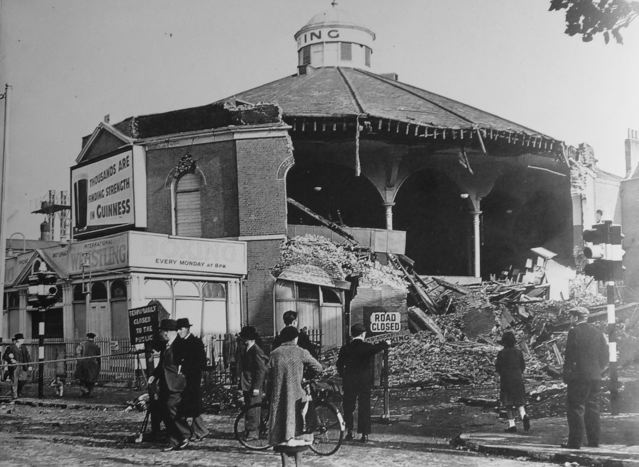
The Blackfriars' Ring partly destroyed by a bomb October 1940.
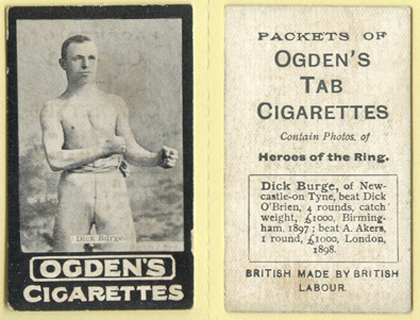
The Ring was an octagonal building built in 1782 by the charismatic church orator Reverend Rowland Hill as a chapel (he thought that the shape ‘prevented the devil hiding in any of the corners’). Disused and empty by the end of the 19th century, it had been a boxing ring since 1910 when Bella Burge and her husband, the ex-prize fighter Dick Burge, acquired the lease believing it would make an ideal wrestling and boxing ring. They named it, simply, ‘The Ring’ and it would become the first indoor boxing ring for the working classes – the sport until then had been generally fought by working class men in front of an upper class audience.
Bella of Blackfriars’ as she was known, was also the first to break the taboo of women attending boxing bouts when in 1914 she and her actress friends (she was close to music hall star Marie Lloyd and her family practically all her life) were the first to become female regulars at ‘The Ring’.
After the first bombing raid, The Ring was still standing, albeit badly damaged, but another bombing raid during March 1941 almost completely destroyed the building and it was eventually demolished.
The blitz on London had been continuing since the previous September and by now over 40,000 people had lost their lives and an incredible 250,000 people were homeless.
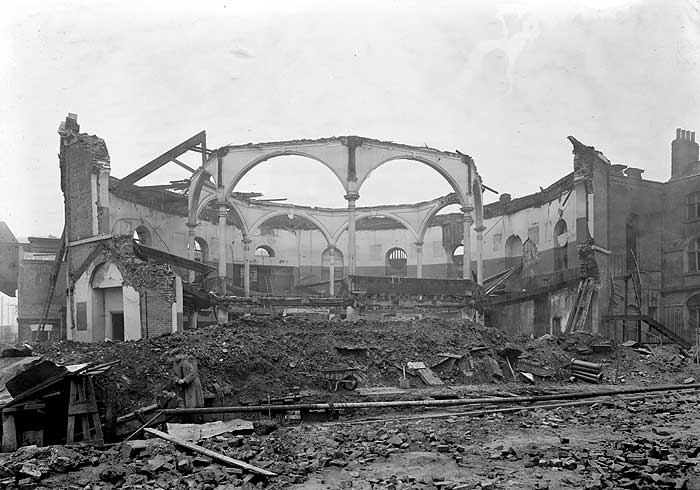
The Ring, now completely destroyed and ready for demolition. March 1941.
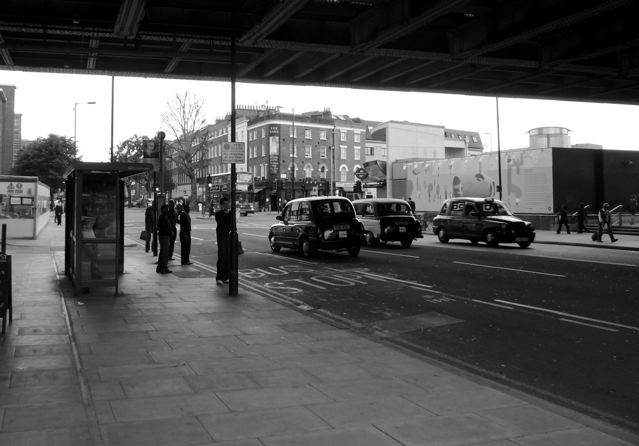
Blackfriars Road, June 2009. The Ring pub can be seen in the distance.
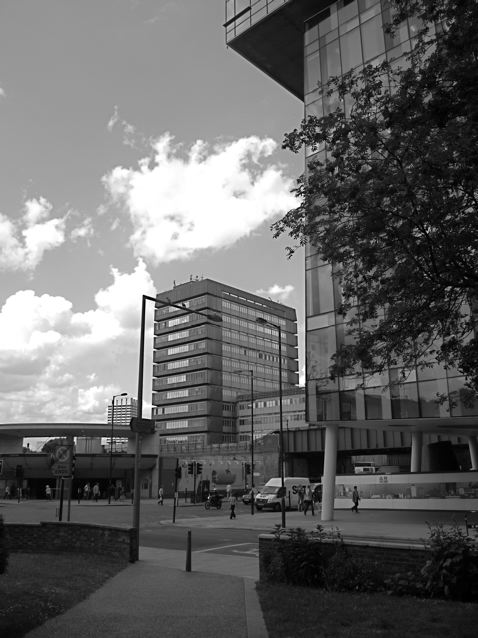
Surrey Chapel and 'The Ring' would have been situated across the road on the right where Palestra House now stands. Palestra is Greek for a public place used for wrestling. Although I expect you knew that.
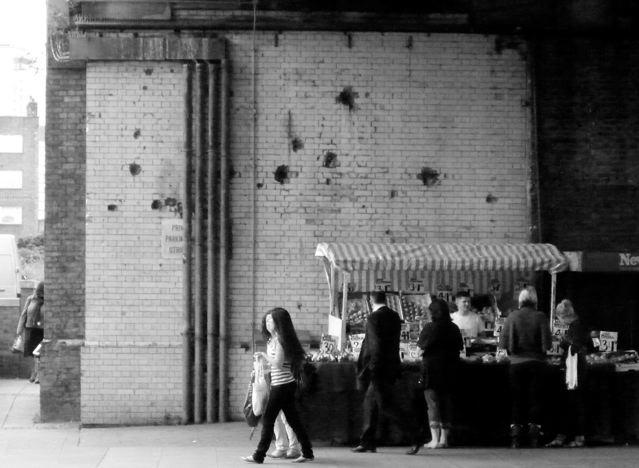
Bomb damage underneath the bridge is still visible 68 years later.
Two or three weeks after the bomb that almost completely destroyed the Blackfriars’ Ring, another bomb silently dropped onto the more salubrious surroundings of Jermyn Street at 3am on 17th April 1941. The Luftwaffe had just introduced a new terrifying weapon – the parachute mine – it was packed full of high explosives, was eight feet long, two feet wide and weighed two and a half tons. They were designed to explode in mid-air purposely to cause a greater loss of human life. When the bomb exploded above Jermyn Street it severely damaged several buildings including an apartment block called Duke’s Court, which happened to be the home of one of the country’s favourite recording artists – Albert Alick ‘Al’ Bowlly.
The popular singer was killed instantly. Although, it was said, that his body strangely appeared untouched even though the massive explosion had blown Bowlly’s bedroom door off its hinges and it had fatally smashed against his head.
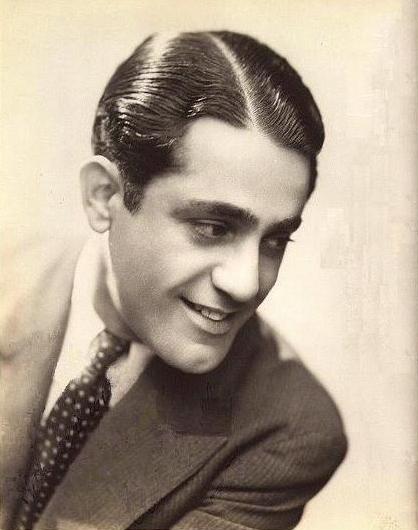
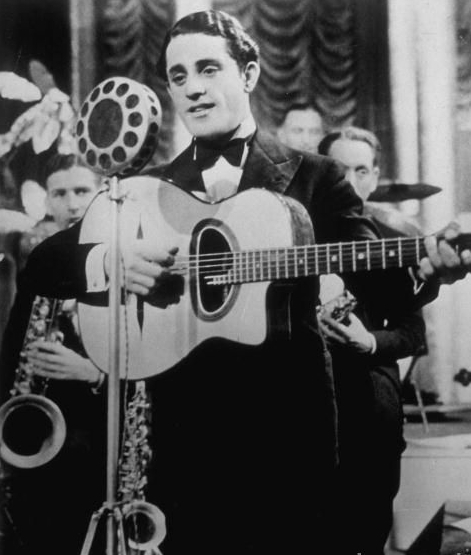
During his career Bowlly recorded over 1000 songs and was said by many to have invented the style of singing called ‘crooning’ where the singer utilises the amplification of the microphone or even a megaphone. The last song he recorded was on 8th April, just a week before he died. It was prophetically called When That Man Is Dead And Gone. The song was actually about Hitler and written, earlier that year, by Irving Berlin:
What a day to wake up on
What a way to greet the dawn
Some fine day the news’ll flash
Satan with a small moustache
Is asleep beneath the lawn
When that man is dead and gone
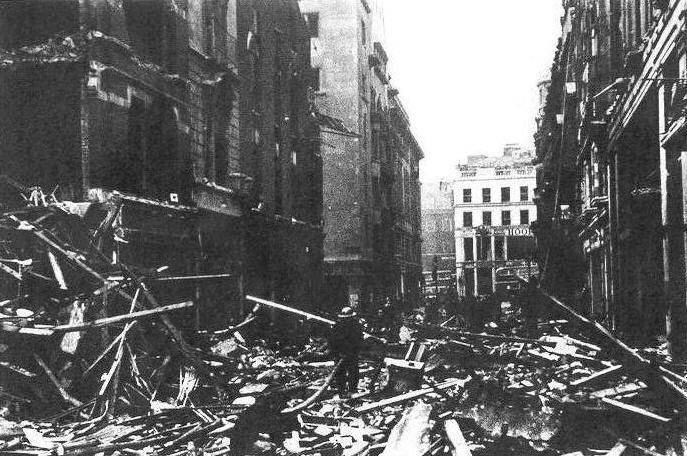
A devastated Jermyn Street, 17th April 1941
Bowlly, along with many other victims from that night of intensive bombing, was buried in a mass grave at the Westminster Cemetery on the Uxbridge Road in Hanwell. It was one of the worst nights of the Blitz and there was no time or energy for sentiment. His name on the monument was spelled Albert Alex [sic] Bowlly.
I personally came across Al Bowlly when several of his recordings were used in Dennis Potter’s Pennies From Heaven and also ‘The Singing Detective’. It could be said that, in relation to other singers of his time, probably more popular than he has ever been. His recordings have also appeared in some of the great cult films of the last few decades including The Shining, Withnail And I and Amelie.
Al Bowlly and Jimmy Messene – That Man Is Dead And Gone
Al Bowlly with Ray Noble and his Orchestra – Guilty (Amelie)
Al Bowlly with Ray Noble and his Orchestra – Hang Out The Stars in Indiana (Withnail And I)
Al Bowlly with Ray Noble and his Orchestra – Midnight, the Stars and You (The Shining)
Al Bowlly with Lew Stone and his Band – Just Let Me Look At You
Al Bowlly with Lew Stone and his Band – You Couldn’t Be Cuter

Tags: Al Bowlly, bombs, boxing, crooning, graves, the Blitz, WW2
I would love to hear from any of Sailor Richardson’s relatives with more news.
Unfortunately, 32 Dukes Court building, (were I worked for a while and where Al Bowlly lived and ultimately died), has now been demolished
Carole Richardson – only just seen your post! My mother Nellie May Richardson married my father Ronald William Berry – Frederick Richardson was my grandfather though I never knew or met him…
I have posts awaiting moderation from last year too – is this site now dead?
After reading narratives I believe I am related to Jane Carpenter etc as my father William John Richardson’s eldest brother was called Frederick Richardson who are the children of Frederick William Richardson known as Sailor Richardson.I have photos of Frederick William Richardson also known as Sailor Richardson. I would very much like to get in touch with anyone who is interested in liaising about family etc. I have been doing the family tree and have photos of family members and also of Sailor Richardson. With thanks to everyone for their comments. Carole
What a terrific piece, thank you, found serendipitously. And I certainly didn’t know that Palestra comes from the greek for a wrestling ring [is that a term?], but it makes me feel slightly better about Will Alsop’s annoying building, both the name and the fact that the significant building previously on the site wasn’t demolished just to make way for it.
Hello Editor
You run a great site which is impressive. I am the grand-daughter.of the battam-weight boxer Frederick William RICHARDSON (known as SAILOR RICHARDSON) who fought in THE RING. I am very enthusiastic in getting in touch with.my relatives who have left messages on this site ie LEE BERRY, JANE RICHARDSON,.JOHN RICHARDSON, EDITH CARPENTER AND others.who are related to.me. I am extremely interested ib the family tree for which I hhave some results. Please ket my relatives have my e-mail address. WITH THANKS. Carole Richardson.
My name is Carole Richards grand-daughter.of Frederick William Richardson (battam-weight boxer).who fought in The Ring). I gave left my e-mail address with.the Editor of the.site so ny rerelatives can contact me.. with many thanks. I am not sure how we go about thus though. My father’s eldest brother was Frederick. I wiuld dearly live to hear from my relatives. Thank you.
FOR THE EDITOR OF THIS AMAZING.AMAZING SITE:
Please advise how we get in touch.with my relatives of Sailor Richardson *battam-weight boxer). Thank you. Carole Richardson
Dear Editor
I am one of the grandchildren of Sailor Richardson (Frederick William Richardson (battam-weight). I mote I am related to EdEdu Carpenter and Lee Berry. We would like to get in touch with each other. Is it ppossible please you could pass my e-mail address to Lee Berry and Edith Carpenter. If this is not possible please advise us how to. With thanks. Carole Richardson
Lee Berry & Edith Carpenter etc like me are grand-daughters of Sailor Richardson, battam-weight (Frederick William Richardson) contact me soon on temporary e-mail address:
carolefrichardson@btinternet.com.
Lee Berry & Edith Carpenter like me are grand-daughters of SailorvRichardson battam-weight boxer Frederick William Richardson). Please contact me soon.on: carolefrichardson@btinternet.com.
My dad was a young ARP warden / Civil defence at the nearby post, on this night was lucky to get away with minor injuries, was blown up the road from under the railway bridge into sandbags that surrounded the ARP post! What I am not sure if it was the 1940 0r 41 bombing this happened.
We lived at 228 Blackfriars rd and my Grandparents on both sides in nearby Nicholson street, Great pictures thank you!
Please pass e-mail please to:
Lee Berry
Edith Carpenter
Who are my cousins and are related tome.
Lots of thanks.
Carole Richardson
Grand-Daughter of Sailor Richardson