‘The Elephant was not exactly a classy district.’

The Elephant was not exactly a classy district. The streets were as rough and dangerous as it was possible to get without anybody actually declaring war, and even the cinema was not without its perils. (Michael Caine)

The Trocadero Theatre at Elephant And Castle was built in 1930 and had 3400 seats but by the 1950s the theatre was renowned for its critical and violent local Teddy Boy audience who threw coins at Cliff Richard and jeered Bobby Darin but idolised Duane Eddy. When the film Rock Around The Clock played there, the Teds famously slashed the seats, rioted in the aisles and two policemen were seriously injured when the ‘juvenile deliquents’ let off steam after watching the film. The incidents made headline news. They also loved Buddy Holly who actually made his UK debut at the cinema and concert hall (strangely with Des O’Connor as the compere) in March 1958.
Elephant And Castle, like a lot of South London, had been heavily bombed in the Second World War (most of the damage occurring over just two nights in 1941) and for over a decade the streets, where once music halls, brothels, pubs and tightly-packed terraced houses had stood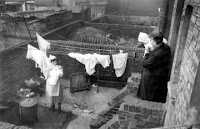 , now lay desolate and dilapidated. From this grim and desperate south London district a new phenomenon grew, The Teddy Boys – Britain’s first youth cult. Their style was derived from Savile Row tailors who had revived the Edwardian look after the war, ironically for upper-class ex-army officers wanting a dandyish look, however the fashion was quickly taken up by teenagers in and around Elephant And Castle in the early fifties and the name given to the followers of the fashion movement soon got corrupted to ‘Ted’ or ‘Teddy Boy’. They wore long drape jackets, usually with a velvet trim collar and pocket flaps, high-waisted drainpipe trousers, chunky brogues and later large crepe-soled shoes (known as brothel creepers), white shirts and narrow ‘Slim Jim’ ties. These clothes were mostly tailor-made at great expense and paid for through many weekly installments. The Teddy Girls meanwhile also wore drape jackets but with hobble skirts (these are narrow at the hem and thus ‘hobble’ the wearer) or toreador pants, cameo brooches, and espadrilles. It was possibly the first example of a sartorial protest against authority and post-war austerity and, realistically, the beginning of the British teenager.
 , now lay desolate and dilapidated. From this grim and desperate south London district a new phenomenon grew, The Teddy Boys – Britain’s first youth cult. Their style was derived from Savile Row tailors who had revived the Edwardian look after the war, ironically for upper-class ex-army officers wanting a dandyish look, however the fashion was quickly taken up by teenagers in and around Elephant And Castle in the early fifties and the name given to the followers of the fashion movement soon got corrupted to ‘Ted’ or ‘Teddy Boy’. They wore long drape jackets, usually with a velvet trim collar and pocket flaps, high-waisted drainpipe trousers, chunky brogues and later large crepe-soled shoes (known as brothel creepers), white shirts and narrow ‘Slim Jim’ ties. These clothes were mostly tailor-made at great expense and paid for through many weekly installments. The Teddy Girls meanwhile also wore drape jackets but with hobble skirts (these are narrow at the hem and thus ‘hobble’ the wearer) or toreador pants, cameo brooches, and espadrilles. It was possibly the first example of a sartorial protest against authority and post-war austerity and, realistically, the beginning of the British teenager.
PHOTOS REMOVED BY REQUEST FROM THE COPYRIGHT OWNER
small versions of the Ken Russell pictures here
Truly excellent photos of Teddy girls and boys from the mid-fifties by the director Ken Russell
The self-styled ‘King of the Teds’ in the late fifties was Eddie Richardson, brother of the future South London gang leader Charlie Richardson.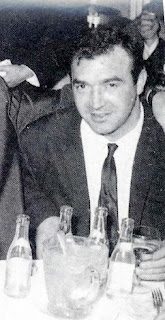 The Richardsons were soon to become infamous for their rivalry with the East London Kray Twins but also for their sadistic methods of torture they dealt out to their enemies. These included being nailed to the floor, teeth being pulled out by pliers (the speciality of their fellow gang member ‘Mad’ Frankie Fraser) and being electrocuted to unconsciousness. However the Richardsons were just part of the local tradition and there had been a history of violence in this part of South London for centuries – even the word ‘hooligan’ (according to the Oxford English Dictionary) comes from ‘a 19th century Irish family in south-east London conspicuous for its ruffianism’. The original Hooligan was apparently a Limerick-born Patrick Hooligan (originally Houlihan) and his family who specialised in street violence in the mid Victorian era. By the beginning of the 20th century Elephant And Castle and its surrounding area was perhaps the most lawless part of the capital. The main gang of criminals, led by Charles ‘Wag’ McDonald, were the so-called Elephant Boys. However while the men were heavily involved in protection rackets and organised violence, the local women were experts at shoplifting. A woman known as Aggy Hill, known as the ‘Queen of the Forty Elephants’, and her associates (presumably some of the Elephants, but did anyone call them that to their faces?) would descend on the West End in chauffeured-driven cars and fleece the shops while their cars waited outside. Of course there were no double yellow lines, officious traffic wardens and parking meters to disrupt the stealing.
 The Richardsons were soon to become infamous for their rivalry with the East London Kray Twins but also for their sadistic methods of torture they dealt out to their enemies. These included being nailed to the floor, teeth being pulled out by pliers (the speciality of their fellow gang member ‘Mad’ Frankie Fraser) and being electrocuted to unconsciousness. However the Richardsons were just part of the local tradition and there had been a history of violence in this part of South London for centuries – even the word ‘hooligan’ (according to the Oxford English Dictionary) comes from ‘a 19th century Irish family in south-east London conspicuous for its ruffianism’. The original Hooligan was apparently a Limerick-born Patrick Hooligan (originally Houlihan) and his family who specialised in street violence in the mid Victorian era. By the beginning of the 20th century Elephant And Castle and its surrounding area was perhaps the most lawless part of the capital. The main gang of criminals, led by Charles ‘Wag’ McDonald, were the so-called Elephant Boys. However while the men were heavily involved in protection rackets and organised violence, the local women were experts at shoplifting. A woman known as Aggy Hill, known as the ‘Queen of the Forty Elephants’, and her associates (presumably some of the Elephants, but did anyone call them that to their faces?) would descend on the West End in chauffeured-driven cars and fleece the shops while their cars waited outside. Of course there were no double yellow lines, officious traffic wardens and parking meters to disrupt the stealing.
The Teds pre-dated American rock and roll but they grew to love the rebellious aspect of this new musical fashion, and this part of South London in one way or another produced many of the British stars that were coming to prominence at the time, basically copying their US conterparts. Terry Dene was born above a sweet-shop in Lancaster Road (a street long since bulldozed and demolished) in Elephant And Castle in 1938. 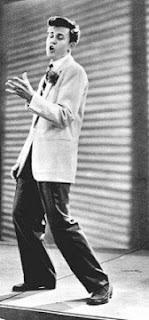 He started playing at the famous Two I’s coffee bar where the influential producer Jack Good spotted him and signed him for popular music television show Six Five Special. His first release was A White Sports Coat which was an instant hit but he found the looming stardom, which seemed to his for the taking, hard to cope with and he was arrested for being drunk and disorderly and the popular press attacked him – the establishment at the time blamed ‘evil’ rock and roll music for seemingly all of society’s ills. It led to a nervous breakdown and his mental health only deteriorated when he started National Service and because of this he was soon discharged after only two months. This time the headlines were even worse as the press presumed he was just trying to avoid conscription. His career was now in ruins, and although he appeared in a film ‘The Golden Disc’ and joined the talent-spotter Larry Parnes’ stable of stars, he was unable to recapture the momentum and faded from the music scene. There were several unsuccessful comebacks and in 1974 he released a book and album entitled ‘I Thought Terry Dene Was Dead’, unfortunately it didn’t really make any difference and the majority of people presumably thought he still was.
 He started playing at the famous Two I’s coffee bar where the influential producer Jack Good spotted him and signed him for popular music television show Six Five Special. His first release was A White Sports Coat which was an instant hit but he found the looming stardom, which seemed to his for the taking, hard to cope with and he was arrested for being drunk and disorderly and the popular press attacked him – the establishment at the time blamed ‘evil’ rock and roll music for seemingly all of society’s ills. It led to a nervous breakdown and his mental health only deteriorated when he started National Service and because of this he was soon discharged after only two months. This time the headlines were even worse as the press presumed he was just trying to avoid conscription. His career was now in ruins, and although he appeared in a film ‘The Golden Disc’ and joined the talent-spotter Larry Parnes’ stable of stars, he was unable to recapture the momentum and faded from the music scene. There were several unsuccessful comebacks and in 1974 he released a book and album entitled ‘I Thought Terry Dene Was Dead’, unfortunately it didn’t really make any difference and the majority of people presumably thought he still was.
Just ten minutes walk away from ‘The Elephant’ on the Waterloo Road was a cafe called The Cave (so-called because it was under some railway arches). Three young musicians played there in a skiffle group called The Cavemen and named after the cafe. They were Lionel Bart, local boy Tommy Hicks and Mike Pratt. They’d all met at a party at a sort of pre-hippie Beatnik commune called The Yellow Door next to The Cave and over six or seven months they played at coffee shops and cafes around town for up to ten shillings a night. They slowly started finding an audience especially at the Two I’s cafe in Soho where they was spotted by the impresario Larry Parnes who re-christened Hicks ‘Tommy Steele’. Decca Records signed Steele in 1956 and in October the trio recorded ‘Rock With The Caveman’ with the help of some British jazz notables including saxman Ronnie Scott. It became the now solo Steele’s first UK hit. A year later the song ‘Handful Of Songs’ which came from the film soundtrack of ‘The Tommy Steele Story’ (released in 1957 and incredibly made in three weeks) and written by Bart, Hicks and Pratt went on to win a Ivor Novello award for the best song.


 Pictures from Picture Post in 1957 – he was still living at Frean Street in Bermondsey.
Tommy Steele soon became a huge success albeit more as an all round family entertainer than a rock and roll star. Lionel Bart went on to write Living Doll – the massive Cliff Richard hit and of course was the writer of the hugely successful musical Oliver! – incidentally Bart couldn’t read or write a note of music and he could barely plonk out a tune with one finger on a piano – so he wrote all his famous songs by humming his tunes into a tape recorder. Mike Pratt, before dying of lung cancer in 1976, eventually went on to strangle Roger Moore in The Saint, gave Patrick McGoohan a severe beating in Danger Man and was the villainous Simey in The Adventures of Black Beauty, but his famous role was when he played Jeff Randall in the fantastic sixties series Randall And Hopkirk (Deceased).
The Trocadero was demolished in 1963 as part of the huge sixties rebuilding of Elephant And Castle. During the previous decade there had been calls to regenerate the violent and filthy district, and in September 1959 ambitious plans to redevelop the area with a shopping centre and housing estates were released by Sir Isaac Hayward the leader of the London County Council. He said ‘With its famous name and history of traditions the new Elephant and Castle offers opportunities one would have to go a long way to better. Here’s a real chance for the South to ‘show them how’ on the north side of the Thames’.

Well the chance certainly wasn’t taken. The new dystopian Elephant And Castle made south London even more of a joke and a seeming irrelevance to north Londoners and the planners managed to finish off what the German bombs had started. They decided to make the Elephant into one enormous gyratory system surrounded by massive, brutal, featureless and ugly concrete estates where the car was king and pedestrians banished to dirty, leaky and poorly lit walkways that became just a labyrinth of fear and crime.
Part of the regeneration, however, included Erno Goldfinger’s Odeon which opened in December 1966 on the site of the old Trocadero. It featured a famous ‘floating screen’ which had no masking at the top and bottom and had two black panels which rotated around from the back of the screen if the aspect ratio needed changing. The Odeon, itself, was shockingly demolished in 1988 for nothing more than a car park.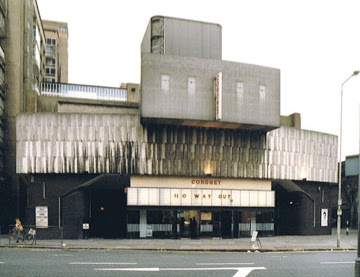


I lived in albridge st just off surry square and used to drink in the pricess of Wales in bagshot st where a few of the chaps drunk the brindle brothers frankie Fraser and a few of the other faces.
What a great blog! THANKS AND KEEP IT COMING!
//Klas
I Lived at 5 pasley Road walworth and went to ST Marys School left about 1957, I have been back to East Lane as we knew it but houses are nearly all gone and flats there now ,
Brian McDonald’s new book ‘Alice Diamond and the Forty Elephants’ will be published by Milo on 22 October 2015. It is the only full-length biography of this all-female gang of specialist hoisters.
I saw FrankSinatra at the Trocodera off the New Kent Rd in the early fifties,great show always remember him with his cuppa tea whilst onstage good stuff.so many famous names appeared there such as Billy Cotton Ted Heath and their bands and singers,Lita Rosa Dickie Valentine etc etc. good memories.F.
A new book ‘Alice Diamond and the Forty Elephants’ is due to be published on 22 October 2015. It is the only full-length treatment of this infamous all-female gang of marauding shoplifters that terrorised London’s West End in the 1920s/30s. The author is Brian McDonald who first drew attention to the gang in his book ‘Gangs of London’.
McDonald grew up at the Elephant and is the premier historian on the district’s historical criminal activity.
Hi
just came across this blog I am researching the coffee house culture of 1950s London and the teddy boy culture, would love to interview or speak to anyone who was a former teddy boy from this time and maybe visited the Two I’s café, its for a university project
angelajk0@gmail.com
Kate who posted in 2010. I was born in the tenements in Polock road and would love contact if your still on this site. I went back years ago to find it no longer there. I was gutted.
Hi.
I note reference to the sad death of Sir Henry Cooper. My father used to play piano in the band at The Thomas A’Beckett, where Sir H used to train in the late 50′s / early 60′s. As kids, my young brother and I would stand on the stairs leading up to the gym, watching the band & drinking orangeade. We often saw him passing us on his way to training & he’d tussle our hair & say “‘Allo, boys. Still ‘ere?”.
My dad used to have a photo of my brother & I standing either side of a kneeling Henry, with a huge boxing glove each – posed as if we were thumping his jaw, and a big surprised look of his face. Never did find out what happened to that pic. Shame.
This was when the Elephant had real people and character. Ella Fitzgerald played at the Troc. early one Sunday evening and then starred at Sunday night at the London Palladium Later that evening. The area was called the Piccadilly of the south until the planners got their hands on the place and destroyed it. The terrible shopping centre was built, a street of local shops was forced to close, the Trocadero was demolished, as was the clock tower. All that remains of the historical Elephant is Sputgeons Tabernacle and the Bakerloo line station. With the forthcoming regeneration we MUST have better without driving out the few working class cockneys that remain.
Hello! My name is Mitja and I’m from Finland. I visited the Tower pub near Elephant and Castle tube station in the early eighties. I met some local Teddy Boys and enjoyed many bands there including the Dynamite Band and Screamin’ Lord Sutch. I’m going to pay a visit to London this month and tried to find some information about the place from the internet, but no matter how much I google, not a single piece of info found.
Is the place still existing? If so, any teds around? I would like to have a beer there and remember the old times. What is the adress of the joint if still there? I’m afraid I don’t quite recall the walkin’ route there from the E&C tube station.
I would appreciate any kind of info.
Mitja
Im trying to find out more about my ancestors the ‘Hoolighan’s of Lambeth – late 1880′s – 1940′s – anyone out there know of anything?
Hi! Slightly off-topic, but I lived in Paddington / Harrow Road in the 1950′s and 1960′s. I can remember “milk bars”, which were were very popular. I also remember my father taking me to the Flora hotel (a pub in the Harrow Road) and I had to sit on the step outside and he brought me a lemonade. He then enjoyed his pints at the bar! The “Teddy Boys” were well known for fighting and there were two factions. We lived north of the Grand Union canal, near St John’s church, Kilburn Lane, (used as a set for a “Please Sir” marriage in the tv series, I believe). Those Teds who lived over the canal on the southern side were known as the “Townies”. I was too young to be part of them (my era was Mods and Rockers), but it was well known for the Townies Teds and our Teds to have good fights with chains and knuckle dusters, etc. I won’t say “happy memories”, but violence was very simplistic in those days! Anyway, it’s good to find a website that, at least, reminds me of my younger years! Best Wishes, Ian
I lived on the Rockingham estate in the 1950s got married at Walworth Road Town hall.was tuff in those days had to look after yourself,I had 4 brothers so I was o.k. We used to bunk in the Troc,through the exit doors I did meet Tommy Steeles Sister Susan,we all used to hang around a cafe called the Rodney.oh I love seeing all these comments brings me back to the good old days,keep them coming.
Being a Bermondsey girl, I went to Thomas O Becket, enjoyed the films at Elephant & Castle Cinemas, Attended Trinity School, Harpers Road.
I believe my eldest sister went to the same school as Colin Hicks.
My parents ran a Hardware Shop in Bermondsey and were well known by all the locals, situated in Ilderton Road. My eldest sister definitely dressed as a teddy girl.
But if you are 70 ish the Beatles and Stones appeared and most folk were
either mods or rockers. I was a ‘Mod’ and travelled on a scooter and the
boyfriend wore the obligatory Parker. Anyway lovely to read other folks stories.
Hi I was born in Guys Hospital in 1959, we lived in the lower part of Weston Street, sadly demolished in the 1960′s and replaced with the concrete eyesore called Hunter Close, just off The Bricklayers Arms / Great Dover Street. . My Dad Lawrie was a Lighterman and was an acquaintance of Tommy Steele who I believe was an apprentice at the same time. Similarly to the previous comments, he was also a “Modernist” in the late 1950′s, following the Modern Jazz performers in those clubs/coffee bars so iconic as the cradles of live music at the time. He was also a member of the Elephant Mob for a time and mentioned that recently deceased performer Kenny Lynch also had ties to the gang back then. Although we left Bermondsey in 1967 my family still lived in the Lawson Estate so regular visits to see my grandparents and uncles/aunties remain as my favourite memories. I went to Webb Street junior school and recall stuff like queuing up for George’s saveloys and please pudding on a Saturday night, Hot Sarsaparilla down East Lane , The Duchess of Kent and Beehive pubs, Manzes on a Saturday, before going to The Den to watch Millwall . Many of these places are no longer there, but I always feel proud to describe myself as a Bermondsey Boy and occasionally make the trip to see what is still there. I remember when the Troc was pulled down and the Silver building put up on the new roundabout built, I was told it was a Tardis and for some time wondered if the Doctor was going to walk out. Anyway I digress, I wanted to say that my Dad is still alive ged
Sorry, aged 81 and living in Hayling Island nowadays, his recall of the times and events in his life are still a great source for revisiting our family life and times. Please feel free to contact me if you have a relative that may have known him. Thanks very much.
David Goldswain.
I looking forward to reading both of your books. I am intrigued to read, My Great Grandfather and Uncles were part of the Elephant Gang and owned a bookies in Manor Place. There surname was Gregory, Alfie and Ernie.
Hi,
Fascinating read. I lived at 13 Skipton Street, opposite the Bakerloo Line Underground station. Half the house had been bombed and was missing but had been plastered up. In the space that it left there was a coal delivery place; they used horses and a cart. Moved to Peckham when I was about 11. Went to St Judes school and spent weekends at the War Museum. Worked on the stall down East Lane – East St) owned by Roates selling kids and and woman’s. Eventually joined the Met and ended up at Carter Street of the Wolly Road. Ended up teaching and living in Devon but have those nostalgic twinges. Have a scar on my leg from falling on a bomb site. Constant reminder.