Archive for the ‘Hampstead’ Category

Hampstead Heath and the Rise and Fall of the author Colin Wilson

Sunday, January 10th, 2010
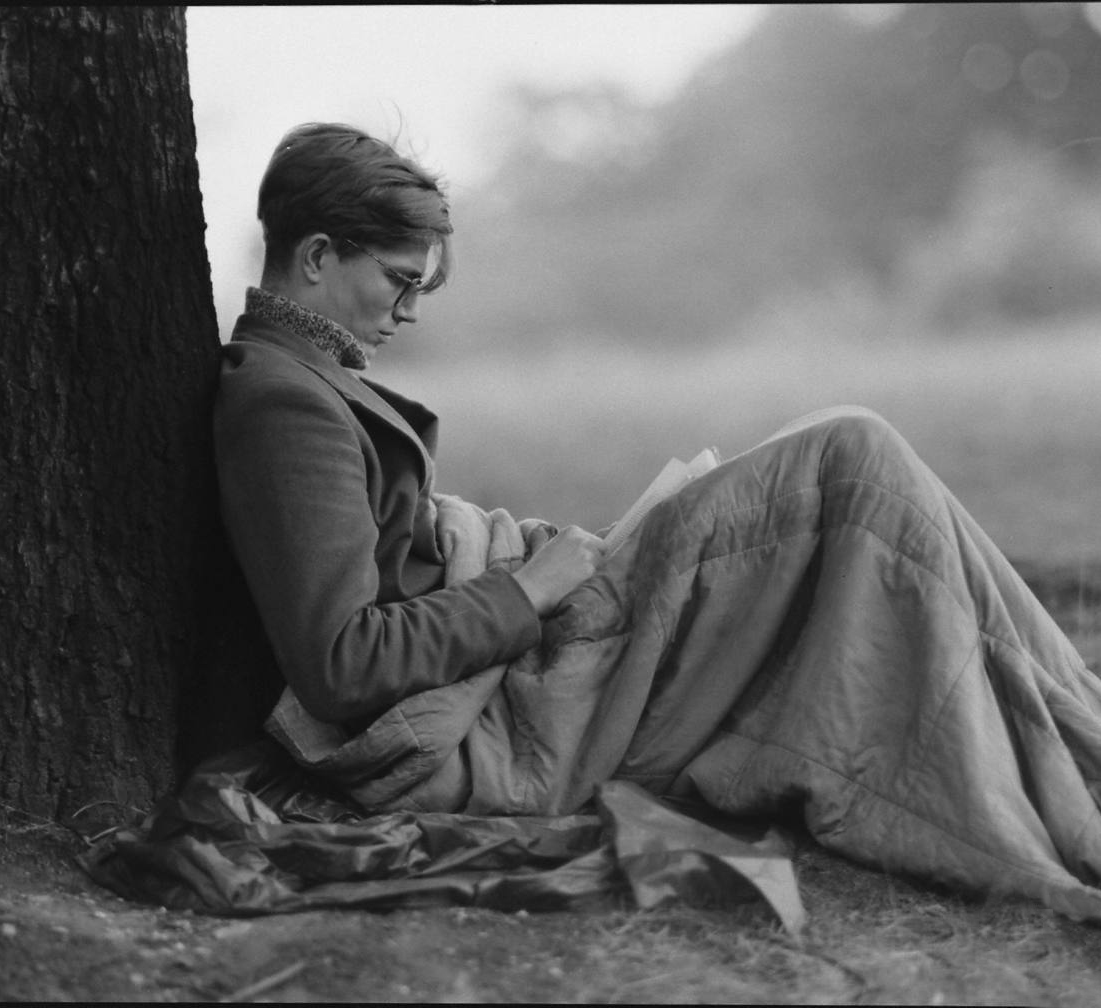
Colin Wilson on Hampstead Heath, 1956

Colin Wilson on Hampstead Heath, 1956

The author Colin Wilson once said: “I had taken it for granted that I was a man of genius since I was about 13″. For a short few months after the publication of his first book entitled The Outsider in 1956, it seemed that the rest of the world thought so too.

abilify canada us
abilify vs generic
abilify and canada
abilify 5mg canada
prices for abilify
older cats abilify
abilify from canada
abilify and generic
abilify from canada
abilify generic teva
abilify generic name
abilify cheap canada
abilify prescription
order abilify online
abilify discount card
abilify generic names
abilify discount code
what is abilify 30 mg
abilify 10 mg pricing
i cant afford abilify
purchase abilify cheap
update on abilify 30 mg
abilify price expensive
abilify no prescription
abilify dosage by weight
abilify prescription help
will abilify get you high
prescription drug abilify
abilify free prescription
abilify uses and strength
abilify prescription price
abilify generic equivalent
cheapest price for abilify
online prescription abilify
carbamazepine abilify 25 mg
compare abilify drug prices
abilify for 11 year old boy
abilify online prescription
can i take abilify 2x a day
price comparison for abilify
canada is generic abilify ok
who should take abilify 30 mg
problems with generic abilify
why do i need to take abilify
ok to take reglan and abilify
abilify and generic and image
abilify prescription strength
abilify without a prescription
abilify prescription assistance
abilify 5mg canada aripiprazole
abilify and generic and picture
what is the generic for abilify
purchase abilify wo prescription
when will abilify become generic
can snorting abilify get you high
abilify sertraline generic images
abilify shortage deliver problems
picture of generic abilify tablet
ok to stop taking abilify abruptly
buy abilify without a prescription
weight and abilify and adderall xr
on line abilify prescription costs
get abilify without a prescription
what does generic abilify look like
shallow breathing caused by abilify
serum concentration abilify by hour
abilify online without prescription
abilify generic equivalent australia
generic abilify without prescription
what is abilify and why do i need it
abilify patient prescription program
stomach problems with generic abilify
abilify and adderall xr for adult add
abilify get along just fine ringtones
pictures of abilify and generic forms
if you snort abilify will you get high
abilify help with cost of prescription
what sleep med can i take with abilify
can i take abilify and topamax together
withdrawl symptoms from generic abilify
generic abilify doctor reddys labs 2012
withdrawal symptoms from generic abilify
abilify anorexia anxiety 11 year old boy
my teen has been taking abilify to get high
me and abilify get along just fine ringtones
abilify weight gain counteracted by adderall
where can i get abilify 50 mg for cheap price
recommended dosage of abilify approved by fda
can i take a combination of zyprexa and abilify
how soon after taking abilify might i become drowsy
mirtazapine 45 mg does it work good with abilify 10mg
how long does it take to get abilify out of your system
how long does it take for abilify to get out of your system
does mirtazapine 45 mg and 10mg abilify work good when combine
what percentage of patients get tardive diskinesia from abilify
can abilify aripiprazole tablets 5 mg cause a person to be lazy
does abilify aripiprazole tablets 5 mg causes a person to be lazy

The Outsider was a collection of essays that explored the philosophical idea of ‘the outsider’ in literature including that of Kafka, Camus, Hesse, Sartre and Nietzsche. It was an impressive collection of modern writers but it seems extraordinary today that the 24 year old Wilson, within a few days of publication, was rocketed into celebrity orbit for what was essentially a book of existential literary criticism.

For many of the tens of thousands who bought the book it was probably just a good way of making an acquaintance with intellectual foreign authors without the laborious obligation of actually having to read their stuff. But for whatever reason the book incredibly sold out its initial print run of 5000 copies on the very first day of publication.
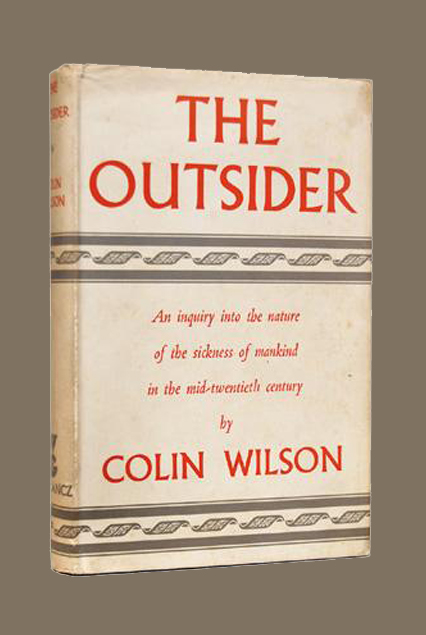
The Outsider by Colin Wilson published in 1956 by Gollancz

The Outsider by Colin Wilson published in 1956 by Gollancz

Britain’s two main literary critics were both extremely effusive in their reviews of the book. Philip Toynbee in the Observer described the book as “luminously intelligent” and Cyril Connolly in the Sunday Times pronounced it as “extraordinary” and “one of the most remarkable first books I have read for a long time”.

They weren’t alone, The Listener described The Outsider as ‘The most remarkable book on which the reviewer has ever had to pass judgement’ and Edith Sitwell stated ‘I am deeply grateful for this astonishing book’.
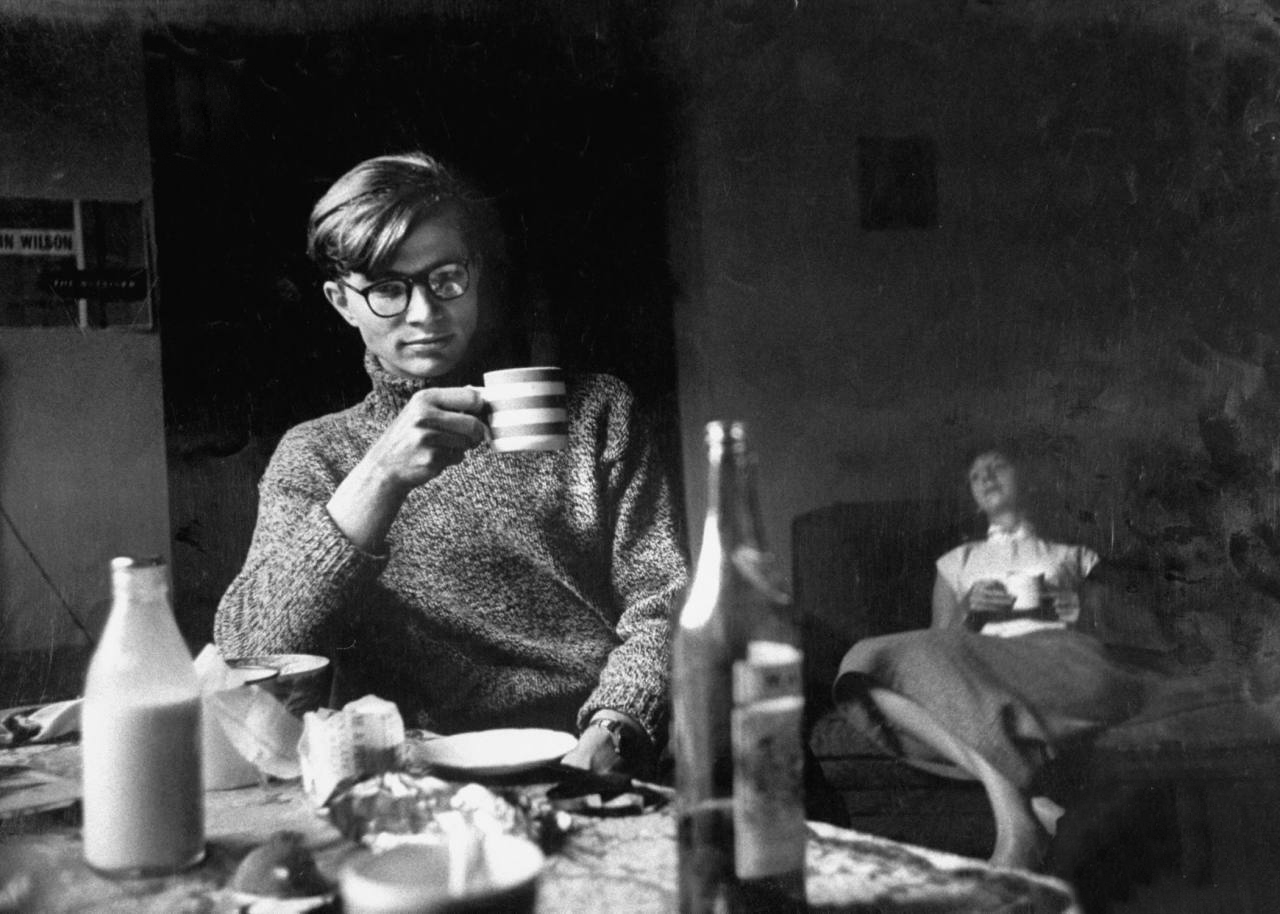
Colin Wilson drinking wine in a cup with girlfriend Joy

Colin Wilson drinking tea, or perhaps wine in a cup with girlfriend Joy

Wilson was a working class lad from Leicester who had left school at sixteen, worked as a hospital porter, a lab assistant and a labourer in a Finchley plastics factory and had never been anywhere near a sixth-form let alone a University, red-brick or otherwise.

The excited British press thought that Britain, at last, had its own existentialist intellectual to compete with the continental sophisticates. He even wore sandals, a ubiquitous oatmeal polo-neck jumper, and a pair of studious spectacles.

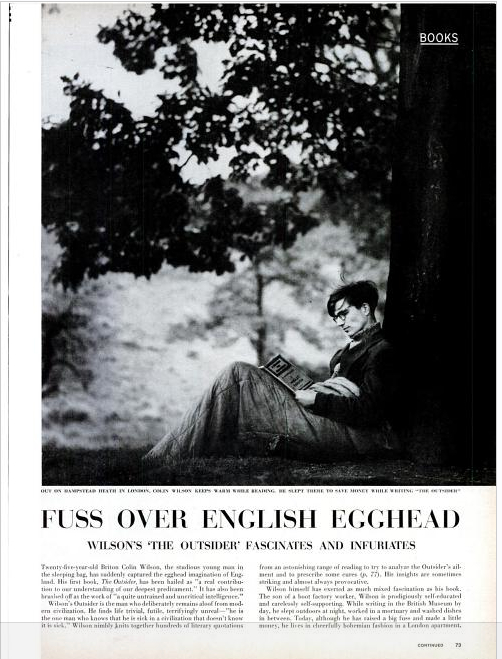
The myth of Colin Wilson really started, however, when the Evening News revealed that the author had saved money by writing The Outsider in the British Museum by day, but slept rough, with only the protection of a water-proof sleeping bag, on Hampstead Heath during the night:

The wind in my face was lovely and when I did go back inside to live I found it very hard to sleep. But towards the end I was getting very depressed, carrying around this great sack of books.
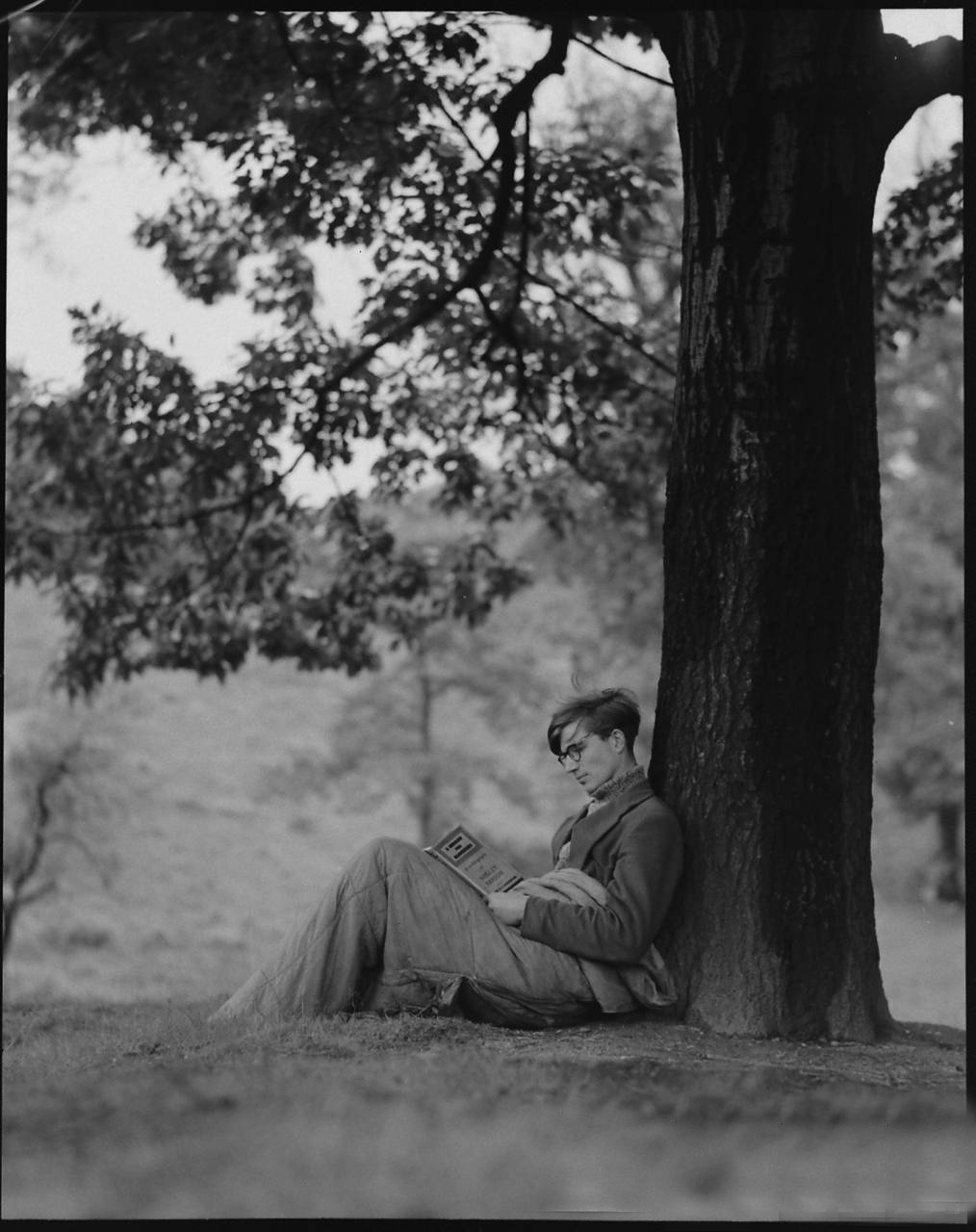
Colin Wilson reading on Hampstead Heath in 1956
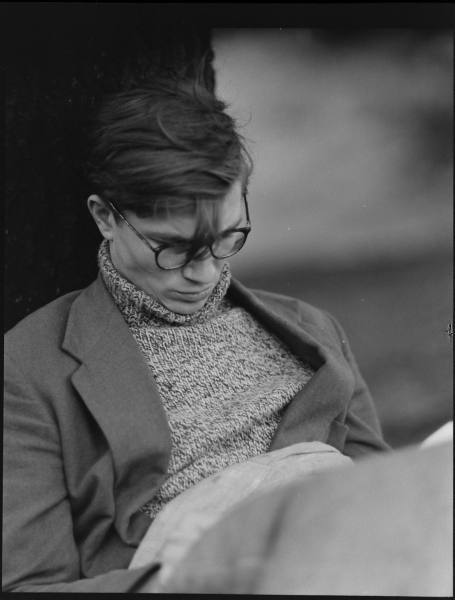
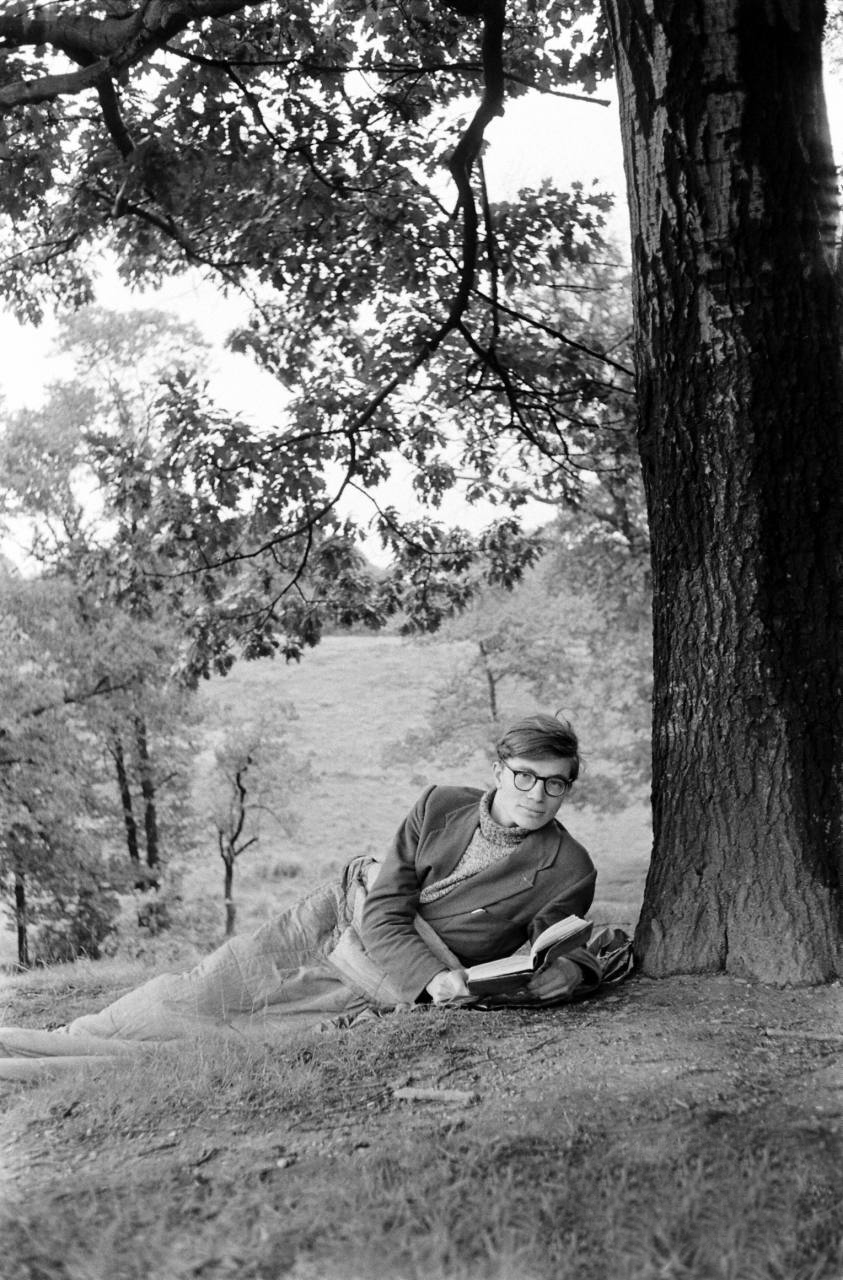
Colin Wilson reading on Hampstead Heath in 1956

colin-wilson-asleep-on-hh

colin-wilson-in-sleeping-bag-1956

By now the less high-brow newspapers were following the story. Dan Farson, one of Britain’s first television stars, but then writing for the Daily Mail, wrote:

I have just met my first genius. His name is Colin Wilson.

At this stage no one seemed to notice that Wilson was agreeing, slightly too readily, with the ‘genius’ part of his description.

Wilson quickly threw himself into his new celebrity status with relish and found himself invited to glamourous parties throughout the capital. One night he was standing at the urinals of the Athenaeum Club in Pall Mall and found himself next to the tall and almost blind Aldous Huxley. “I never thought I’d be having a pee at the side of Aldous Huxley” said Wilson. “Yes, that’s what I thought when I was standing beside George V”, retorted the famous author.

On the 12th October 1956 on his way home from another party (at Faber with TS Eliot in attendance no less), and apparently worse the wear from champagne, Wilson noticed huge crowds outside the Comedy Theatre situated just off the Haymarket. Intrigued he asked the taxi driver to drop him off and he managed to make his way through the thronging crowds to the stage door.

The huge crowds were there to see Marilyn Monroe who was currently in London to appear in a film version of Terrence Rattigan’s play ‘The Sleeping Prince’ – the film that eventually became ‘The Prince and the Showgirl’ directed and co-starring Lawrence Olivier.
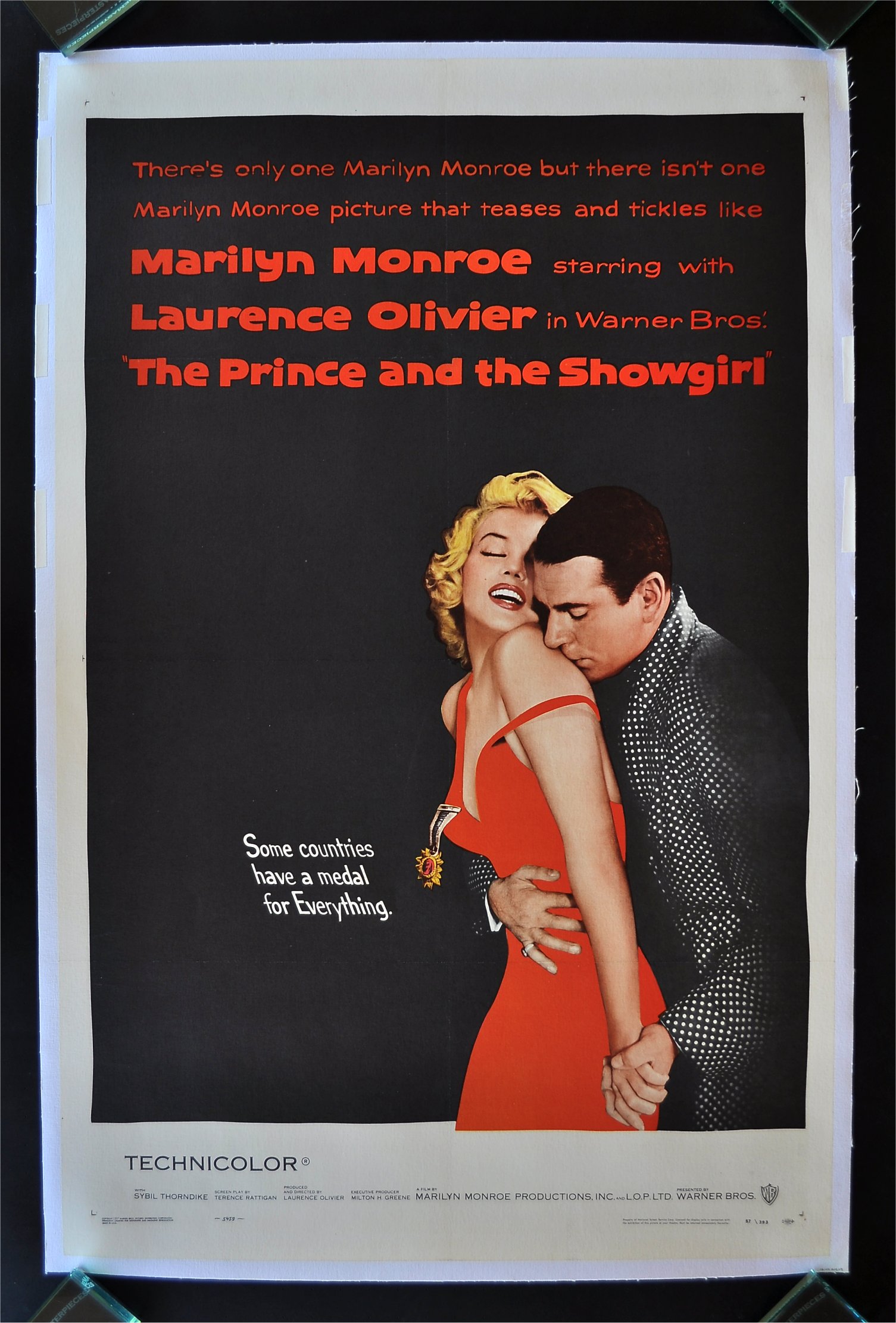
The original poster for The Prince and the Showgirl directed by Lawrence Olivier

The original poster for The Prince and the Showgirl directed by Lawrence Olivier

Marilyn and her husband Arthur Miller had arrived in Britain three months previously in July 1956. The couple had just gone through a tumultuous few weeks. Not only had they just got married the month before but Miller had appeared, three years after his play The Crucible had first been staged, in front of the House Un-American Activities Committee accused of communist sympathies.

Miller had been subpoenaed after applying for a passport to accompany his new wife to London. He refused, in front of the committee, to inform on his friends and fellow writers, and was cited for contempt of Congress – the trial for which would take place the following year.

Monroe, against a lot of advice, had publicly supported Miller through these hearings but generally there was huge worldwide support for the acclaimed playwright. Wary of hurting American credibility around the world, the State Department ignored the committee’s advice and issued Miller with a passport enabling him to accompany his wife to London.

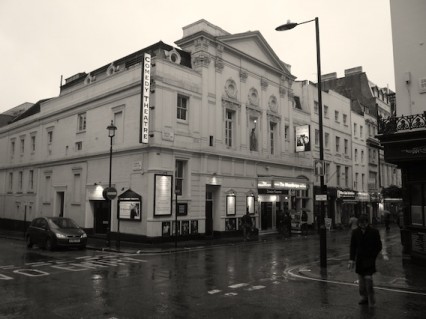
While Marilyn was filming with Lawrence Oliver at Pinewood, Miller decided to put on a rewritten version of his latest play called View From The Bridge to be directed by Peter Brook. The crowds that intrigued Colin Wilson enough to stop his car to investigate, were surrounding The Comedy Theatre in Panton Street hoping to catch a glance of Marilyn Monroe who had come for the premiere of her husband’s play.
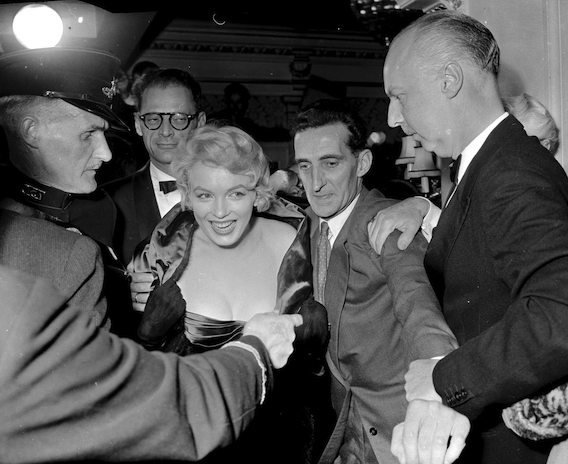
Marilyn in the crush outside the Comedy Theatre, October 1956

Marilyn in the crush outside the Comedy Theatre, October 1956

Arthur Miller was actually no fan of the ‘trivial, voguish theatre’ of the West End, considering it, not entirely unfairly at the time, as ‘slanted to please the upper middle class’. When the auditions started for View From A Bridge in London he asked the director Peter Brook why all the actors had such cut-glass accents. ‘Doesn’t a grocer’s son ever want to become an actor?’ he asked. Brook replied, ‘These are all grocer’s sons.’

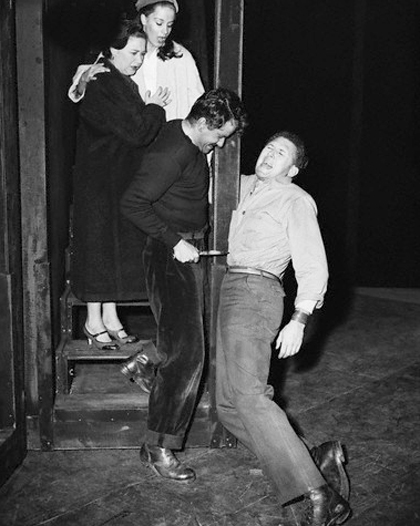
Ironically at the end of the auditions a Rugby-educated lawyer’s son called Anthony Quayle came closest to portraying a working-class American accent and he was chosen to play the main part of Eddie the New York docker.
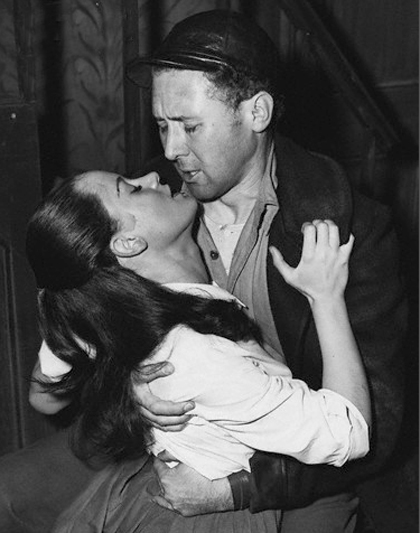
Mary Ure and Anthony Quayle at the rehearsal of View From A Bridge, 1956
Mary Ure and Anthony Quayle at the rehearsal of View From A Bridge, 1956

Rehearsals of the London version of View From A Bridge
Rehearsals of the London version of View From A Bridge

The Comedy Theatre in Panton Street, January 2010

The Comedy Theatre in Panton Street, January 2010

Luckily Colin Wilson had recently become a slight acquaintance of Anthony Quayle and after pushing through the crowds surrounding the stage-door he used Quayle’s name to be allowed to the party back-stage. He soon saw Marilyn standing alone in front of a mirror where she was trying to pull up a, very beautiful, but tight strapless dress. Wilson noted that, despite her best efforts, the dress ‘was slipping down towards her nipples’. Not wasting the chance of a lifetime, he went to introduce himself – ‘I had been told she was bookish’, he once remembered .

According to Wilson there was a definite ‘connection’ with Marilyn and she actually grasped his hand as they made their way through the throng to their waiting cars.
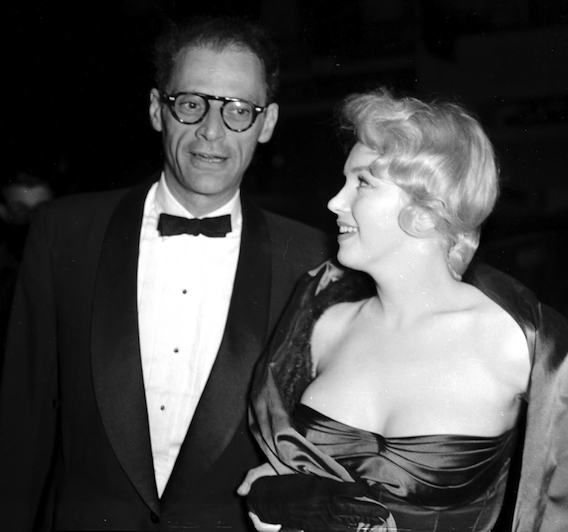
Marilyn and Miller at the opening night of View From a Bridge
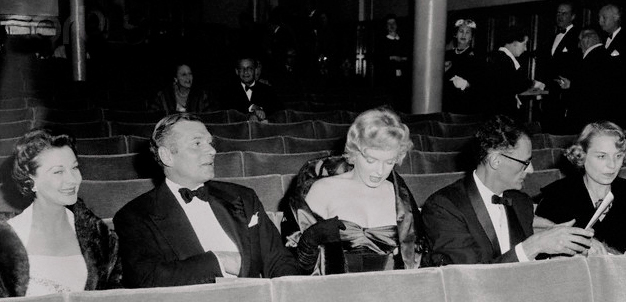
Marilyn and Miller at the opening night of View From a Bridge

Marilyn checking her dress at the premiere
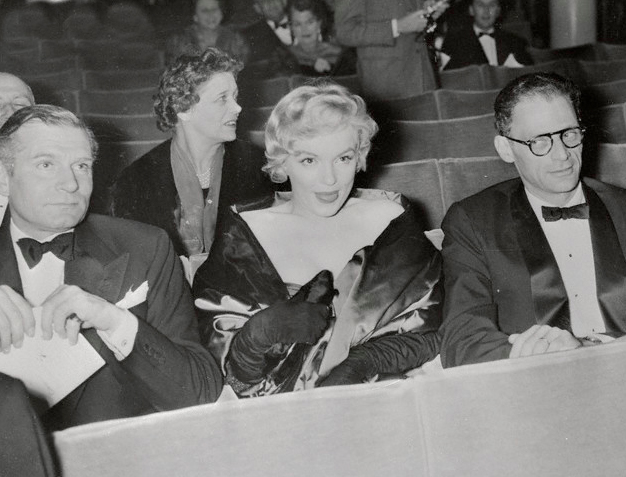
Marilyn checking her dress at the premiere

marilyn-monroe-october-11th-56

A gossip columnist buttonholed Wilson before he left the party and asked what he was doing there. Wilson said that he had spent the evening hoping to talk to TS Eliot and ended up meeting Marilyn Monroe.

The next morning the columnist duly wrote about the young author meeting Marilyn at the premiere adding that Wilson, while there, had been asked to write a play for Olivier.

It was publicity like this that made his supporters question whether he really was a serious writer. The New York Times had written about his almost over-night ascendancy – “he walked into literature like a man walks into his own house”.

If it’s easy to walk into your own house, it’s presumably just as easy to walk out, and Wilson’s fall from grace was almost as quick as his initial success. The tabloid backlash began in December 1956 when a story in the Sunday Pictorial informed the public that Wilson had a wife and a five year old son but was living with a mistress – his girlfriend Joy – in Notting Hill. Indeed, one of the reasons he lived rough on Hampstead Heath, while he was writing his acclaimed first book, was to avoid paying maintenance to his estranged wife.
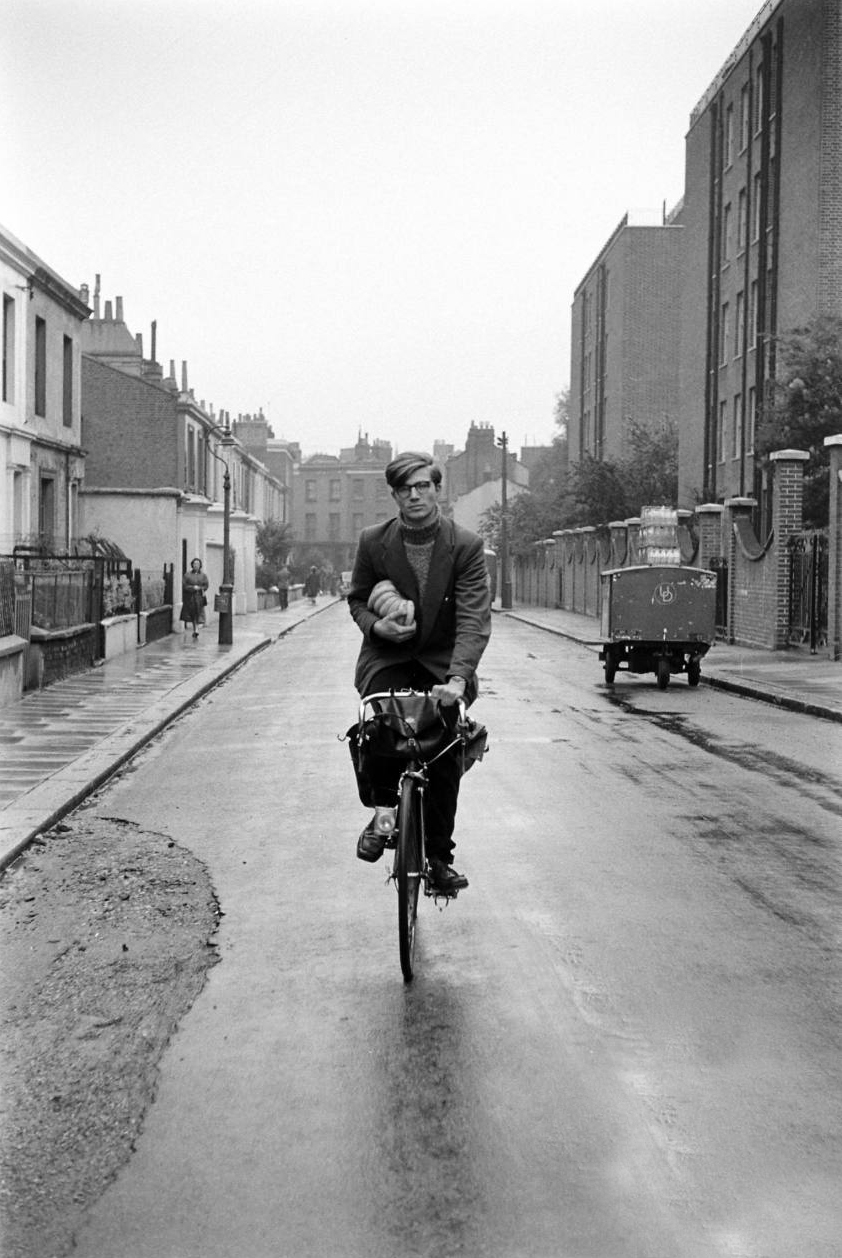
colin-wilson-with-bananas-on-bike-2

Around this time Joy’s father came across Wilson’s journals. He was shocked to read what he took to be horrific pornographic fantasies about his daughter (in reality, according to Wilson, they were notes for his novel he was currently writing). Joy’s father, along with her mother, sister and brother, arrived at the front door of the flat that she and Wilson shared, intent on rescuing her. Incredibly the story became front page news for days, even Time magazine in America wrote about the incident involving their favourite ‘English Egghead’:

Without warning, the door of the book-glutted flat was suddenly flung open and in burst Joy’s enraged father. “Aha, Wilson! The game is up!” roared accountant John Stewart, 58, brandishing a horsewhip. Beside Father Stewart stood his wife, bearing a sturdy umbrella…with no further pleasantries, Mrs. Stewart fell to pummeling Philosophy Collector Wilson with her weapon, while the others tried to drag Joy from the villain’s premises. They screamed at Joy: “You will go to hell!” Their efforts were futile. Wilson was unbruised, Joy unbound, when bobbies swooped down on the domestic scene. Crimson with anger, John Stewart offered Wilson’s diary as proof that the rapscallion was “not a genius” but just plain “mad.” Rasped Stewart: “He thinks he’s God!” The diary, noted newsmen, was indeed rather bizarre. Excerpt: “I have always wanted to be worshipped … I must live on longer than anyone else has ever lived. I am the most serious man of our age.
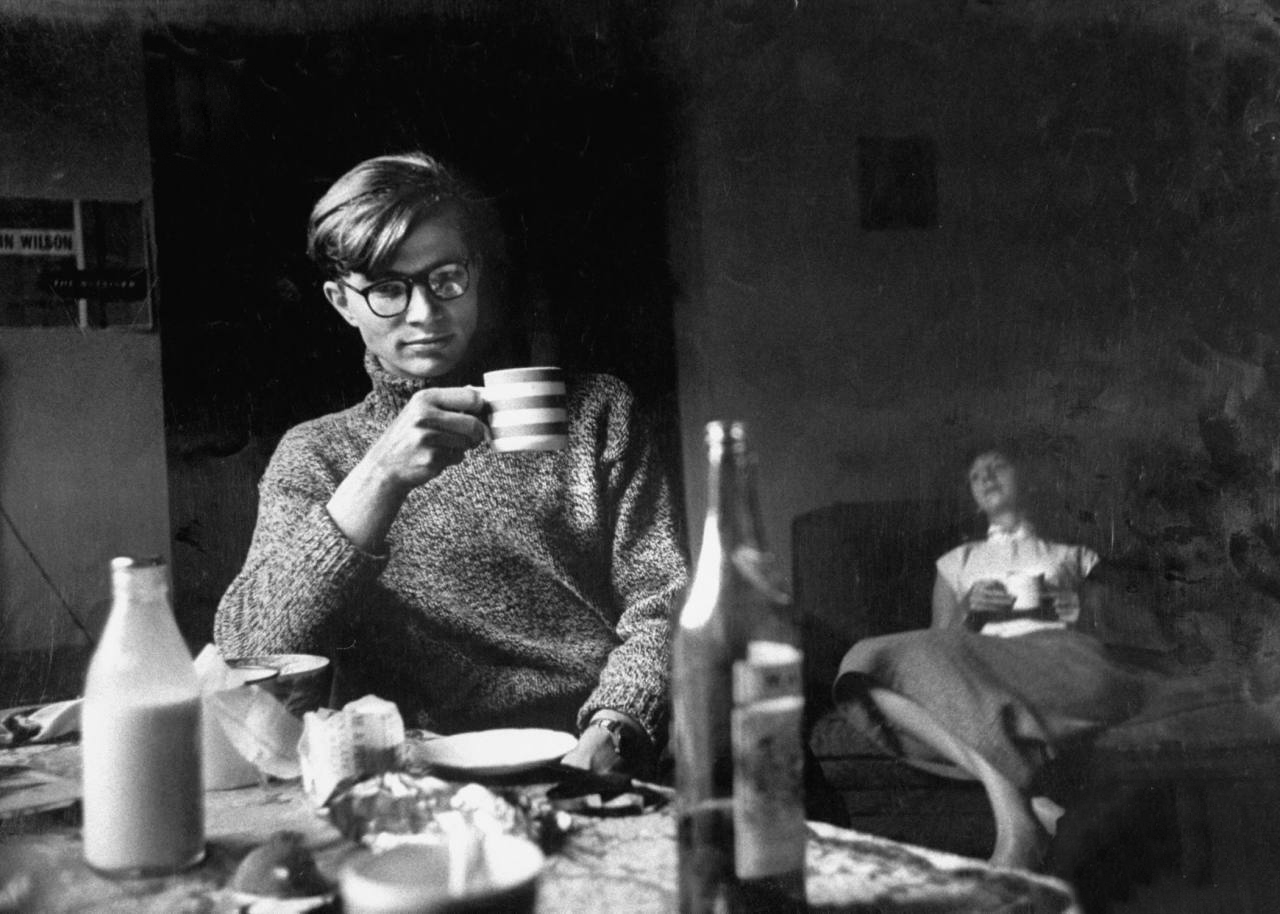
Colin Wilson drinking tea with girlfriend Joy
Colin Wilson drinking tea with girlfriend Joy

colin-wilson-in-life-magazine

The members of the British literary establishment must have appeared like the characters in an HM Bateman cartoon, looking down at the young working-class author, they originally feted, utterly aghast.

Philip Toynbee, in his books of the year article in the Observer got the backlash rolling, writing, “I doubt whether this interesting and extremely promising book quite deserved the furore which it seems to have caused”. By now The Outsider had earned around £20,000 (approximately £1m today) for Wilson, and the critical reappraisal by many of his former supporters may well have been driven, not a little, by a touch of envy.

There can’t be many second books that have been set up so beautifully for an author’s reputation to be critically destroyed. Sure enough Wilson’s second book ‘Religion and the Rebel’ published in September 1957 was witheringly and disparagingly panned – “half-baked Nietzsche” wrote the Sunday Times, a “vulgarising rubbish bin” wrote Philip Toynbee who was now remembering The Outsider as “clumsily written and still more clumsily composed”.
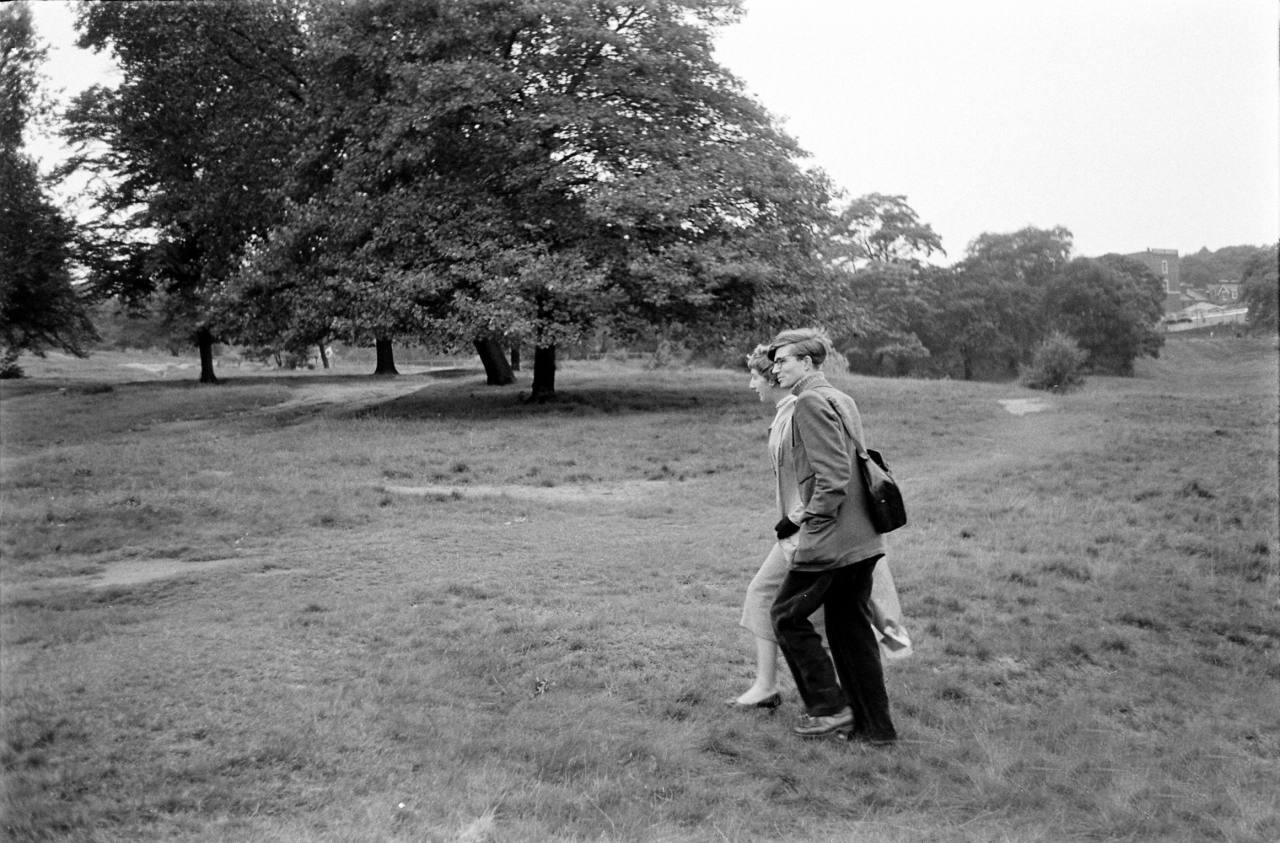
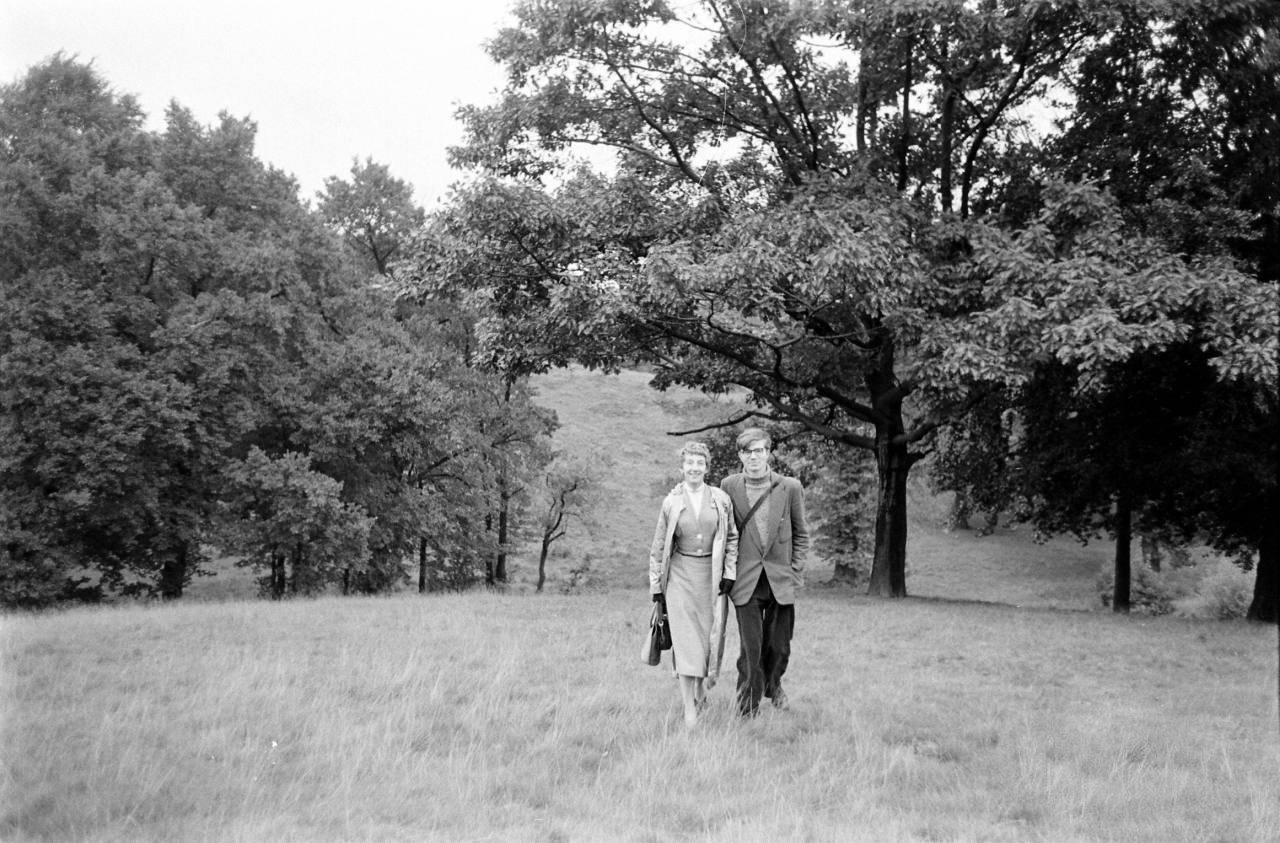
colin-wilson-and-girlfriend-1956

The future Mr and Mrs Wilson, 1956

The future Mr and Mrs Wilson, 1956

Wilson and his girlfriend fled to Cornwall to avoid the still-frenzied press, not before he handed his journals to the Daily Mail who gleefully printed excerpts including “The day must come when I am hailed as a major prophet,” and “I must live on, longer than anyone else has ever lived…to be eventually Plato’s ideal sage and king…” Not to be outdone, The Daily Express had Wilson musing that death could be avoided by those with a sufficient intellect: “Why do people die? Out of laziness, lack of purpose, of direction.”

It seems that Wilson is neither lazy, lacks purpose or direction, as he is still alive and living in Cornwall with his wife Joy. Although none of them have come close to repeating the extraordinary success of The Outsider, Wilson has subsequently published over a hundred books.

Fifty five years after sleeping rough on Hampstead Heath and walking to the British museum to write it, The Outsider is still in print.
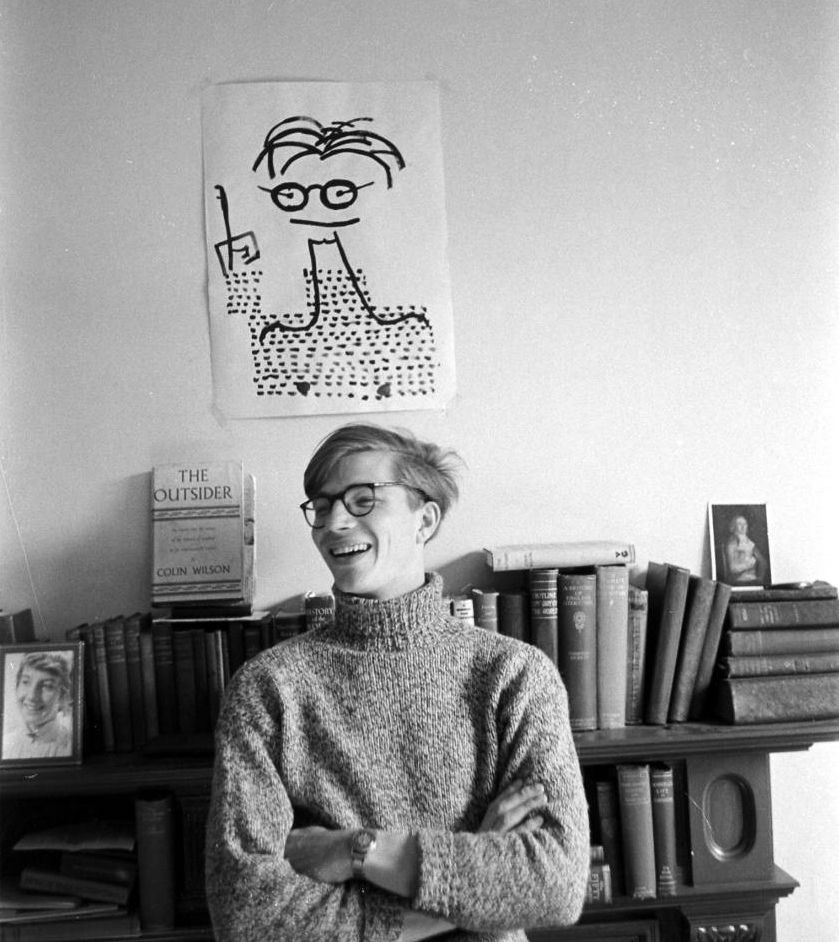
Colin Wilson having the last laugh


Colin Wilson having the last laugh

Share

Hampstead; Dusty Springfield, also The Magdala and Ruth Ellis plus Lee Miller and Roland Penrose at Downshire Hill.

Tuesday, May 13th, 2008

‘I had to hide behind a mask, and I chose mascara.’


About a month before the beginning of the Second World War a baby girl was born in Hampstead to an Irish Catholic family and named Mary Isabel Catherine Bernadette O’Brien. The O’Brien’s were a prosperous family, the father was an Income Tax accountant, and Mary was brought up with two brothers in a conservative and comfortable Hampstead, and subsequently Ealing, middle-class existence.

Mary as a child was a bit of a tomboy and often came home with grubby clothes and dirty knees and was soon always known as ‘Dusty’, she also was a bit tubby and bespectacled and recalled once that at the age of 16 she looked in the mirror and told herself “be miserable or become someone else”.

Dusty in 1958

In 1958 Dusty answered an a newspaper ad and much to her great surprise was chosen as a singer in an established girl group called The Lana Sisters. With this vocal group, she developed the art of harmonising, learned microphone technique, made records, did some television shows and played live both in the UK, and at American Air Bases.

Dusty with the Lana Sisters in 1959

After a couple of years she joined up with her brother to form a folk trio called The Springfields (this is where her stage surname came from and when she permanently adopted the name ‘Dusty’).

Dusty with The Springfields in 1962

After two years she again felt claustrophobic in a group format and struck out on her own and her first solo recording ‘I Only Want To Be With You’ became a huge hit in the UK (it was the opening song on the very first edition of Top Of The Pops) and following in the wake of The Beatles a big hit in The States. If this had been her only hit she would still have a small footnote in the history of pop music but realistically she was just getting going. She subsequently had a string of hits over the next few years including her first number one ‘You Don’t Have To Say You Love Me’, and became, arguably, Britain’s greatest female singer.


Dusty had always been a big fan of black music and hosted a programme of Ready Steady Go that featured just Motown musicians – her ability to sing and master the style of black American soul music earned from Cliff Richard the rather dated nick-name “The White Negress”. In 1964 Dusty was booked to play in South Africa but made sure that in her contract she only played to un-segregated audiences. She was arrested and deported back to the UK after just one concert in front of a mixed audience in Cape Town. Both Max Bygraves and Derek Nimmo, to their shame, complained to the press that her pig-headedness over the matter would cause problems for them and for other entertainers wanting to tour South Africa.

Dusty with Martha and the Vandellas

Dusty returning from the aborted South Africa tour.

Dusty Springfield was a huge star in her own country even recording several series of her own shows, two series for the BBC entitled Dusty and one with ITV called ‘It Must Be Dusty’ this even included a duet with Jimi Hendrix of the song ‘Mockingbird’.

By 1968 the music industry was starting to split between the progressive and hip and the pop and unfashionable. Hoping to reinvigorate her career and boost her credibility Springfield signed with Atlantic records, the same label as her idol Aretha Franklin. Her Memphis sessions for the label were produced by Jerry Wexler, Tom Dowd and Arif Mardin, the backing singers were the Sweet Inspirations and the instrumental band was The Memphis Cats. Jerry Wexler realised that her natural voice at last should be placed at the front of the recording
and shouldn’t be battling with the backing musicians, however due to what he recalled as ‘a gigantic inferiority complex’ her vocals were recorded later in New York.

Dusty In Memphis is these days widely considered as perhaps one of the greatest LPs ever recorded and it seems incredible now that although Rolling Stone magazine at the time wrote that the record had “…blazing soul and sexual honesty…that transcended both race and geography”, the recording didn’t even make the UK top 40.

In 1970, after more and more whispered rumours, Springfield spoke to Ray Connolly a journalist for the Evening Standard in London – “There’s one thing that’s always annoyed me, and I’m going to get into something nasty here. But I’ve got to say it because so many people say it to my face. A lot of people say I’m bent, and I’ve heard it so many times that I’ve almost learned to accept it…. Girls run after me a lot, and it doesn’t upset me. It upsets me when people insinuate things that aren’t true. I couldn’t stand to be thought to be a big butch lady. But I know I’m perfectly as capable of being swayed by a girl as by a boy. More and more people feel that way, and I don’t see why I shouldn’t…. Being a pop star, I shouldn’t even admit that I might think that way.” This was a ridiculously bold statement for the time and and although she was brave it realistically didn’t do her any favours.

In fact all Dusty’s long term relationships were with women and at the time of the interview Dusty was living in Kensington with a black American folk singer called Norma Tanega and had been for years.

Norma Tanega – A Street That Rhymes at 6am

It surely must have been extraordinarily frustrating for any creative person, let alone a relatively great seemingly able to express any human emotion, not to be able to come out with their own feelings about love and desire in their own work. Dusty Springfield had in some ways always hidden herself away and was desperately insecure hiding herself under thick make-up and a beehive hairdo – ‘to be the star they wanted’ she once explained ‘I had to hide behind a mask, and I chose mascara.’ An academic wrote that she transformed herself into ‘elaborate camp masquerade’ where the Hampstead-born middle-class white girl was tranformed into both a black woman and, almost, a male drag queen (an influence to which Dusty subsequently admitted). However in pop music (and often in other forms of art) the invention by the artist of a flamboyant character or ‘masquerade’ that helps to hide your normal persona is exactly what enables you to produce art or music that stands out from the rest.

In 1972, ostensibly to escape from the intrusive UK press Dusty moved to Los Angeles and started to live the life of a Beverley Hills socialite. More than at home she could now move comfortably in lesbian circles and she befriended the tennis players Billie Jean King and Rosie Casals, the latter saying that although she and Dusty were close friends they were never lovers.

Dusty with Rod Stewart and Olivia Newton John in 1978

In 1973 Dusty explained to the Los Angeles Free Press: “I mean, people say that I’m gay, gay, gay, gay, gay, gay, gay, gay. I’m not anything. I’m just … People are people…. I basically want to be straight…. I go from men to women; I don’t give a shit. The catchphrase is: I can’t love a man. Now, that’s my hang-up. To love, to go to bed, fantastic; but to love a man is my prime ambition…. They frighten me.”

Incidentally she only recorded one song during her life that spoke openly about loving another woman (although I suppose it could be said to be ‘self reverential’). It was called Beautiful Soul and was recorded during one of her Atlantic Record sessions that were discontinued due to ‘poor mental health’. The track was eventually released after her death.

Rapidly falling record sales, and intrusions by the press took a toll on her private life and by the mid-seventies Springfield was unable to cope without drinking heavily and taking drugs on a regular basis. She had resorted to self-harming in such a way that she was hospitalised several times including after a failed suicide attempt.

In the early eighties Dusty was making an effort to clean up and met a little known actress and singer called Teda Bracci at an AA meeting. Dusty eventually got ‘married’ to her in a backyard ceremony in San Fernando with wedding guests that were nearly all fellow inhabitants of the rehab centre. When they were asked whether there were any objections to the marriage all the guests raised their hands in jest, including Dusty who also jokingly put up her arm. The couple’s relationship was tempestuous to say the least and during one particularly heated row Bracci hit Dusty in the face with a saucepan and smashed her mouth, knocking out her teeth. Dusty responded and hit her partner around the face with a skillet. Both of them ended up in hospital with Dusty requiring plastic surgery. Unsurprisingly the marriage didn’t last long.

Dusty getting married to the actress/singer Teda Bracci in 1983

In 1987, The Pet Shop Boys, huge fans of hers, invited her to record with them for, what would become the world-wide hit “What Have I Done To Deserve This” and then a few years later her brilliant version of “Son Of A Preacher Man” was included in the Pulp Fiction soundtrack meaning that she now had a whole new generation of fans. Although at this stage of her career Dusty was tired of keeping up an expected image and said “it would have been so easy to go down the diva route, but there’s no substance to it and bores me”.

Dusty performing with the Pet Shop Boys at The Brit Awards 1988

Springfield was diagnosed with breast cancer in the early nineties and after initially seemingly to recover from the disease succumbed to it in March 1999 just before what would have been her sixtieth birthday.


Dusty Springfield – Beautiful Soul

Buy Dusty Springfield music here and here.

“I am guilty. I’m a little confused”

The evidence of the shooting still remains on the exterior tiled wall of the slightly old-fashioned Hampstead pub called The Magdala. The bullet holes mark the spot where Ruth Ellis shot her playboy racing-driver lover six times with a heavy British service .38 Smith and Wesson revolver. She was quickly apprehended by an off-duty policeman who had been drinking in the pub. He took the gun Ellis offered him, put it in one of his coat pockets, and heard her say, incriminatingly,”I am guilty. I’m a little confused.”

In Holloway prison on the morning of 13th July 1955 (just three months and three days after the shooting), Ruth Ellis put her spectacles on the table and told the warder guarding her, “I won’t need those any more.” She was taken out of her cell to be hanged by Albert Pierrepoint who later wrote “She died as brave as any man and she never spoke a single word.” The Bishop of Stepney visited Ellis just before her death and wrote that he “was horrified and aghast beyond words” when he learned that Ellis “could hear the hammering as the scaffold was being erected.”

The executioner Albert Pierrepoint

The body of Ruth Ellis was buried in an unmarked grave within the walls of Prison. However in the early seventies the gaol was extensively re-built and the bodies of all the executed women were exhumed. Ellis’s body was reburied in Saint Mary Churchyard in Amersham, Buckinghamshire – the grave now completely overgrown by Yew.

Ruth Ellis was born in Rhyl in North Wales but her family moved to London in 1941 in the middle of the Blitz. In 1944, aged eighteen, she had a brief affair with a French-Canadian soldier called Clare eventually becoming pregnant and giving birth to a son called Clare Andrea, known throughout his life as ‘Andy’.

After the war she supported herself by being a model at the Camera Club where she posed nude before a group of men taking photos – often with cameras that contained no film. It was at The Camera Club where she met the West End club-owner Morris Conley, a fraud, conman, ponce and described as ‘ugly as a toad’ however he was very very rich. He took Ruth under his wing as a hostess in his raffish Mayfair club ‘The Little Club. It was the sort of place that professional and upper-class men went to get drinks, entertainment and easy sex.

Ruth Ellis and a guest at The Little Club
The club has often been described in the press as a sort of low-class and rough dive, however it apparently had members such as King Hussein of Jordan, Douglas Fairbanks, Burt Lancaster, Anthony Armstrong-Jones (later Princess Margaret’s husband) and even Stephen Ward – the osteopath who would come to play an infamous part in the Profumo Affair fame.

Ruth’s reputation spread and she was sought after by the clientele as a woman who was great at sex and great fun to be with. The club was becoming more popular and Morris Conley made her manager which gave her the use of the small apartment upstairs. During her time at The Little Club she married and divorced a George Ellis an alcoholic dentist who found it impossible to hold down a job, and in 1951 she gave birth to a daughter called Georgina.


Ruth Ellis posing for photos in the flat above The Little Club

During the summer of 1953 Ruth was entertaining a group of young dashing racing drivers including Mike Hawthorn and Stirling Moss and through this group she met another, albeit less successful, driver called David Blakely. The man she was eventually to murder.
.
David Blakely and Ruth Ellis at The Little Club

At first their relationship was friendly, but soon public displays of arguing and even violence became common and the couple both started drinking prodigiously. At one point Blakely damaged property at the club in a drunken rage and this, as well as Ellis allowing him to run up a tab that he was never going to be able to pay back, meant that Morris Conley had no choice but to sack Ellis and therefore forced to leave the upstairs apartment.

During her tempestuous relationship with Blakely, Ellis was actually also seeing a man called Desmond Cussen – an affair that started when Blakely failed to return from racing at Le Mans in France. Cussen was a sullen, shy man and an accountant in the tobacco business and he and Blakely hated each other even before Ruth came between them. However Cussen was generous to both Ellis and her children, putting them up at his lodgings and even paying for her son’s school fees. Despite this she still continued to see Blakely – a relationship that was starting to become more and more physically abusive.

Ruth Ellis became pregnant at the beginning of 1955 and David Blakely promised to marry her, a promise on which he soon reneged. During another of their violent arguments its likely he caused her to miscarry her baby after hitting her hard in the stomach. Ellis’s love for David Blakely started to turn into an obsessive hate and she took to chasing him around his various haunts using her loyal Desmond Cussen as a chauffeur. At one point she was arrested but released when she smashed his car windows when she found it parked outside the home of some friends of his. Finally with Ellis filled with alcohol and prescribed tranquilisers she took a gun provided by Cussen and waited outside Blakely’s house until he came out. He eventually decided to to go to the pub – The Magdala – for some extra bottles of beer and she shot him several times. She held the revolver only three inches from Blakely’s body when she fired the last bullet. It was just two years after she had first met him.


The actual .38 Smith and Wesson revolver that killed David Blakely

Ruth Ellis when she was asked at her trial by the prosecution counsel what she had intended to do when she fired the revolver at David Blakely, impassively said “It’s obvious when I shot him I intended to kill him.” This reply guaranteed a guilty verdict and the jury only took 23 minutes to convict her. The trial judge Sir Cecil Havers (incidentally the actor Nigel Havers’ grandfather) had no other choice but to sentence her to death.

It was expected by most people that the sentence would be reprieved by the Conservative Home Secretary – out of the sixty women sentenced to death in the previous thirty years only seven were eventually executed; indeed a petition to the Home Office asking for clemency was signed by 50,000. However the Home Secretary Major Lloyd-George rejected all appeals.

The Daily Mirror wrote a column attacking the sentence – ‘The one thing that brings stature and dignity to mankind and raises us above the beasts will have been denied her – pity and the hope of ultimate redemption.” Hundreds of people protested outside Holloway prison for days before the execution after which it became news though out the world. A French reporter, surprised at the lack of a ‘crime passionel’ defence in the English legal system wrote “passion in England, except for cricket and betting, is always regarded as as shameful disease.”
Crowds outside Holloway Prison the day before Ruth Ellis’s execution.

Although the protests were to no avail, the eventual hanging of Ellis and its accompanying uproar, helped strengthen political support for the end to the death penalty and it was abolished just nine years later. Sir Cecil Havers, the judge at the trial, was said to have felt so guilty he sent money every year to help in Ruth’s son Andy’s upkeep. Andy, though, never seemed to get over his mother’s death and tragically committed suicide in 1982 soon after destroying his mother’s gravestone in Amersham.

It’s not particularly well known but Ruth Ellis was actually a friend of Diana Dors – the UK’s version of Marilyn Monroe. She had had a bit part in the Diana Dors 1951 film ‘Lady Godiva Rides Again’ and Diana frequented the same West End clubs as Ellis.

In 1956 Diana Dors made the film Yield To The Night directed by J. Lee. Thompson. It is generally accepted that it’s Dor’s most accomplished acting role where she plays a murderess who is eventually sentenced to death. The moving performance was said to be based on what she knew about her friend Ruth Ellis.

Diana Dors at Cannes promoting Yield To The Night

Diana Dors in a scene from Yield To The Night

Some songs that were number one in the UK charts just before and around the times of David Blakely’s murder and Ruth Ellis’s hanging in 1955.

Dickie Valentine and the Stargazers – Finger Of Suspicion
Eddie Calvert – Cherry Pink And Apple Blossom White

“I looked like an angel but I was a fiend inside.”

Lee Miller and Roland Penrose at Downshire Hill
Just around the corner from The Magdala is a road called Downshire Hill – another pleasant, leafy street in which that part of Hampstead specialises. On the wall of number 21 is a blue plaque commemorating the fact that both Lee Miller, the model and photographer, and Roland Penrose, the British surrealist and seemingly friend of every significant artist of the 20th Century, lived there during the duration of WWII.

Roland Penrose had moved into the house in 1936 after years of travelling around the Mediterranean, meeting all kinds of artists and subsequently becoming a notable collector of their work. Downshire Hill contained works of Picasso, Braque, Magritte, Miro and Max Ernst. In the front garden he had placed Henry Moore’s ‘Mother and Child’ – the artist had given it to him saying if he got tired of it he would give him another one. Unfortunately the neighbours found the modernist sculpture rather shocking and after too many complaints to the Council it was eventually removed.

21 Devonshire Hill, Hampstead

Penrose first met Lee Miller at a surrealist party in Paris in 1937. He was dressed as a rather gaudy surrealist bandit, with green hair, a right hand that was painted blue and trousers all the colours of the rainbow. Miller, however, had just arrived in Paris and only just unpacked, and was in a beautiful dark blue gown. Penrose said that seeing her was like ‘being hit by a bolt of lightening’ and they soon became inseparable, holidaying at Penrose’s family home in Cornwall in the company of, amongst others, Max Ernst, Henry Moore, Man Ray, Leonara Carrington and Eileen Agar. Agar wrote in her biography – “It was a delightful Surrealist house party, with Roland taking the lead, ready to turn the slightest encounter into an orgy. I remember going off to watch Lee taking a bubble-bath, but there was not quite enough room in the tub for all of us.”

Lee Miller and Picasso in 1937

Later that summer most of the group travelled to Picasso’s house at Mougins in the South of France (it’s worth noting here that this was just weeks after Picasso had painted Guernica – arguably his most famous painting) and it was a wild summer of partner-swapping and relaxed exhibitionism and Lee was painted by Picasso six times. Miller was gladly loaned to the host for a night or two by Penrose. Back in Roland’s bed, he introduced her to bondage and he later gave gave her a set of handcuffs made from Cartier gold.) Eileen Agar wrote in her biography that in the South of France that summer there was “Surrealism on the horizon, Stravinsky in the air, and Freud under the bed.”

Picnic at Mougins in 1937 by Lee Miller

The same scene captured by Roland Penrose

Lee Miller in 1937 was at the time married to an Egyptian called Aziz Eloui Bey but was already well-known in the avant-garde world of Montparnasse. In 1930 she had appeared in Jean Cocteau’s “The Blood of a Poet, but also, and most notably, was the former model, muse, collaborator and lover of the American surrealist photographer Man Ray.
The Song Of A Poet by Jean Cocteau
Lee Miller by Man Ray 1929
Miller had originally been a model in her native US (a career that started when she was saved from being run-over in New York by, extraordinarily, Conde Nast himself – who subsequently asked her to model for Vogue). She was on the cover by 1929 aged 19 immortalised as an art deco illustration. “I was terribly terribly pretty” she once said, “I looked like an angel but I was a fiend inside.”

Modelling in front of the camera was nothing new to Miller as she had posed many times for her father Theodore Miller, often naked and sometimes accompanied by her friends. This slightly disturbing photography went on until her early twenties. However her American modelling career came to an abrupt end when, unbeknownst to her, she was featured in an infamous Kotex campaign (magazines, but more specifically magazine advertisers, did not want to be associated with such an embarrassing private and unglamorous hygiene product) and shortly afterwards Miller moved, pretty well permanently, to Europe at the end of the 1920s. She arrived in Paris, arranged to meet Man Ray and told him she was to be his new assistant – a collaboration in more ways than one that lasted for three intense years.

Lee Miller in Sweden 1930 taken by her father.

When the war started Lee Miller and Roland Penrose decided to live permanently at Downhill Rise in Hampstead. In 1941 Miller met a fellow American and Life photographer David Scherman. He was gregarious, great fun and a youthful twenty five and she brought him home to Downshire Hill, initially as a lodger but almost immediately as a lover and a member of a happy and consensual menage a trois – the three of them actually remained friends throughout their lives.

Lee Miller in Camouflage, London 1942 by David E. Scherman
Encouraged by Scherman, Miller became a photographer with the US Army and although, it seems incredible reading most of the celebrity-obsessed lightweight women’s magazines of today, it was British Vogue (known by some as ‘Brogue’) that originally published Miller’s war journalism and pictures. Travelling a lot of the time with Dave Scherman, Miller didn’t shy away from the atrocities towards the end of the war. She even scooped the siege of St Malo three week after D-Day and photographed the US military’s first use of napalm there. Vogue even published her pictures from the concentration camps Dachau and Buchenwald. At this time nobody in Britain had seen images like this before and Lee Miller sent a telegram to Audrey Withers – the Vogue editor, saying “I IMPLORE YOU TO BELIEVE THIS IS TRUE.” She later wrote “I could never get the stench of Dachau out of my nostrils.” A notable picture of the time is a picture of Miller in the bathtub of Hitler’s house in Munich taken by Scherman.

Women in Fire masks, Downshire Hill, 1941

Scene of the suicide of the Burgermeister of Leipzig and his family, 1945

Lee Miller in Hitler’s bath, Munich, 1945

In 1946, after half-hearted assignments and wandering round Europe in a drug and alcohol daze, she returned home to Hampstead (Scherman had by now re-established himself back in New York and had sent her a telegram saying ‘GO HOME’). The thankful Penrose had almost given up her after innumerable unanswered letters. Miller worked at Vogue for a few more years but with less and less enthusiasm. Eventually Penrose and Miller married and moved to a farm in Sussex where they raised their only son Anthony. Penrose continued his friendships with famous artists and notably curated an influential Picasso exhibition in (1961). He founded the ICA and was eventually knighted. Whereas Miller became somewhat of an alcoholic, and although she enjoyed cooking, she pretty well gave up her art altogether.
Essentially, we would probably say today that she had suffered from post-traumatic stress disorder and a massive withdrawal from the excitement of being a war photographer – her doctor actually said to her “we cannot keep the world permanently at war just to provide you with entertainment.” She died in 1977 aged 70 in the arms of Roland Penrose almost exactly forty years after the sunlight dappled picnic in the South of France in the year that they met.


Stravinsky – The Firebird Suite

Share
