Posts Tagged ‘sex’

Chinatown, the Death of Billie Carleton and the ‘Brilliant’ Chang

Sunday, October 25th, 2009
Billie Carlton

Billie Carlton

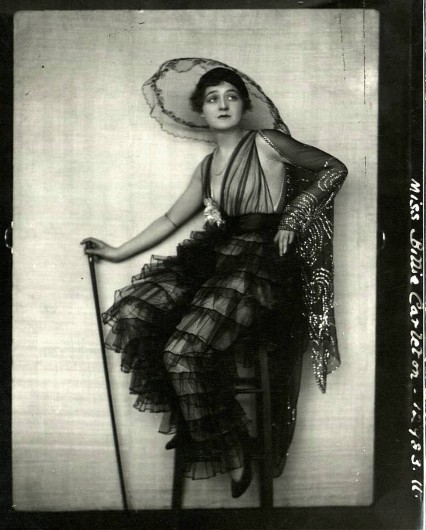
A young pretty actress called Billie Carlton had a starring role on stage at the huge Victory Ball held at the Albert Hall on 28th November 1918. Tatler had a few months previously described one of her appearances on a London stage, saying that she had: ‘cleverness, temperament and charm. Not enough of the first, and perhaps too much of the latter.’

While one newspaper described her appearance at the ball:

It seemed that every man there wished to dance with her. Her costume was extraordinary and daring to the utmost, but so attractive and refined was her face that it never occurred to any one to be shocked. The costume consisted almost entirely of transparent black georgette.

Although she she was well on the way to becoming a star her career was being held back by, what was becoming a rather obvious and large drug habit, and unfortunately the girl with too much charm and the daring costume was found dead in her Savoy Hotel suite by her maid the morning after the Victory ball. She was just 22 years old.
A gold box containing cocaine was found at her bedside and at the inquest it was suggested that she had died of ‘cocaine poisoning’. Although it was more likely that a combination of cocaine and some kind of depressant helped end her short life.

Billie Carlton in 1916

Billie Carlton in 1916

The subsequent court case revealed a highly dubious way of life for a young woman of the time. Witnesses described her heavy cocaine and opium use and it became known that the London-born actress, who incidentally never knew her father, was involved with three ’sugar daddies’. Two of these helped her financially -- she had a very expensive life-style to maintain including a permanent suite at the Savoy Hotel -- while the other, a married dress-designer called Reggie de Veulle, was more of a drug-taking partner.

The Daily Sketch front page January 24th 1919

The Daily Sketch front page January 24th 1919

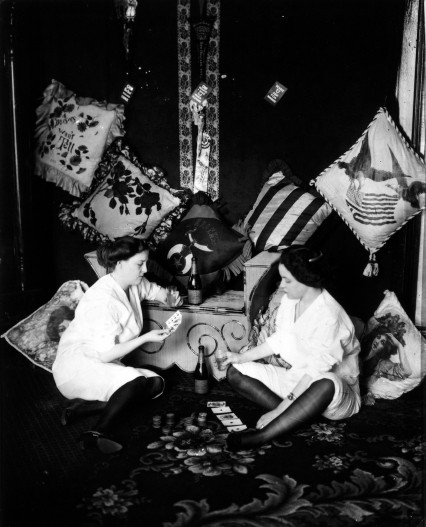
It was de Veulle who had given Carleton the cocaine that apparently had killed her. He had bought the drug a few days previously from a Scottish woman called Ada and her Chinese husband Lau Ping You who both lived on the Limehouse Causeway. In court it came to light that de Veulle had  been involved in a previous homosexual blackmail case and with a headline that read “An Opium Circle. Chinaman’s Wife Sent to Prison. High Priestess of Unholy Rites” the normally staid Times reported that both de Veulle and Carleton had been at an all-night ‘orgy’ in a Mayfair flat where the women wore flimsy nighties and the men silk pyjamas while smoking opium.

The press and the court, however, considered Billie Carleton a tragic innocent victim describing her as having:

“a certain frail beauty of that perishable, moth-like substance that does not last long in the wear and tear of this rough-and-ready world.”

Ada was sentenced to five months hard labour, her husband escaped with just a ten pound fine while, despite the judge’s direction, the jury acquitted Carleton’s friend Reggie de Veulle of her manslaughter. He admitted, however, to supplying Carleton cocaine and was imprisoned for eight months.

The death of beautiful girl from drugs combined with the involvement of a Chinese man created what was to become the first big drug scandal of the 20th century. The press, as they say, whipped themselves into a frenzy and the newspaper Pictorial News, for instance, ran a series of pieces about the East End of London and what they described as the encroaching ‘Yellow Peril’.

In the real world the so-called ‘yellow peril’ was actually a small, relatively law-abiding Chinese community which had been based around the Limehouse docks area from around the beginning of the 19th century. By the beginning of the twentieth century there were two separate communities in the area -- the Chinese from Shanghai were based around Pennyfields and Ming Street (between the present Westferry and Poplar DLR stations) whereas the immigrants from Southern China and Canton lived around Gill Street and the Limehouse Causeway. By 1911 the whole area had started to be called Chinatown by the rest of London.

The East End Chinatown in 1911

The East End Chinatown in 1911

Three seamen on the West India Dock Road

Three seamen on the West India Dock Road

Bag and sack shop circa 1900

Bag and sack shop circa 1900

Considering that there were rarely more than a few hundred Chinese people living around Limehouse before and after the first world war (in fact Liverpool had a far larger Chinese population), the East End Chinatown had an extraordinarily bad reputation.

It wasn’t just the fault of a slavering press looking for scandal and writing lurid headlines about opium dens and the white-slave traders there were also numerous writers, novelists and even film-makers that were helping to greatly exaggerate the danger and immorality of the area. At times it seemed that Limehouse was almost singlehandedly responsible for corroding the moral backbone of the British middle-classes.

Limehouse in 1927

Limehouse in 1927

two-men-on-the-corner-in-chinatown

Shop in Pennyfields in 1924

Shop in Pennyfields in 1924

Limehouse in 1910

Limehouse in 1910

HV Morton the famous travel essayist and journalist wrote about Limehouse in his book ‘The Nights of London’ in 1926:

The squalor of Limehouse is that strange squalor of the East which seems to conceal vicious splendour. There is an air of something unrevealed in those narrow streets of shuttered houses, each one of which appears to be hugging its own dreadful little secret… you might open a filthy door and find yourself in a palace sweet with joss-sticks, where queer things happen in a mist of smoke……The silence grips you, almost persuading you that behind it is something which you are always on the verge of discovering; some mystery of vice or of beauty, or of terror and cruelty.

The fact that the Chinese community liked to gamble and smoke opium was bad enough but it seemed to be the fear of sexual contact between the races (which the drug-taking of course only exacerbated) that frightened so many people; especially the newspaper editors of the time. ‘White Girls Hypnotised by Yellow Men’ shouted the Evening News, writing that it was the duty ‘of every Englishman and Englishwoman to know the truth about the degradation of young white girls’.

Limehouse Nights a collection of stories by Thomas Burke

Limehouse Nights a collection of stories by Thomas Burke

Thomas Burke, writing for an apprehensive suburban readership that lapped up his writings, even in the US,  wrote a number of ’sordid and morbid’ short stories and newspaper articles about the Limehouse Chinatown. One of his stories, from a collection entitled Limehouse Nights, was called ‘The Chink and the Child’ and was actually made into a successful film called ‘Broken Blossoms by DW Griffiths starring Lilian Gish.

burke_1916_limehouse_nights_1926_mcbride_00f1

Broken Blossoms directed by DW Griffiths

Broken Blossoms directed by DW Griffiths in 1919, its alternative title was The Yellow man and the Girl. Lillian Gish was 26 at the time.

Another of the stories from Limehouse Nights was called Tai Fu and Pansy Greers and was about a young white woman who submitted her self to a ‘loathly, fat and old’ Chinese man:

He was a dreadful doper. He was a connoisseur, and used his selected yen-shi (opium) and yen-hok (a needle used to cook the opium pellet) as an Englishman uses a Cabanas…She went to him that night at his house in the Causeway. He opened the door himself, and flung a low-lidded, wine-whipped glance about her that seemed to undress her where she stood, noting her fault and charm as one notes an animal. He did not love her; there was no sentiment in this business. Brute cunning and greed were in his brow, and lust was in his lips… What he did to her in the blackness of that curtained room of his had best not be imagined. But she came away with bruised limbs and body, with torn hair, and a face paled to death.

Sax Rohmer was another former journalist that used his knowledge of Limehouse to write popular fiction, notably the incredibly successful Fu Manchu novels about a depraved Chinese man whose evil empire’s headquarters was based improbably in Limehouse:

Imagine a person, tall, lean and feline, high-shouldered, with a brow like Shakespeare and a face like Satan, a close-shaven skull, and long magnetic eyes of the true cat-green. Invest him with all the the cruel cunning of an entire Eastern race, accumulated in one giant intellect, with all the resources of science past and present…Imagine that awful being and you have a mental picture of Dr Fu Manchu, the yellow peril incarnate in one man.

Sax Rohmer

Sax Rohmer

fu-manchu

The Mask of Fu Manchu released in 1932

The Mask of Fu Manchu released in 1932

Myrna Loy in Mask of Fu Manchu

Myrna Loy in Mask of Fu Manchu

Sax Rohmer’s Fu Manchu stories went on to inspire over thirty films and television series throughout the following decades. However Rohmer also wrote a novel called Dope in which a character called Rita Dresden was unashamedly based on Billie Carleton. A silly socialite in the same novel called Mollie Gretna envies the Scottish wife of the Chinese drug dealer:

I have read that Chinamen tie their wives to beams in the roof and lash them with leather thongs. I could die for a man who lashed me with leather thongs. Englishmen are so ridiculously gentle to women!

Freda Kempton in 1922

Freda Kempton in 1922

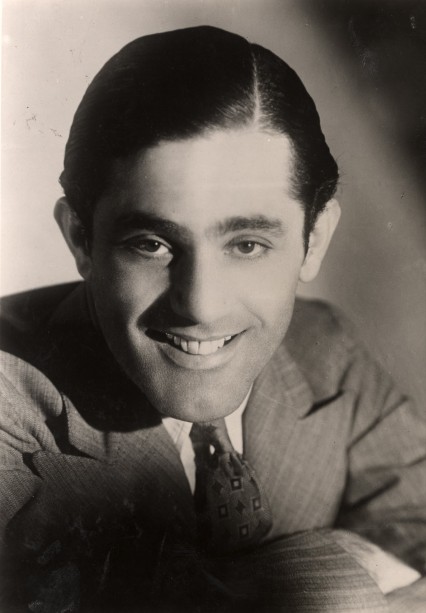
Four years after the death of Billie Carleton, a girl of roughly the same age called Freda Kempton, was found dead after an overdose of cocaine. At the inquest of the young nightclub ‘dance instructress’ the press found out that on the night of her death she had been with a notorious drug dealer called, rather brilliantly, Billy ‘Brilliant’ Chang at his Regent Street restaurant. He told the Coroner at her inquest “Freda was a friend of mine but I know nothing about the cocaine. It is all a mystery to me”. Chang during the inquest was portrayed as a man with a magnetic attraction to white women and one newspaper wrote that after the verdict:

“Some of the girls rushed to Chang, patted his back, and one, more daring than the rest, fondled the Chinaman’s black, smooth hair and passed her fingers slowly through it.”

According to the coroner there was no proof that he was linked to the death but the police, and the press, were convinced that he was. By now Chang had sold his restaurant  in Regent Street and opened the Palm Court Club in Gerrard Street. There’s a strong possibility that Chang was the first Chinese man to open a business in the street which was to become the centre of the new Chinatown in London forty or so years later.

Billy 'Brilliant' Chang

Billy 'Brilliant' Chang during the inquest of Freda Kempton

Limehouse Causeway in 1924

Limehouse Causeway, the location of Brilliant Chang's flat in 1924

Due to continuous police raids Chang sold up again and moved to Limehouse where he opened the Shanghai Restaurant. His flat was at 13 Limehouse Causeway (coincidentally just four doors away from where Mr and Mrs Lau Ping You lived) below a top floor let to two Chinese sailors and it was here in 1924 when his luck finally ran out.

The police had already twice raided his Limehouse flat and although they found no drugs on one occasion they found two chorus girls in his bed. On the third attempt however, and armed with evidence from a drug addicted actress called Violet Payne, they found a wrap of cocaine behind a loose wooden board and they arrested the man who may have been controlling 40 per cent of the London cocaine trade.

During the trial, the press, again pruriently slavering, had a field day. The World Pictorial News wrote:

“Sometimes one girl alone went with Chang to learn the mysteries of that intoxicatingly beautiful den of iniquity above the restaurant. At other times half-a-dozen drug-frenzied women together joined him in wild orgies.”

As well as the cocaine the police found at Chang’s home a pile of identical handwritten letters:

chang-letter

Dear Unknown -- Please do not regard this as a liberty that I write to you, as i am really unable to resist the temptation after having seen you so many times. I should extremely like to know you better, and should be glad if you would do me the honour of meeting me one evening where we could have a little dinner and a quiet chat together. I do hope you will consent to this, as it will give me great pleasure, and in any case do not be cross with me for having written to you.

Yours hopefully, Chang.

P.S. -- If you reply, please address it to me at the Shanghai Restaurant, Limehouse-Causeway, E14.

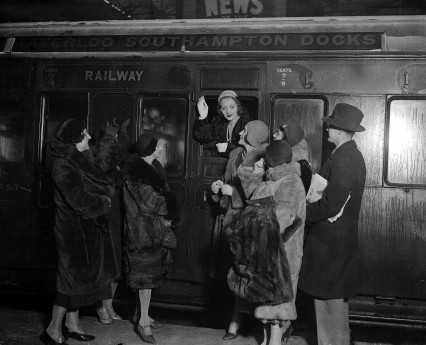
Chang was sentenced to fourteen months in prison after which he was deported. His ship left from the Royal Albert Docks and it was reported that one girl shouted out as he was leaving ‘Come back soon, Chang!’.

The local council, maybe because of the’Yellow Peril’ nonsense exaggerated by the wild press reports, lurid novels and films, started to clear the slums in the Limehouse area. This started to break up the original London Chinatown and a few years later the Second World War practically finished the job as the area was razed to the ground by the wartime bombing.

children-in-chinatown

pouring-tea-in-chinatown

The Chinatown we know today began not long after the war when a few restaurants opened in Lisle Street, the road that runs parallel to Gerrard Street where Brilliant Chang briefly ran his nightclub. The area was on the edge of Soho where foreign restaurants had long been the norm and the rents were cheap for a West End central location.

The funeral of Chong Mong Young in 1964

The funeral of Chong Mong Young in 1964

Macclesfield Street in 1972

Macclesfield Street in 1972

The number of restaurants increased mainly because of returning servicemen who had discovered a taste for food from the far East. However, when in 1951 the UK government finally recognised Mao Zedong’s communist regime, the diplomats and staff of the now defunct Chinese Nationalist Embassy suddenly had to find new jobs. A lot of them, including the famous restauranteur and cookery writer Ken Lo choose to open Cantonese restaurants in the area we now know as Chinatown.

A lot of the information and inspiration for this post comes from the really excellent book Dope Girls by Marek Kohn.

George Formby -- Chinese Laundry Blues

Django Reinhardt -- Limehouse Blues

  • Share/Save/Bookmark

The Disappearance of the Author Adam Diment

Saturday, August 1st, 2009
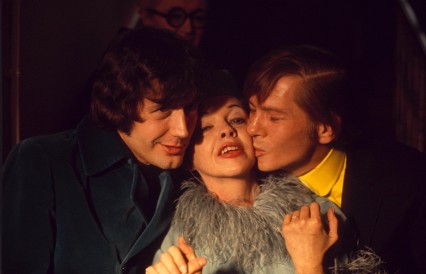
The author Adam Diment in 1967 with two lovely ladies.

The author Adam Diment in 1967 with two lovely ladies.

The October 1967 edition of Michael Heseltine’s Town magazine featured an interview with the fashionable twenty-three year old author Adam Diment. In it, he said that he was:

“hoping to move from his Fulham Road flat to trendy King’s Road, where his tight pink trousers and matching floral shirt will be more appreciated.”

In the late sixties moving a few hundred yards from one area of west London to another was like travelling to a different country. Diment knew he had enough money to make the move because after the publication of his first novel The Dolly, Dolly Spy, Diment suddenly became the most talked-about author in town. That year Publishers’ Weekly wrote about the novel:

A kinky, cool mod flare that is outrageously entertaining….If you appreciate clever plotting, plenty of excitement, sex at its most uninhibited, a dollop or two of explicit sadism, Adam Diment is a name to remember.

Except he wasn’t, and Diment is almost totally forgotten about these days. He wrote three more books – The Spying Game and The Dolly, Dolly Birds which were both published in 1968 and a fourth novel Think Inc that was published  in 1971. After which, suddenly, he completely disappeared from public view.

His four novels, although relatively entertaining, are hugely dated these days and are peppered with the era’s casual sexism and racism that occasionally make the James Bond novels appear as if they were written by Andrea Dworkin.

“Despite her lovely body it was her face which had me hooked. I do not belong to that philistine philosophy which propounds the ‘put a sack over their heads and they’re all the same’ nonsense. I like to watch something pretty and interesting when collecting my oats, and her face is certainly that. At present she was doing a languorous chameleon change from perplexed to pout.” - The Bang Bang Birds

“She was wearing her latest acquisition, bought in a boutique in King’s Road which is a cross between an Eastern bazaar and a rugger scrum. It was very short and covered with overlapping blue and yellow flowers. Over her heart, which was almost visible because it was as low at the breast as it was short at the thighs, was a bright pink heart…as she was so brown, she had given up wearing stockings. Veronica was about as naked as you can get these days without being nicked for indecency.” - The Dolly, Dolly Spy

The Bang Bang Birds published in 1968

The Bang Bang Birds published in 1968

The Dolly, Dolly Spy published in 1967

The Dolly, Dolly Spy published in 1967

The books were all thrillers featuring a reluctant spy called Philip McAlpine. The sex-hungry hero was suspiciously similar in appearance to the writer and Diment, it seems, was very happy for this blurred confusion to continue. Especially, the marijuana smoking and the preponderance of girls. Fleet Street seemed genuinely intrigued with the similarity between hero and author and Atticus in the Sunday Times wrote:

Adam Diment is 23; his hero, Philip McAlpine, is based on himself. That is to say he’s tall, good-looking, with a taste for fast cars, planes, girls and pot.

While the Daily Mirror wrote:

McAlpine is the most modern hero in years. He’s hip, he’s hard, he likes birds and, sometimes, marijuana.

Adam Diment smoking a 'hashish cigarette'.

Adam Diment smoking a 'hashish cigarette'.

More hashish with companion Suzie Mandrake in 1967

More hashish with companion Suzie Mandrake in 1967

Adam with the artist Tim Whidborne, Anne McAuley and Victoria Brooke. 1967

Adam with the artist Tim Whidborne, Anne McAuley and Victoria Brooke. 1967

Adam with Tim Whidbourne and a modelling Suzie Mandrake

Adam "I've got my eyes closed I promise" Diment with Tim Whidbourne presumably pretending to paint Suzie Mandrake.

On the inside cover of my copy of The Bang Bang Birds it says that “At present THE DOLLY DOLLY SPY is being filmed with David Hemmings as Philip McAlpine. A Stanley Canter/Desmond Elliott production for release by United Artists”. It’s worth noting that David Hemmings was at the height of his career at this stage – the premier of Blow Up was in October 1967 and both The Charge of the Light Brigade and Barberella were released in 1968.

However the film came to nothing. Whether filming ever took place or was halted half way through nobody seems to know. Although there are pictures of Adam seen with David Hemmings and one of the producers Desmond Elliott.

Adam with David Hemmings in 1967.

Adam with David Hemmings in 1967.

Adam with Desmond Elliott and Suzie Mandrake.

Adam with Desmond Elliott and Suzie Mandrake.

Adam Diment published his final novel Think Inc in 1971 and then he  completely disappeared from public view. I just can’t seem to find any information about him at all after this date. Except for one thing. Last year a few documents relating to Adam Diment (F.A. Diment) were released by the National Archives and amongst them were two anonymous letters written in March 1969 to the department of Exchange Control of the Bank of England.

Both the letters seemed to accuse Adam Diment of some kind of currency swindle involving the export of 2400 dollars which had been paid by the film producer Stanley Canter and one letter even mentions that there were suspicions that it may have been some kind of drug-deal.

anon-letter-one

anon-letter-two

Whether the currency swindle was anything to do with the non-completion of the film  of The Dolly Dolly Spy or was the cause of Diment’s disappearance, there seems to be no clue. However one of the letters imparts the important piece of information that Adam Diment, despite telling Town magazine otherwise, never seemed to have made the move to The King’s Road as he was still living in the tight-pink-trousers-fearing Fulham at 28 Tregunter Road.

Adam with Victoria Brooke and a Tiger Moth

Adam with Victoria Brooke and a Tiger Moth

full-cover-of-the-bang-bang-birds

Ray Charles – Let’s Go Get Stoned

Muddy Waters – Champagne and Reefer

  • Share/Save/Bookmark

Caxton Hall in Westminster and the marriage of Diana Dors to Dennis Hamilton

Tuesday, June 30th, 2009
The marriage of Diana Dors to Dennis Hamilton at Caxton Hall, July 1951

A very happy looking Diana Dors with Dennis Hamilton at Caxton Hall, July 1951

Diana Dors, the so-called English Marilyn Monroe, is almost forgotten about these days, especially by anyone under thirty. Perhaps it’s not that unsurprising as it’s now over 25 years ago since she died. However for most of her life, in one way or another, the Swindon-born actress whose real name was Diana Fluck, was easily one of Britain’s biggest stars.

She married her first husband, Dennis Hamilton, at 4.pm 3rd July 1951 at Caxton Hall registry office in Westminster. She was just nineteen.

Her parents, not over-enamoured with the proposed union, decided not to come, and Diana, who was still under the legal age of 21, had to forge their signatures on the form that gave permission for their daughter to be married.

diana-and-dennis-marriage-3rd-may-51

after-the-wedding-dd-and-dh-kissing

Caxton Hall, 10 Caxton Street today

Caxton Hall, 10 Caxton Street today

Caxton Hall, now a redeveloped apartment and office block, wasn’t just a registry office favoured by celebrities, it was also the location for some fascinating political events in its time. The first meeting of the Suffragettes in 1906 was at Caxton Hall and it was often used for their rallies due to its close proximity to the Houses of Parliament and no doubt plenty of railings. Caxton Hall is now a listed building because of its Suffragette associations.

A fearsome looking bunch of Suffragettes at Caxton Hall in 1908

A fearsome looking bunch of Suffragettes at Caxton Hall in 1908

Caxton Hall was also the scene of the assassination of Michael O’Dwyer by Udham Singh on March 13 1940. Tipperary-born O’Dwyer had been the Lieutenant Governor of the Punjab at the time of the infamous Amritsar massacre of 1919. Brigadier General O’Dyer, with O’Dwyer’s full connivance, ordered soldiers to open fire on a crowd of 20,000 Indian Independence supporters.

It was said  that over 1,500 rounds of ammunition were used in just 15 seconds. The obvious result of which meant hundreds of protesters died in cold blood.  Unfortunately for O’Dwyer, one of the victims was Udham Singh’s brother.

The day after the massacre the Brigadier received a telegram from Governor O’Dwyer which said:

“Your action correct. Lieutenant Governor approves.”

I wonder if the saying “revenge is a dish best served cold” exists in the Sikh language. It probably does, because over twenty years after the massacre, Singh pulled out a Smith and Wesson revolver at a meeting in Caxton Hall and fired six shots, two of which hit the former Punjab Governor, killing him instantly.

Udham Singh leaving Caxton Hall after his arrest, March 14th 1940

Udham Singh leaving Caxton Hall after his arrest, March 14th 1940

At his trial, Singh, not overly contrite, explained to the judge:

“I did it because I had a grudge against him, he deserved it.”

Truthful it may have been, but unsurprisingly his statement didn’t particularly help his cause, and on 31st July 1940 Udham Singh was hanged at Pentonville Prison. Maybe sooner than he would have expected, India gained independence seven years later.

As I mentioned earlier, Caxton Hall was the location for many a celebrity wedding during the fifties, sixties and seventies…

Elizabeth Taylor and Michael Wilding in 1952

19 year old Elizabeth Taylor and Michael Wilding in 1952

Peter Sellers and Anne Howe, 15th September 1951

Peter Sellers and Anne Howe, 15th September 1951

Billy Butlin marrying his late wife's sister in 1959.

Billy Butlin marrying his late wife's sister in 1959.

Wendy Richards marrying the business man Leonard Black in 1972

Wendy Richards marrying the business man Leonard Black in 1972

Roger Moore and Luisa Mattioli in 1969

Roger Moore after marrying his third wife Luisa Mattioli in 1969

Robin Nedwell and Jenny Handley in 1973.

An extraordinarily and unbelievably lucky Robin Nedwell marrying an extraordinarily and unbelievably beautiful Jenny Handley in 1973.

Elizabeth Taylor back at Caxton Hall for the marriage of her son Michael Wilding jnr. in 1971

Elizabeth Taylor back at Caxton Hall for the marriage of her son Michael Wilding jnr. in 1971. He seems to be some kind of goth before goths were invented.

Back again. Peter Sellers leaving Caxton Hall with his third wife Miranda Quarry in 1970

Back again. Peter Sellers, looking disgustingly happy with himself, leaving Caxton Hall with his third wife Miranda Quarry in 1970.

Orson Welles marrying his third wife Paula Mori in 1955

Orson Welles marrying his third wife Paula Mori in 1955

The Caxton Hall wedding between Diana Dors and Dennis Hamilton wasn’t the smoothest of affairs. Before the ceremony the couple had posed for pictures outside (Hamilton had tipped off the press) but eventually the registrar tapped Hamilton on the shoulder and asked for a quiet word. The official discretely told him that he had received an anonymous phone call with the information that the marriage application had been forged.

Hamilton, furious, grabbed the registrar by the throat and shouted:

“You’ll marry us, all right, or I’ll knock your fucking teeth down your throat.”

The registrar decided to accidentally forget about the phone call and in the end officiated over the ceremony. Diana hadn’t seen the bullying side of Hamilton before but was now quietly impressed with his, what to her, seemed a rather exciting criminal glamour.

diana-and-dennis-with-pipe

They had met just five weeks previously after Dennis had chatted Diana up when asking her for a light. She was instantly charmed. Although Diana already had a boyfriend, a man of dubious morals named Michael Caborn-Waterfield, Hamilton sent her flowers almost daily. Unfortunately, Michael went to prison for a fortnight after one too many shady business deals and Dennis pounced. He proposed to Diana at the end of June 1951 and they became Mr and Mrs Hamilton just four days later.

Dors was in the middle of working on a film called Godiva Rides Again so there was no honeymoon after the wedding, just a meal in Olivelli’s in Store Street. The guests all paid for their own meals.

Lady Godiva Rides Again 1951

Lady Godiva Rides Again 1951

Diamond City, 1949

Diamond City, 1949

A Monroe-esque picture from 1950. Five years before the famous Marilyn Monroe picture.

A Monroe-esque picture from 1950. Five years before the famous Marilyn Monroe picture.

Diana in Folkestone the same month she married Dennis Hamilton

Diana in Folkestone the same month she married Dennis Hamilton

By the time of her wedding she had already been a contract girl for J Arthur Rank for five years and had made some fifteen films including a role in David Lean’s Oliver Twist.

She was certainly not untalented but had always struggled to find real noteworthy roles and a rather turbulent private life certainly didn’t help her cause. She had been renting a small flat off the Kings Road from 1949 for six guineas a week but was eventually thrown out after complaints from the neighbours for the endless parties, late nights and loud music. The nights must have been very late and the music very loud because she wrote in her first autobiography in 1960:

“I didn’t realise it but the cute flat was slap dab in the middle of one of the worst areas I could have established myself in, for Chelsea in those days, just after the war, was much wilder than it is today.”

In 1950, while seeing Caborn-Waterfield, she also had a traumatic illegal abortion, performed on a kitchen table in Battersea, for ten quid.

The ‘interesting’ private life didn’t disappear now that she was married to Hamilton. Not long after their wedding he introduced her to, what were basically, sex parties.

Dors and Hamilton in Cannes,1956

Dors and Hamilton in Cannes,1956

Just a few months after Diana and Dennis’s wedding, Bob Monkhouse, then a 24 year old up-and-coming script writer, was invited to one of their parties. The lights were very low when he got there with almost the only lumination coming from a 16mm projector showing hard core porn (stag films or blue movies as they were known then) and there was a faint smell of Amyl Nitrate in the air.

Monkhouse was quickly invited to bed by a very attractive and comely young dancer. It was a little too quickly and he soon realised that something wasn’t quite right. After his eyes adjusted to the darkness he saw that there was a false mirror on the ceiling and the other party guests were watching behind it. Furious, he stormed out of the room, with the ‘dancer’ shouting, “I think he’s a homo”. He was met by Dors in the hallway who said:

“Some people absolutely adore putting on a show, they come back to my parties just to do that.”

Bob Monkhouse in 1954

Bob Monkhouse in 1954

The following year Monkhouse and Dors met again at a Sunday evening radio show and they had a brief affair. Diana lied that her husband was in New York to lower Monkhouse’s guard. Eventually Hamilton found out about the affair and threatened Monkhouse with a cut-throat razor screaming at his face:

“I’m going to slit your eyeballs!”

Monkhouse only escaped by kneeing Hamilton in the groin and running away, but he once wrote that he had spent the next six years continually looking over his shoulder. He only had to worry for six years because in 1959 Dennis Hamilton suddenly died. His death was initially blamed on a heart attack but the day after the funeral Dors found out that he had died of tertiary syphilis. It never came to light, despite many autobiographies, whether she had contracted the disease herself.

Diana Dors made one acclaimed film in the fifties called Yield To The Night – a movie that was loosely based on the Ruth Ellis story but it’s not entirely unfair to say that she starred in some of the worst films ever made. After an unsuccessful foray to Hollywood (a public affair with Rod Steiger and and an incident where Hamilton beat up a photographer unconcious didn’t help), her film career, despite the very early promise, never really took off.

Dors would later complain that while Marilyn Monroe was making How To Marry A Millionaire in Hollywood, she was up in Manchester making It’s A Grand Life with the alcoholic northern comedian Frank Randle. Diana Dors was always a household name but it was her television guest appearances and roles in saucy sex comedies such as The Adventures of a Taxi Driver and Swedish Wildcats, that eventually kept her in the public eye.

She became the diet guru on GMTV in 1983 – where apparently she would weigh herself with all her heavy gold jewellery so it would look like she lost weight the following week. She died of  protracted cancer the following year in 1984.

A year after Dors’ and Hamilton’s wedding back in 1952, the jazz drummer Louie Bellson (Duke Ellington called him the greatest ever) married the black Broadway star Pearl Bailey at Caxton Hall after a four day whirlwind romance. They came to London convinced that the wedding would attract less racial bias than back in New York, especially as Bellson’s father had said publicly that he “would have nothing to do with them if they go through with this”. The couple remained married until Bailey’s death in 1990.

By all accounts the wedding was a joyous affair, and if you listen to Bellson’s Caxton Hall Swing from his Skin Deep album released in 1954, I think you can tell.

Louie Bellson and Pearl Bailey outside Caxton Hall, November 1952.

Louie Bellson and Pearl Bailey outside Caxton Hall, November 1952.

.

Louie Bellson – Caxton Hall Swing

Diana Dors – Roller Coaster Blues

.

Buy Louie Bellson’s Skin Deep here

Buy Diana Dors’ Swingin’ Dors here

Buy the DVD of  Yield To The Night here

Buy the DVD of It’s A Grand Life here

  • Share/Save/Bookmark

The London Spy: A Discreet Guide to the City’s Pleasures

Tuesday, June 23rd, 2009

jane-birkin-1966

In 1966 Anthony Blond published a modern London guidebook edited by Hunter Davies * called The London Spy: A Discreet Guide To The City’s Pleasures. London was rapidly changing in those days and Blond republished an updated version in 1971. Even though it was now the seventies, and despite trying, The London Spy just couldn’t shake off its very ’swinging sixties’ feel. As a guide to the capital city the book has dated more than if Dr Johnson himself took you by the hand and showed you his streets of London.

The chapters about meeting the opposite sex come over as ridiculously old-fashioned and it’s worth noting that the chapter with tips for men is over sixteen pages long, whereas the chapter advising women (on how to meet a man in the capital), lasts just over one page. The main advice from which, essentially, is to remind women to avoid pubs if  they are alone, saying;

“You may be thirsty, but nobody, nobody will believe you.”

The last advice it gives to women is:

“Finally, don’t lie down in one of the parks in your bikini. Men will swarm like flies at the merest glimpse of your delicious body.”

The author even suggests that he has known men with children to send a child over to a sunbathing woman and get them to say:

“Daddy says, he is sure you would like an ice-cream.”

Office girls in St James' Park in the early seventies

Office girls in St James' Park in the early seventies

I have now, believe it or not, covered the entire chapter for female readers, so I will now offer some excerpts from the chapter aimed at men, which is entitled;

Women for Men, 1: Pulling

So here is a chapter of practical counsel on how and where to make the acquaintance of willing young ladies – a useful art henceforth referred to as ‘pulling birds’.

1) PULLING BY DAY

The traditional place to get your eye in is down the King’s Road. Arm yourself with a pint or a Pimms or a Pernod and position yourself on the pavement outside the Chelsea Potter or the Markham Arms.

You know what you’re there for; they know what you’re there for. King’s Road birds are used to being accosted every 30 yards they walk. So, if a tasty one sails past you and she is still alone, you’re backing yourself to succeed where up to 15 other fellows have already failed that morning.

Boutique shopping on the Kings Road

Boutique shopping on the Kings Road

twiggy-on-the-kings-road1

jenny-dingeman-in-fleet-street

Not that all King’s Road birds are groupies (girls passed around like a joint between members of a pop group). But they are wary. So have a few shapes by all means to get your chat flowing. But don’t be discouraged if you draw only blanks.

Now let the pulling proper begin, and, if you are still intent on sniffing a swinger catch a cab up to Kensington High Street. Here’s where the dolly birds shop.

In the old Biba’s, a gentleman, feigning short-sightedness or absent-mindedness or both, could wander downstairs and through a plush curtain. Bang into a huge roomful of up to 100 darlings, most only in tights and chattering like monkeys, as they tried on the gear. Regretfully the writer cannot personally endorse the new Biba in this respect, as he is barred.

A woman changing at Biba, note the two look outs watching for the author of The London Spy

A woman changing at Biba, note the two look outs watching out for the author of The London Spy

How to pull in Kensington High Street? There are as many well tried appraoches as there are for the act itself. Of course purely in the interests of the standards of the game you will do well to try to be slightly original. Invitations for a coffee ten to be reather dreary. ‘Haven’t I seen you dancing on Top of the Pops?’ is a stopper. ‘Can I do your washing for three weeks?’ had its vogue a while back.

The only grotty cliche which never dates (feminine vanity being what it is) is the ‘I’m a photographer…’ ploy. And a golden rule is. if she’s carrying anything (a hold-all, a Biba’s bag), take it from her firmly and continue walking in the direction she wwas heading. So she has got to tag along and listen to you unless she’s willing to resort to an actual scene, which would be uncool.

Don’t just snatch in the streets. Put yourself about in the shops, where the shopbirds have to stand around all day and get bored. They welcome a bit of action. So if you see one even vaguely showing out, interview her on the merchandise and follow up with your pitch. Specially recommended stores include Fenwicks, Bond Street, Simpsons, Piccadilly and Peter Robinsons, the Strand (remember a bird in the Strand is worth two in Shepherd’s Bush).

Carnaby Street 1967

Carnaby Street 1967

girl-outside-lord-john-carnaby-st-july-67

high-street-shoppers1

rosie-and-susie-young-1966

As for the offices, be sure to visit J. Walter Thomson in Berkeley Square. This American-owned advertising agency is famous for recruiting spectacular birds, presumably to keep the clients calling. March purposefully into the main entrance and wander around with a brief case. Here’s where you will find the account executives’ secretaries. They are awfully keen if they think you are important.

A chair with matching secretary. How on earth did that go out of fashion?

A chair with matching secretary. How on earth did that go out of fashion?

If you have a fancy for Miss J. Hunter-Dunn and have the necessary gear and talents, get up to Campden Hill Tennis Club, Aubrey Walk, W8. Before 18.00 hrs. there are loads of birds and very few fellows. And they are friendly if they think you are the right sort – particularly the tasty mums. Or if the sun is shining proceed to the Serpentine Lido. Again its great for mums.

Cooling down in the Serpentine, 1969

Cooling down in the Serpentine, 1969

2. PULLING BY NIGHT

Once a chap has mastered the arts of pulling by day, when a certain amount of front is needed even in swinging London, he’ll be able to pull at night with his eyes shut.

First there are the DISCOTHEQUES. You’ll find them all over the West End and in clusters in Earls Court, Swiss Cottage, South Kensington and Streatham. Young Ladies go to all these places with their mates in twos and threes and fours and fives and will deem it an unsatisfactory evening if they leave with their mates.

Where you will very definitely can pull are less way out scenes like Lulu’s, Young Street, W8 (nurses and secretaries), Die Fledermaus, Carlisle Street, W1 (Au Pairs), La Cage d’Or, Broadhurst Gardens, NW3 (Golders Green teenyboppers) and the 007 Room at the Hilton (hairdressers).

the-speakeasy-1967

girl-in-disco

"Hello...you really are on my list of things to do tonight."

"Hello!..you remind of an aspirin...I'd like to take you every four or five hours."

"I must say, you remind me of an aspirin...I'd like to take you every four or five hours."

But before the discos were the DANCE HALLS. Great British institutions where males and females go roughly in even numbers. Which are full every night of the week. In this respect we British don’t appreciate how lucky we have been – and still are.

The greatest of them all, where every puller worthy of the name has been and seen and conquered – the Hammersmith Palais. that brilliant pasticcio of neon, tinsel and plush. Evocative scents of hair lacquer, gin and Bodymist. And close on teh Palais’ patent leather heels – the Lyceum in the Strand. The Royal, Tottenham High Road, N17. The Orchid Ballroom, Purley. For the veteran puller, the magic of these names. And how bitter sweet the names gone by. The Locarno Ballroom, Streatham. The Atheneum, Muswell Hill.

The overseas puller in particular is exhorted to visit a real British dance hall. You’ll see darling birds in plenty (be careful about schoolgirls through – in their dolly rocker dresses it’s very hard to tell).

Hammersmith Palais in 1971

Hammersmith Palais in 1971

Pulling by night, part two, concerns the PUBS. Much cheaper than the discotheques, obviously, and even cheaper than the dance halls. Because all you need to work yourself into a striking position is a half pint of bitter in your hand.

Pubs are particularly good places for pulling middle class birds. Probably because these particular young ladies come from a back ground of scrimping and scaping on pleasures and comforts to pay for school fees. So they are perfectly happy to tag along on a date that costs the price of a few half pints of bitter. Yes, they’ll even drink beer too!

Notable pubs offering the above facilities include the Windsor Castle, Camden Hill Road, W.8, The Sun in Barnes, The Dove in Hammersmith, the Harrington Hotel, Gloucester Road, SW7. Pullers interested in the arty, purple-toenailed variety are advised to visit Henekeys (now the Earl of Lonsdale), Westbourne Grove, W11 and Finch’s and Queen’s Elm both in Fulham Road, SW10.

girls-in-pub-playing-pool-1966

"Does yours keep offering you a half pint of Watney's Red Barrel? "

PULLING FOREIGN BIRDS

Where else in the world could a sportsman sniff out a darling from Dallas, a teenybopper from Tokyo, a raver from Rotterdam and a wobbly one from Woggawogga – all in one afternoon?

The interesting feature of recent years has been the upwards progress of North Americans to a position comfortably above the line. It appears that the old ‘hands-off’ line, ‘American boys like their goods freshly wrapped’ is no longer a totally inhibiting consideration.  Nevertheless international golden rules should be borne in mind irrespective of race or creed. In particular remember,

‘you’ll never score with a schoolteacher, but always with a nurse.’

French tourist at Trafalgar Square

French tourist at Trafalgar Square

diahann-carroll-at-trafalgar-square

Swedish tourist at Biba in Kensington. Patently unaware that she's only encouraging the London Spy author.

Swedish tourist at Biba in Kensington. She's patently unaware that she's only encouraging the London Spy author. Barred or not.

"Don't tell anyone, but sometimes I wish I was a teacher."

"Don't tell anyone, but sometimes I wish I was a teacher."

There used to be a specialised scene for sniffing out Aussies – the Overseas Visitors’ Club in the Earls Court Road. Regretfully this now appears defunct. But you’ll find them quite easily in pubs in the Earls Court and Notting Hill areas. Look out for strapping big birds swilling pints and shaking with laughter. These are Aussies. Many of them are highly tasty. In the Surrey, Surrey Street, WC2…you’ll find not only birds but Fosters Lager too. What more could any man ask?

The Overseas Visitors Club in Earls Court

The Overseas Visitors Club in Earls Court

Au Pairs are pulled in discotheques designed for the purpose, which advertise ‘continental ambiance’ or sometimes even ’stim-mung’. Above all remember the golden  au pair rule – find where she’s living first. Many’s the unwary puller who’s found himself driving through the night to locations verging on the outlandish. Forest Hill. Watford and Camberley to name but three.

Well, there it is, puller. You’ve been reading long enough. Now stiffen your sinews, lick your lips, adjust your dress and go out and get ‘em.

The London Spy - A Discreet Guide To The City's Pleasures

The London Spy - A Discreet Guide To The City's Pleasures

If you need to brush on your pulling techniques or perhaps need to learn how to protect yourself, second hand copies of THE LONDON SPY can be bought here

Hunter Davies the original editor of The London Spy went on to write one of the greatest books ever. You can buy The Glory Game here.

The O’Kaysions – Girl Watcher

Frankie Valli and the Four Seasons – I Can’t Take My Eyes Of You

Frank Sinatra – What A Funny Girl You Used To Be

Moments and Whatnauts – Girls

  • Share/Save/Bookmark