
Posts Tagged ‘trial’

Marie Lloyd, Dr Crippen and the Bedford Music Hall in Camden

Friday, August 14th, 2009
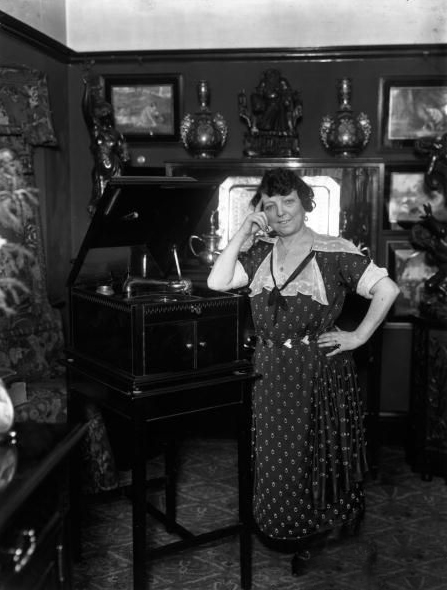
Marie Lloyd at home in 1921, a year before she died.

Marie Lloyd at home in 1921, a year before she died.

There is a strange, but rather brilliant documentary, directed in 1967 by Norman Cohen, called The London Nobody Knows, the beginning of which features a slightly incongruous James Mason, in very smart polished shoes, gingerly stepping over the literally putrefying remains of an old music hall theatre.

The building was the Bedford Music Hall on Camden High Street and it was said to be Marie Lloyd’s favourite place to perform. Unfortunately the theatre closed permanently in 1959 and the sad, rotting building was eventually demolished ten years later. Two years after nearly ruining James Mason’s brogues.

Excerpt from The London That Nobody Knows

At one point in the film James Mason mentions, with a wry smile on his face, that an early regular performer at the Music Hall may well have still been haunting the place -- a local singer called Belle Elmore.

Elmore’s stage career was relatively unsuccessful and her name is unknown to most of us today, especially as a Music Hall artiste. However, after her death in 1910 she achieved notoriety throughout the land, not as a singer, but as the murdered wife of the infamous Dr Hawley Harvey Crippen.
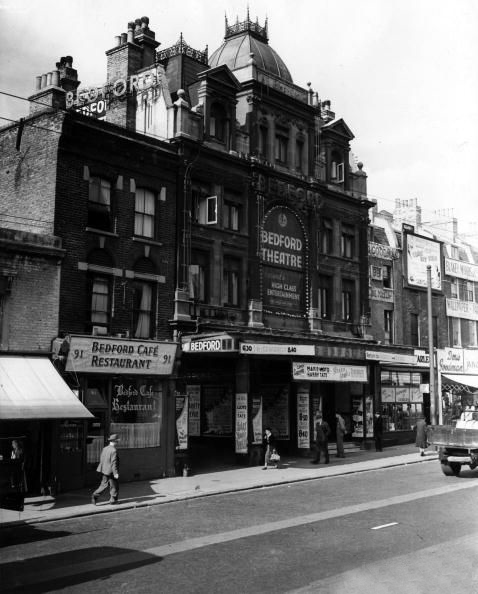
The Bedford Theatre in 1949
The Bedford Theatre in 1949

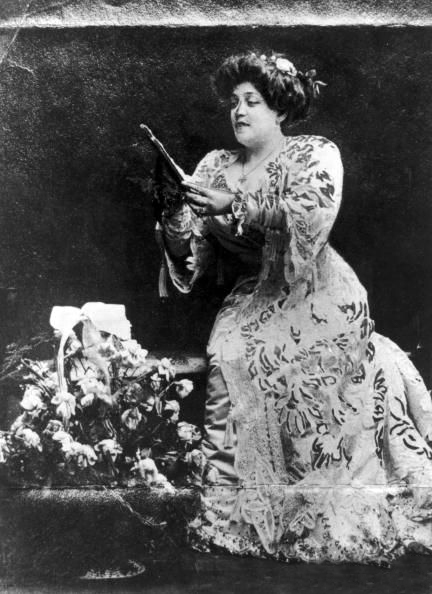
Belle Elmore in 1900, ten years before she was murdered by her husband.
Belle Elmore in 1900, ten years before she was murdered by her husband.

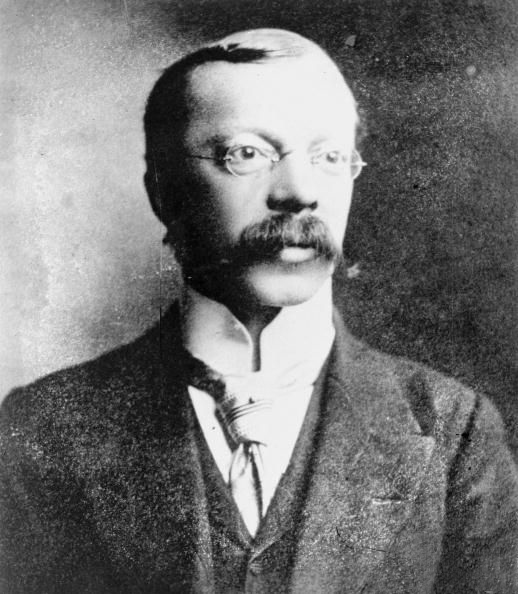
Dr Crippen

Dr Crippen

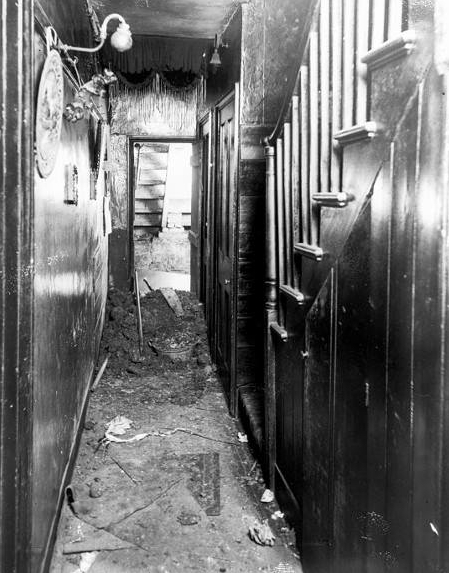
Before the infamous Doctor had murdered Elmore and subsequently burnt her bones in the oven, dissolved her internal organs in an acid bath, buried what was left of the torso under bricks in the basement and placed her decapitated head in a handbag which was subsequently thrown overboard on a day-trip to Dieppe, the married couple lived at 39 Hilldrop Crescent. It was quite a salubrious address about a mile from the Bedford Music Hall.
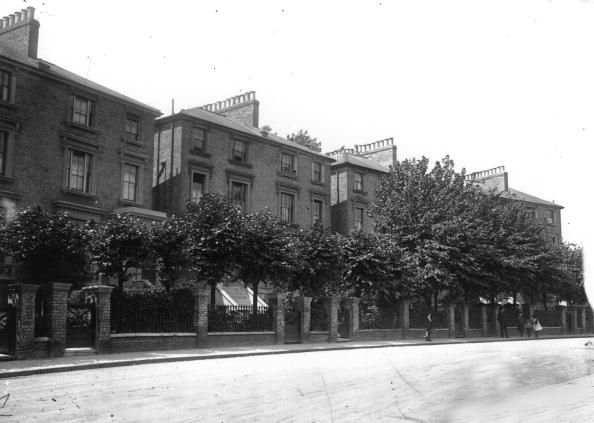
Hilldrop Crescent near Holloway in 1910

Hilldrop Crescent near Holloway in 1910

Dr Crippen is notorious, of course, for being the first murderer to be arrested with the use of telephony when, during an attempted escape to Canada on the SS Montrose with his young lover Ethel Le Neve, Captain Henry George Kendall sent a telegraph back to England saying:

Have strong suspicions that Crippen London cellar murderer and accomplice are among saloon passengers. Moustache taken off growing beard. Accomplice dressed as boy. Manner and build undoubtedly a girl.

Chief Inspector Dew, who had already once interviewed Crippen and initially decided that he was innocent, took the faster White Line steamer -- the SS Laurentic -- to Canada. On the 31 July 1910 the Inspector greeted the couple when they met him on the ship:

Good morning, Dr Crippen. Do you know me? I’m Chief Inspector Dew from Scotland Yard.

After a pause, Crippen replied,

Thank God it’s over. The suspense has been too great. I couldn’t stand it any longer.

Crippen then held out his arms for his handcuffs. Dew later recalled:

Old Crippen took it quite well. He always was a bit of a philosopher, though he could not have helped being astounded to see me on board the boat. He was quite a likeable chap in his way.
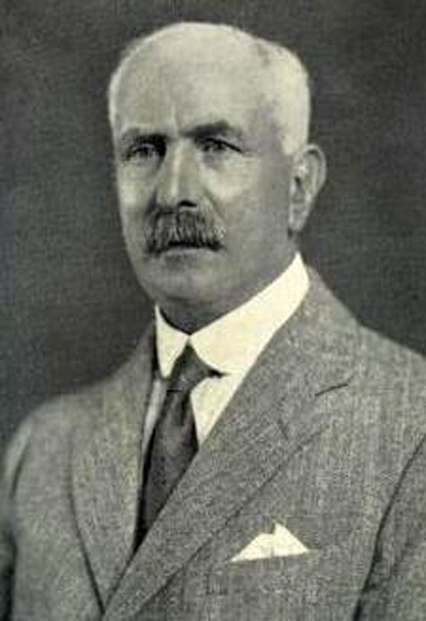
Chief Inspector Walter Dew
Chief Inspector Walter Dew

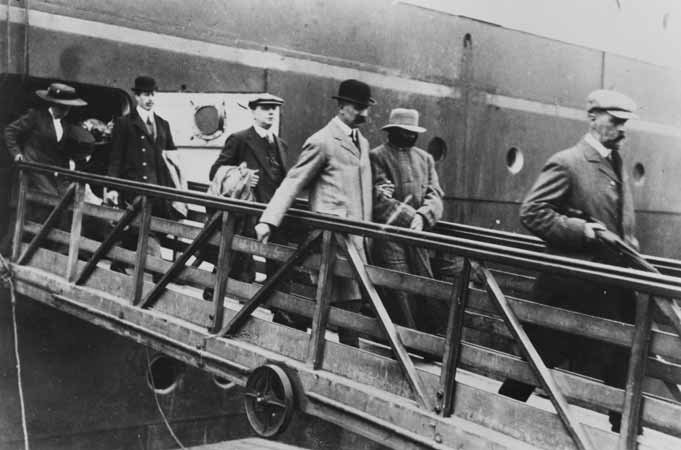
Dr Crippen being led off the SS Montrose, seemingly by one of the Thompson twins but more likely by Chief Inspector Dew
Dr Crippen being led off the SS Montrose, seemingly by one of the Thompson twins but more likely by Chief Inspector Dew

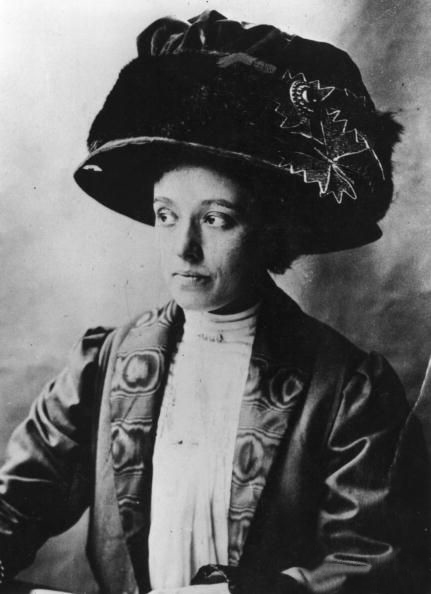
Ethel Le Neve circa 1910
Ethel Le Neve circa 1910

The final resting place of a bit of Belle Elmore
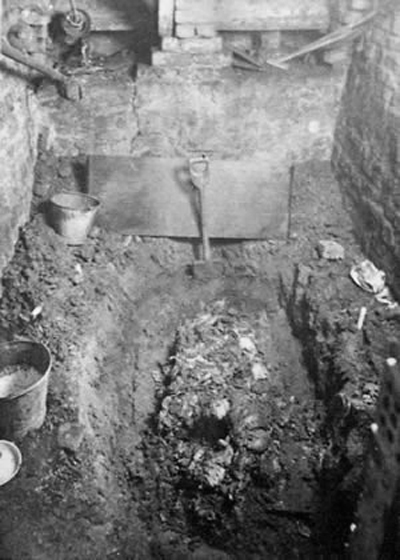
The final resting place of a bit of Belle Elmore

The Hallway at 39 Hilldrop Crescent

The Hallway at 39 Hilldrop Crescent

Crippen and Ethel Le Neve were tried separately by the Central Criminal Court at the Old Bailey and Crippen, likeable philosopher or not, was found guilty after just 27 minutes by the jury and subsequently hanged at Pentonville prison in November 1910. Ethel Le Neve, however, was acquitted and only died in 1967 -- not long after James Mason was filmed exploring what was left of the Bedford Music Hall.
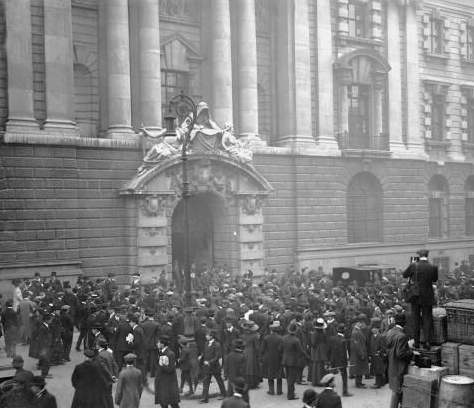
The Old Bailey during the trial of Dr Crippen August 10th 1910

The Old Bailey during the trial of Dr Crippen August 10th 1910

James Mason in his piece about the old theatre in Camden failed to relate that only nine years after Marie Lloyd’s fiftieth birthday celebrations (which were incidentally held at the Bedford), and seven years after her death in 1922, the comic-actor Peter Sellers actually lived at the Bedford with his mother and grandmother in a rented flat above the entrance in Camden High Street.

Sellers’ mother was performing at the Bedford in a production called ‘Ha!Ha!!Ha!!!’ along with his father. When the revue finished, Peter’s father Bill suddenly decided to leave home forever, leaving Peter, his mother, and grandmother to totally fend for themselves while still living upstairs at the theatre. Sellers may well have been still living in the flat above the Bedford when he performed, at the age of five, with his mother in a revue called Splash Me! at the Windmill theatre in Great Windmill Street.

The Bedford Theatre’s fortunes eventually declined and, like many other theatres and converted cinemas in London, it eventually capitulated to its unavoidable fate when it fell dark completely in 1959.
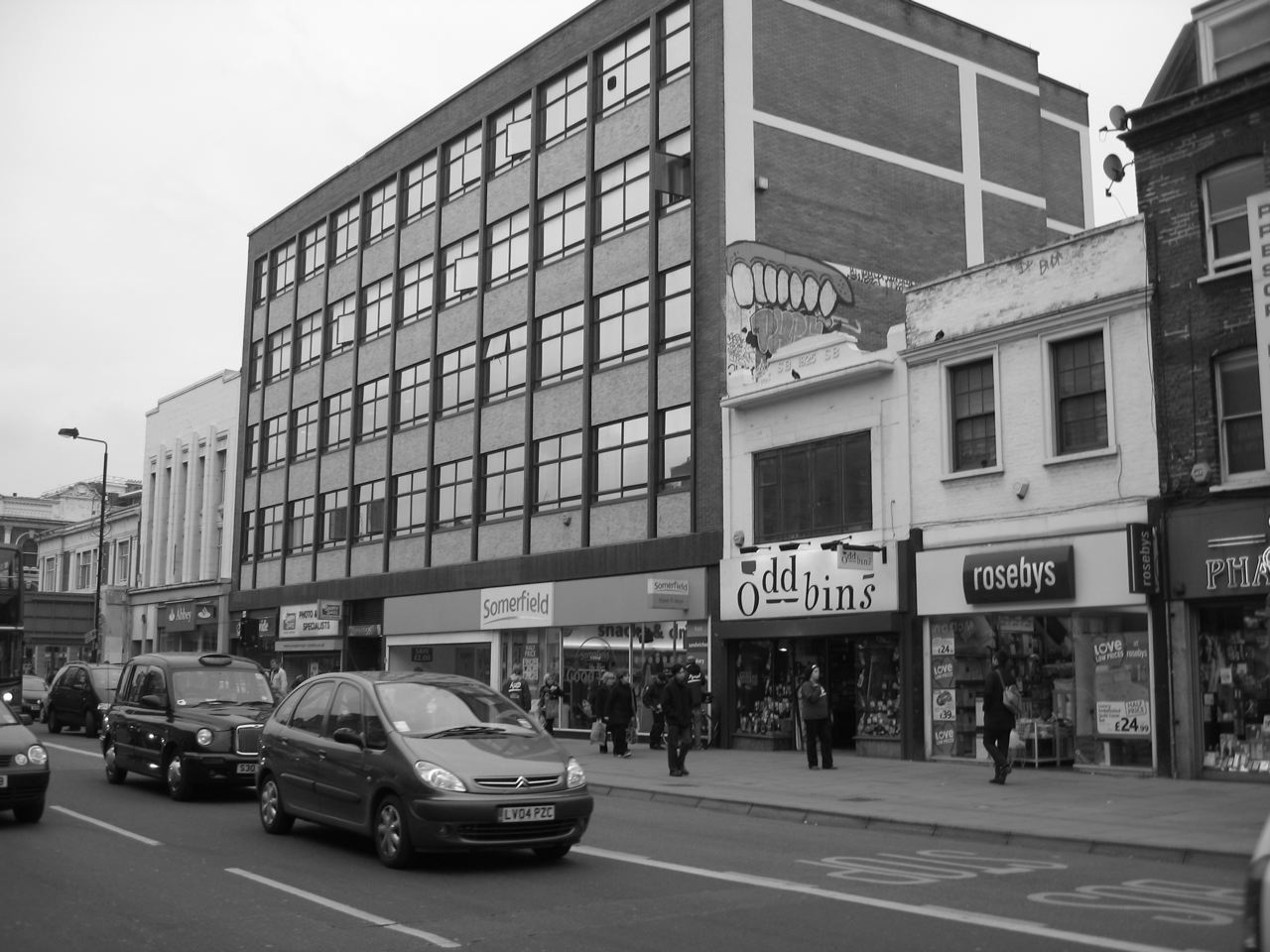
Bedford House on Camden High Street

Bedford House on Camden High Street in 2007

Dr Crippen’s old address, 39 Hilldrop Crescent, was spared the indignity of being demolished at the whim of a sixties Camden council planning meeting, but only because it was destroyed by a bomb in the Second World War. It was replaced, like so many other buildings, by a nondescript block of flats. Another nondescript block was built to replace the Bedford Theatre. It is still known as Bedford House though.
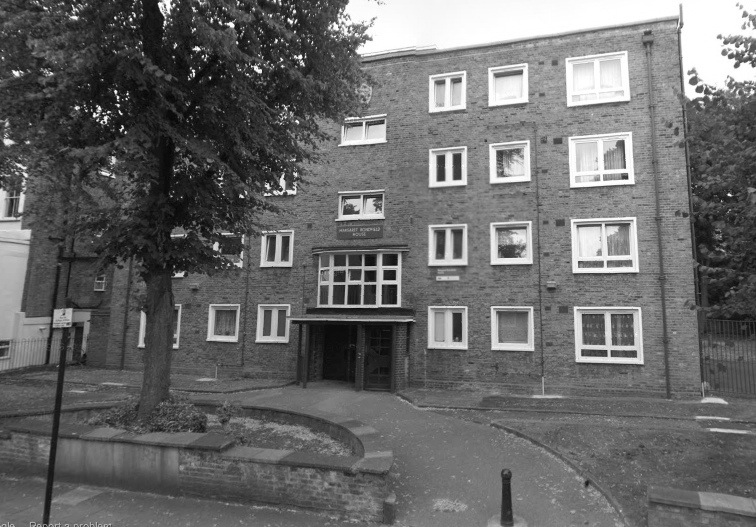
39 Hilldrop Crescent today
39 Hilldrop Crescent today

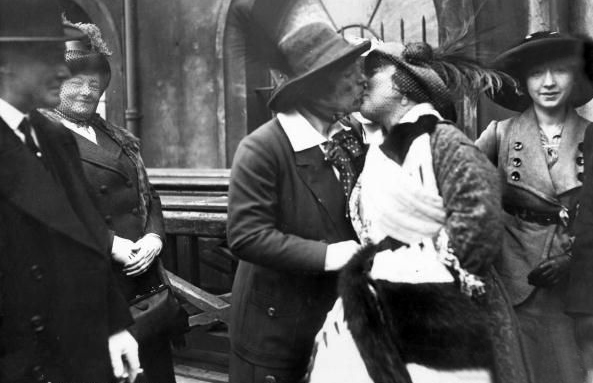
Marie Lloyd and Claire Loumaine 1913

Marie Lloyd and Claire Loumaine 1913

If Heat magazine, or perhaps Perez Hilton, had existed before the First World War they would have surely printed the picture above which features a 43 year old Marie Lloyd embracing and kissing a woman called Claire Loumaine. The photograph was taken on 25th April at Paddington Station where the music hall star had gone to meet Loumaine on her return from Australia.

Does anyone know who Claire Loumaine is? I can’t find anything about her at all.

Nine years after Marie Lloyd greeted her close friend off the train at Paddington the music hall star collapsed on stage during a rendition of one of her most famous songs I’m One of the Ruins That Cromwell Knocked About a Bit. The crowd continued laughing thinking that the staggering around that preceded the fall was all part of her act. Lloyd was desperately ill however, and died soon after on 7th October 1922. One hundred thousand people were reported to have attended her funeral five days later in Hampstead.
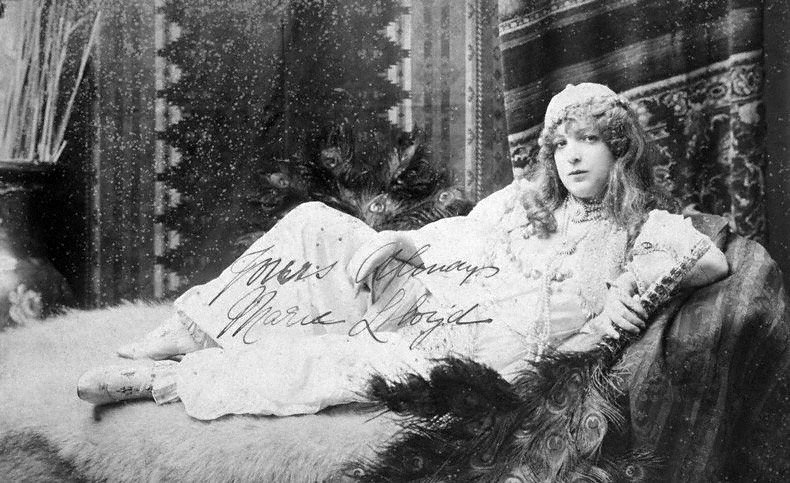
A twenty year old Marie Lloyd in 1890

A twenty year old Marie Lloyd in 1890

Marie Lloyd -- A Little Of What You Fancy Does You Good

  • Share/Save/Bookmark

The Flamingo Club in Wardour Street and the fight between Johnny Edgecombe and ‘Lucky’ Gordon

Sunday, June 7th, 2009
Georgie Fame and the Blue Flames at The Flamingo Club

Georgie Fame and the Blue Flames at The Flamingo Club

It’s not widely known but Georgie Fame was slightly connected to the Profumo affair, the political scandal that led to the resignation of John Profumo the Secretary of State for War in October 1963 and ultimately the  fall of the Conservative government, a year later, in 1964.

In 1962 Georgie Fame had started a three year residency at The Flamingo Club – famous for its weekend all-nighters where it stayed open ’til six in the morning on Friday and Saturday nights. It was situated at 33 Wardour Street, a building which also housed the Wag Club during the eighties and nineties, and is now the Irish-theme pub O’Neills.

The police outside The Flamingo in Wardour Street

The police outside The Flamingo in Wardour Street

The Flamingo Club which originally specialised in modern jazz was opened by Rik and John Gunnell in 1959. The club quickly became popular with West Indians and also black American soldiers that were still stationed in quite large numbers just outside London and who had few other places to socialise. Georgie Fame once recalled:

“there were only a handful of hip young white people that used to go to The Flamingo. When I first went there as a punter I was scared. Once I started to play there, it was no problem.”

Georgie Fame and the Blue Flames

Georgie Fame and the Blue Flames

georgie-fame-at-the-flamingo

Fame, who was born Clive Powell but was instructed to change his name as part of Larry Parnes’ stable (he was originally Billy Fury’s pianist), often employed black musicians, one of which was the strikingly named ‘Psycho’ Gordon – a Jamaican who come to the UK in the late 1940s.

Psycho Gordon often brought to The Flamingo Club his brother ‘Lucky Gordon’ a part-time jazz singer and drug dealer. Lucky had also been a boyfriend of  the infamous Christine Keeler and it was at one of the hot and sweaty ‘all-nighter’ Flamingo sessions in October 1962 when Gordon bumped into another of Keeler’s black lovers – Johnny Edgecombe.

Gordon and Edgecombe started arguing and it soon developed into a vicious knife fight. The fracas ended with Edgecombe badly slicing the face of, this time a rather unlucky, ‘Lucky’ Gordon. No one knew, least of all the two protagonists, but the fight started a slow-burning fuse that eventually caused the explosion that became the most infamous political scandal of the twentieth century.

Aloysius 'Lucky' Gordon the sometime lover of Christine Keeler

Aloysius 'Lucky' Gordon the sometime lover of Christine Keeler

Gordon was treated for his wound at a local hospital but a few days later in a fit of jealousy, and rather unpleasantly, he posted the seventeen used stitches to Keeler and warned her that for each stitch he had sent she would also get two on her face in return.

Meanwhile a scared Edgecombe, along with Keeler, went into hiding from the police. Keeler even bought a Luger pistol in a bid to protect herself from the dangerous and still threatening Gordon.

On December 14th 1962 Keeler finished with Edgecombe, after finding him with another lover, saying that she would testify that it was he who had attacked Lucky Gordon at The Flamingo two months previously.

Keeler went to visit her friend Mandy Rice-Davies at Stephen Ward’s flat in Wimpole Mews with Johnny Edgecombe following her there in a taxi. When Keeler refused to speak to him he angrily shot seven bullets at the door of the flat. Frightened, the girls called Ward at his surgery and he in turn called the police who soon came and arrested Edgecombe.

Johnny Edgecombe

Lucky Gordon and Johnny Edgecombe

Before Edgecombe’s trial, Keeler was whisked off to Spain, one assumes because somebody, somewhere, thought various people would be badly compromised if she was allowed to talk in the witness box. Conspicuous by Keeler’s absence Edgecombe was found not guilty, both for assaulting Lucky Gordon and the attempted murder of Keeler. He was, however, found guilty of possession of an illegal firearm, for which he got seven years and served five.

Christine Keeler in Spain

Christine Keeler in Spain

keeler-sunbathing-in-spain

On April 1st 1963 Christine was fined for her non-appearance at court and Lucky Gordon was bundled away by the Metropolitan police, shouting “I love that girl!” Not long after Keeler bumped into Gordon back at The Flamingo Club and again he had to be dragged away from her by other West Indian friends of hers.

The police struggling with Lucky Gordon 1st April 1963

The police struggling with Lucky Gordon 1st April 1963

In June 1963 Gordon was given a three year prison sentence for supposedly assaulting Keeler and in the same month Stephen Ward was arrested for living off Christine’s immoral earnings.

By now the whole story involving Profumo and the Russian attache/spy Ivananov was emerging, drip by drip. The chain of events that started with the fight of Keeler’s jealous ex-lovers at The Flamingo Club eventually caused the infamous resignation of the Secretary of State for War John Profumo, the suicide of high society’s favourite pimp, portrait painter and osteopath Stephen Ward, and ultimately, it could be said, the fall of the Conservative government.

Christine Keeler outside the Old Bailey 1st April 1963

Christine Keeler outside the Old Bailey 1st April 1963

Christine Keeler with friend 25th April 1963

Christine Keeler with friend 25th April 1963

Stephen Ward unconscious after his suicide attempt. He died a few days later.

Stephen Ward unconscious after his suicide attempt. He died a few days later.

In December 1963, after a drunken tape-recorded confession that she had lied about Gordon assaulting her, Keeler pleaded guilty of perjury and conspiracy to obstruct justice at Lucky Gordon’s trial. Her barrister had pleaded to the judge before sentencing:

“Ward is dead, Profumo is disgraced. And now I know your lordship will resist the temptation to take what I might call society’s pound of flesh.”

It was to no avail and Christine Keeler was sentenced to nine months in jail which ended what her barrister termed, a little prematurely:

“the last chapter in this long saga that has been called the Keeler affair.”

Lucky Gordon after his release from prison

Lucky Gordon after his release from prison

Christine Keeler arriving at court, October 1963

Christine Keeler arriving at court, October 1963

29th October 1963

29th October 1963

Just before Christine Keeler’s trial Georgie Fame and the Blue Flames recorded a live album entitled Rhythm and Blues at “The Flamingo” and it was released in early 1964. The following year Fame had a number one hit with his version of ‘Yeh Yeh’.

After the publicised trouble at The Flamingo, American service men were banned from visiting the club. However, drawn by the weekend all-nighters and the music policy of black American R ‘n’ B and jazz, The Flamingo Club was already becoming the favourite hang-out for  London’s newest teenager cult, the Mods. But that’s a different story…

rhythm-and-blues-at-the-flamingo

outside-the-flamingo

"What if I sit astride the chair? It might just work."

"What if I sit astride the chair? It might just work."

Skatalites – CHRISTINE KEELER

Georgie Fame – Night Train (recorded at The Flamingo)

Derrick Morgan – Fat Man

Derrick and Patsy – Hey Boy Hey Girl

Bobby ‘Blue’ Bland – Turn On Your Lovelight

Smokey Robinson and the Miracles – I Gotta Dance To Keep From Crying

Kim Weston – Looking For The Right Guy

John Lee Hooker – Tupelo

Brenda Holloway – I’ll Always Love You

Marvin Gaye – Pride and Joy

Buy some Georgie Fame stuff here

  • Share/Save/Bookmark

The Murder of Ali Fahmy At The Savoy Hotel

Thursday, November 6th, 2008

“What have I done, my dear! What have I done!”


marguerite-fahmy-signed

Marguerite Fahmy

The two court cases were over seventy years apart and the LA suburb of Brentwood is a long way from the relative sophistication of London’s Savoy Hotel in the 1920s but when OJ Simpson was infamously acquitted in 1995, despite seemingly overwhelming evidence to the contrary, the shocked reaction around the world would not have been dissimilar to when Marguerite Fahmy was sensationally found ‘not guilty’ of the internationally reported murder of her Egyptian playboy husband at the hotel in 1923.   

The Savoy Hotel in 1923

The Savoy Hotel had opened in 1889, and had been no stranger to scandal –  it was at Oscar Wilde’s infamous trial where it came to light that he had entertained a succession of rent-boys at the hotel’s room 361. After Wilde had been arrested for gross indecency the presiding magistrate said “I know nothing about the Savoy, but I must say that in my view chicken and salad for two at sixteen shillings is very high. I am afraid I shall never supper there myself.” 

However it was still the place to stay for celebrities and royalty visiting London. In 1923 the hotel was still seen as one of the finest in the world and in that year, amongst others, Walter Hagen, Fred and Adele Astaire and the opera singer Luisa Tetrazzini (as in chicken) had all stayed there.        

Walter Hagen on the roof of the Savoy


Fred and Adele Astaire

A typical dismal drizzly April in London that year had only been brightened by the wedding of Lady Elizabeth Bowes-Lyon to the Duke of York, Prince Albert – known as ‘Bertie’ to his family and close friends. The house band at the Savoy Hotel – The Savoy Havana Band – made its debut on the BBC on 13th April 1923, not least because the BBC at the time was next door and shared its generator with the hotel.         

A few weeks later on the morning of Sunday 1 July 1923 a limousine drove into Savoy Court and the Hotel doorman helped out a couple who were known to the hotel as the Prince and Princess Fahmy. They were accompanied by the Prince’s private secretary, Mr Said Enani. Accurately Prince Fahmy wasn’t really a prince but he did little to discourage the use of the title when away from Egypt.

Savoy Court – the only road in Britain where drivers are required to drive on the right.

The 22 year Egyptian had met his bride to be, a woman ten years his senior, in Paris the year before -incidentally the year that Egypt was granted independence, if not overall control, by the British Government. To many people Marguerite was seen, at best, as a flirtatious gold-digger and more in love with his not inconsiderable fortune than the man himself. They had married in Egypt, first by a civil ceremony on 26th December and then followed by a Muslim wedding in January 1923 where Madame Fahmy, modestly veiled, proclaimed in Arabic ‘There is one God and Mohammed is His Prophet’. 

couple-in-egypt

Mr and Mrs Fahmy in Egypt

marguerite-in-veil
After a few days in London, which was experiencing a heatwave, Marguerite Fahmy summoned the Savoy’s doctor – she was suffering badly from external haemorrhoids. She alleged to Dr Gordon, while he was treating her, that her husband had ‘torn her by unnatural intercourse’ and was ‘always pestering her’ for this kind of sex. Already thinking about possible future divorce proceedings she repeatedly asked the doctor for ‘a certificate as to her physical condition to negative the suggestion of her husband that she had made up a story’. The doctor, although respectful, ignored her request.

On the 9th July the couple went to Daly’s Theatre on Cranbourne Street off Leicester Square (where the Vue West End cinema now stands) to see, with hindsight the darkly ironic ‘The Merry Widow’. It had been an incredibly hot day and you can only imagine how uncomfortably warm the theatre must have been in those pre-air-conditioned days (although as far as a lot of the West End is concerned we’re still in those days). Not the ideal conditions for someone suffering from piles I would imagine. The main performers in Lehar’s popular operetta were the 22 year old Evelyn Laye and the Danish matinee idol Carl Brisson.

carl-brisson

Carl Brisson

evelyn-laye

The beautiful Evelyn Laye


Daly's Theatre

The couple returned to the Savoy after the theatre for a late supper, however the meal was disrupted by a huge argument which had recently become almost a daily occurrence. Ali had even appeared in public with scratches on his face and Marguerite had been seen with dark bruises on her face ill-disguised with powder and makeup. The row this time degenerated to such an extent that Marguerite picked up a wine bottle and shouted in French ‘You shut up or I’ll smash this over your head.’ Ali replied ‘If you do, I’ll do the same to you.’ They eventually calmed down, not without the help of the head-waiter, and went to the ballroom to listen to the Savoy Havana Band. The house band no doubt would have been playing at one point  Yes, We Have No Bananas or perhaps Ain’t We Got Fun both big hits that year. It wasn’t long before Marguerite, after refusing the offer of a dance with her husband, retired to her room.

Mr Said Enani, as a witness in court a few weeks later, said that Mr Fahmy, in full evening dress, had decided to take a cab in the direction of Piccadilly even though the hot balmy weather had now turned into one of the worse thunderstorms in living memory. When asked the reason why he went, he said he did not know. Although we can perhaps presume that Ali was either visiting an unlicensed nightclub or on the search for either a male or female prostitute both of which frequented the area in high numbers around that part of the West End.          

At around 2.00am the hotel’s night porter passed the door to the Fahmy’s suite but heard a low whistle and looking back saw Ali Fahmy bending down apparently whistling for Marguerite’s little dog that had been following the night porter down the corridor. After continuing on his way for just three yards he suddenly heard three shots fired in quick succession.

He ran back and saw Marguerite throw down a black handgun and also saw Ali slumped against the wall bleeding profusely from a wound on his temple from which splinger of bone and brain tissue protruded. ‘Qu’est-ce que j’ai fait, mon cher?’ (what have I done, my dear?’) Marguerite kept saying over and over again.

sir-edward-marshall-hall-kc-portrait

Sir Edward Marshall Hall - The Great Defender

Marshall Hall was almost 65 at the time of Marguerite’s trial and was a household name. He was six feet three, handsome for his age, and a commanding presence in the courtroom. He was commonly known, after being responsible for several famous acquittals, as ‘The Great Defender’. Marshall Hall’s final speech to the jury in defence of Marguerite, or Madame Fahmy as the press were now calling her, slowly became a character assassination of her dead husband. he portrayed him as a monster of Eastern amoral bisexual depravity. (Not too) subtly Hall accused both Prince Fahmy and his private secretary of being homosexuals.

Ali Fahmy

The public gallery consisted of many young women some of whom were noted to be barely eighteen. Marshall Hall looked up to the gallery saying ‘if women choose to come here to hear this case, they must take the consequences’. None of them left. Meanwhile he turned the attack on Ali to sodomy. Fahmy, said Hall, ‘developed abnormal tendencies and he never treated Madame normally’ Asking them to disregard the fact that the victim was younger than his wife. ‘Yes, he was only 23 years old,’ he told them. ‘But he was given to a life of debauchery and was obsessed with his sexual prowess.’ He went on to remind them that, as an Oriental man, his wife to him was no more than a belonging and that however much he may have acquired the outward signs of urbanity and sophistication, he was forever an Oriental under the skin.


When Marguerite took the stand, she was encouraged by the Great Defender to describe her life as a Muslim bride and to a lot of observers this was when the case turned her way. She testified at one point how she had been sitting ‘in a state of undress in which her modesty would have forbidden her facing even her maid’, she had noticed a strange noise and she pulled aside the hangings that screened an alcove and ’saw crouching there, where he could see every move she made, one of her husband’s numerous ugly, black, half-civilized manservants, who obeyed like slaves his every word’. She screamed for help, but when her husband, appeared from an adjoining room he only, laughed, saying that “He is nobody. He does not count. But he has the right to come here or anywhere you may go and tell me what you are doing.”

It was like a scene from Rudolph Valentino’s The Sheik, the extraordinarily popular film released the year before, and the women in the gallery were treating it as such.

Before he summed up, the judge, referring to the public gallery said, ‘These things are horrible; they are disgusting. How anyone could listen to these things who is not bound to listen to them passes comprehension.’ However he had been swayed by Marshall Hall’s defence, that pandered to the prejudices of the tie, and during the summing up endorsed Marshall Hall by saying ‘We in this country put our women on a pedestal: in Egypt they have not the same views…’

The jury, after less than an hour’s consideration, announced ‘not guilty’ to both the charges of murder and of manslaughter, and Madame Fahmy was discharged and was now a free woman.

The prosecution was refused by the judge, seemingly in awe as much as anyone else to the Great Defender, to cross-examine Marguerite ‘as to whether or not she had lived an immoral life’, to show that she was ‘a woman of the world, well able to look after herself’.

If she had been cross-examined properly the jury would have found out that not only had Marguerite been a teenage common prostitute in Bordeaux and in Paris and had an illegitimate daughter when she was just fifteen, but she had also become a trained high-class courtesan (it was said that she always spoke in a rather stilted French because of elocution lessons). Not only that but Marguerite’s husband was not alone in having inclinations towards the same sex: it was found out by a private detective hired by the prosecution that it was well known in Paris that Madame Fahmy “is addicted, or was addicted, to committing certain offences with other women and it would seem that there is nothing that goes on in such surroundings as she has been moving in Paris that she would not be quite well acquainted with…”


The world’s press reported the case with undisguised glee, mostly portraying Mardame Fahmy as less than innocent in more ways than one. The French newspapers concentrated on the fact that the jury considered the case as if a crime passionnel defence was allowed in English law.


Marguerite Fahmy after the trial

Marguerite Fahmy after the trial

After the verdict Marguerite soon left for Paris where she found out that she had no claim to her late husband’s fortune as he had left no will. After a failed, and slightly ludicrous plot where she pretended that she had been pregnant and subsequently borne a son (who would have been entitled to his father’s fortune). She was now almost a laughing stock in Parisian society and became relatively a recluse. She died on 2 January 1971 in Paris. She never remarried.

A big debt to this post is Andrew Rose’s excellent book about the notorious murder entitled Scandal at the Savoy originally published in 1991. The author has copies still available and can be contacted at andrewroseauthor@googlemail.com.

Billy Jones – Yes, We Have No Bananas!

The Savoy Havana Band - I’m Gonna Bring My Girl a Watermelon Tonight

Louis Armstrong, King Oliver and Bessie Smith – Sugarfoot Stomp (Dippermouth Blues)

Jeanette MacDonald – Merry Widow Waltz 

Paul Whiteman’s Orchestra – Happy Feet

Erik Satie – Gnossiennes No. 1

Benson Orchestra of Chicago – Ain’t We Got Fun

  • Share/Save/Bookmark

Brixton Prison and Mick Jagger

Thursday, September 4th, 2008

“Just groovin’ on, the same as usual” -- Mick Jagger
Jagger, handcuffed and on the way to HMP Brixton

Jagger, handcuffed and on the way to HMP Brixton

On the evening of 29th June 1967 a relatively sober-suited Mick Jagger was taken handcuffed in a white police van to Brixton Gaol. Earlier that day in Chichester Judge Leslie Block had said to him “Michael Philip Jagger, you have pleaded guilty to possessing a highly dangerous and harmful drug (actually just four amphetamine tablets)…You will go to prison for three months”. According to the Daily Telegraph, “Jagger almost broke down and put his head in his hands as he was sentenced. He stumbled out of the dock almost in tears.”
brixton-handcuffed
Brixton Prison today

Brixton Prison today

A couple of months earlier, Mick Jagger, rather pretentiously it has to be said, told the Daily Mirror:
Teenagers are not screaming over pop music any more, they’re screaming for much deeper reasons. We are only serving as a means of giving them an outlet. Teenagers the world over are weary of being pushed around by half-witted politicians . . . they want to be free and have the right of expression, of thinking and living without any petty restrictions.
Weary teenagers

Teenagers weary of half-witted politicians or on a drug comedown - you decide.

More weary teenagers waiting outside court.

More weary teenagers waiting outside court.

It seemed that the great majority of young people at the time were particularly unconcerned about Jagger’s lot, indeed 85 per cent of 21 to 34 year olds thought the sentence was deserved, and 56% thought it should have been more severe. It was a survey result that had the slightly stoned and youthful sounding Pirate DJ John Peel on his show “The Perfumed Garden” bemoaning:

“It’s very sad that there are people that actually feel that way…anyway this is Donovan with a song dedicated to Mama Cass called ‘The Fat Angel…”

Pirate John Peel in 1967

Pirate John Peel in 1967

Not everyone was unconcerned, and William Rees-Mogg, the new-ish editor of the Times, wrote about ‘Mr Jagger’ in his famous editorial with the headline “WHO BREAKS A BUTTERFLY ON A WHEEL”. It’s worth noting that he Times in 1967 ( and pre-Murdoch) would have been seen by most people almost at one with the Establishment. The slightly misquoted line (it’s ‘upon’ not ‘on’) comes from Alexander Pope’s poem “Epistle to Dr Arbuthnot” and means putting too much effort into achieving something minor -- the wheel meant a torture device over which someone was stretched over. Rees Mogg wrote that the case was “as mild a drug case as can ever have been brought before the courts”. It appeared that that the ‘establishment’ was almost turning in on itself over this matter.
William Rees-Mogg in 1967

William Rees-Mogg in 1967

Mick jagger, along with Keith Richards (who was sentenced at the same trial for 12 months) had ended up in court when, after a tip-off by the News Of The World, the police had infamously raided Richards’ house in Redlands in West Sussex. During the search they had found a small amount of drugs -- but enough to arrest the relevant parties. However, a rumour quickly spread (one that is still heard today) that the police who raided the property found a naked Marianne Faithfull loosely wrapped in a large fur rug using a Mars Bar in a way that wouldn’t have placated her hunger. Marianne wrote about the incident in her autobiography:

The Mars Bar was a very effective piece of demonizing. Way out there. It was so overdone, with such malicious twisting of the facts. Mick retrieving a Mars Bar from my vagina, indeed! It was far too jaded for any of us even to have conveived of. It’s a dirty old man’s fantasy… a cop’s idea of what people do on acid!

Incidentally Marianne may noticed that in 2002 Mars decided to change their famous slogan “A Mars a day helps you work, rest and play”. They replaced it with “Pleasure you can’t measure”. Mars, apparently, wanted to increase its treat appeal to the female market.

Jagger and Richards at Redlands in 1967

Jagger and Richards at Redlands in 1967

Marianne at Redlands, look closely at the newspaper headline.

Marianne at Redlands, look closely at the newspaper headline.

The police gave a sparse account of the raid at the initial proceedings. At the full trial at Chichester, however, last-minute witness statements were submitted by the police, mainly to suggest that Richards had known that Marianne Faithfull (during the court case she was anonymously known as Miss X) had smoked cannabis on the property. The police maintained that this ‘got rid of her inhibitions and embarrassment’. Detective Sergeant Stanley Cudmore, the senior CID officer involved in the raid wrote:

As we approached I heard loud strains of pop music. When I entered the room there was a television on but the pop music drowned the sound of the television. There were nine people, two of whom I thought were women. Jagger and a woman were sitting on a couch some distance away from the fire. The woman had wrapped around her a light-coloured fur rug which from time to time she let fall showing her nude body. Sitting on her left was Jagger, and I was of the opinion he was wearing make-up. Sitting on her right was a person I now know to be male but at the time I had thought was a woman. He had long fairish hair and was dressed in what would best be described as a pair of red and green silk ‘pyjamas’. I searched him and this was all he was wearing. I formed the opinion he too was wearing make-up. All the time I was in the house there was a strong, sweet, unusual smell in all rooms.

Mick Jagger, in the end, spent only one night at Brixton Prison although he purportedly wrote lyrics to the songs We Love You and 2000 Light Years From Home whilst there. It was apparently at Brixton when he heard from another inmate about the rumour about Marianne and the Mars Bar for the first time. On the morning of the 30th June 1967 he was released on £7000 bail, pending an appeal, and was picked up by a green Bentley which drove to Wormwood Scrubs where he picked up Keith Richards. They both subsequently had a celebratory pint in a pub off Fleet Street.

Jagger and Richards at Chichester 10th May 1967

Jagger and Richards at Chichester 10th May 1967

Marianne at Chichester 29th June

Marianne at Chichester 29th June

Outside the courthouse at Chichester

Outside the courthouse at Chichester

Mick Jagger at he Appeals Court 31st July 1967

Mick Jagger at he Appeals Court 31st July 1967

Marianne and her Mini outside the court 1st August

Marianne and her Mini outside the court 1st August

A month later on the 31st July the Appeals Court quashed both Jagger and Richard’s sentences. The Lord Chief Justice Parker told Jagger that “You are, whether you like it or not, the idol of a large number of the young in this country. Being in that position, you have very grave responsibilities.” The Lord Chief Justice also said that Judge Block should have warned the jury that there was only tenuous evidence that the girl, dressed only in a rug, smoked cannabis resin and that Mr Richards must have known about it.”

Later that day jagger was picked up by helicopter and whisked off to appear on a special edition of World In Action broadcast by Granada Television that evening. The helicopter wasn’t really needed but it was thought that it would look good ruffling Jagger’s long hair and loose fitting shirt. Jagger was joined on the programme, amongst others, by the Times editor William Rees-Mogg and the Bishop of Woolwich Dr John Robinson to discuss the great moral and cultural divide between the generations. The programme turned out to be rather limp and didn’t come to any particular interesting conclusion. However it did accelerate like a rocket the career of the researcher on the show -- a young John Birt.

Jagger on his way to the World In Action show by helicopter.

Jagger on his way to the World In Action show by helicopter.

Mick Jagger on Granada's World In Action

Mick Jagger on Granada's World In Action

John Birt posing for the camera. The Frost/Nixon interview just a glint in his eye.

John Birt posing for the camera. The Frost/Nixon interview just a glint in his eye.

When asked at a press conference the same day how it felt to be free? Jagger said that it felt lovely to be sure of freedom…I’m not celebrating tonight. Just grooving on, the same as usual.” While Keith Richards put the Mars Bar Redlands myth straight by saying “The fur rug -- yes. The Mars Bar no. We were out of Mars Bars.”
Rolling Stones performing in 1967

Rolling Stones performing in 1967

Jagger, now free as a butterfly.

Jagger, now free as a butterfly.

On the 18th August the Rolling Stones released We Love You which was considered a ‘thank you’ to their fans for their support. It actually features Lennon and McCartney on backing vocals. The Stones made a film to go with the song where they parodied the trial of Oscar Wilde. However the BBC thought it unsuitable and it was banned from Top Of The Pops.

  • Share/Save/Bookmark
