The Honky Tonk Woman – Winifred Atwell and the Railton Road in Brixton.

October 4th, 2012

Winifred Atwell. One of Britain's biggest stars in the 1950s. Modelling Oliver Goldsmith's sunglasses.

At around eight o’clock on the Saturday evening of 14 April 1981 a Molotov cocktail was thrown through a window of The George Hotel on the corner of Effra Parade and Railton Road in Brixton.  It was the second night of the Brixton riots and it was no coincidence that the pub had been targeted – the landlord was infamous in the sixties and seventies for his treatment of local black people and he had been reported to the Race Relations Board for his behaviour.

In the 1970s the pub had been the subject of several local marches and The South London Press, not exactly known to be at the vanguard of radical black separatism, wrote that the arson was “undoubtedly an act of revenge for years of racial discrimination.”

It was relatively un-noticed that the welding shop directly across the road from the George at 82A Railton Road was also set alight. The building all but burnt down during the night and would eventually be demolished.

What was left of 82A Railton Road after the 1981 Brixton Riots.

82A Railton Road around 1975.

Railton Road in 1975. The George pub can be seen in the background on the left behind the greengrocer's awnings.

The 1981 riots were mainly a reaction to the very heavy-handed Metropolitan Police’s ‘Operation Swamp 81′- it was rather horrendously named after Margaret Thatcher’s 1978 World in Action interview where she said “if there is any fear that it [Britain] might be swamped people are going to react and be rather hostile to those coming in.”. To be fair, and sometimes this isn’t remembered, Thatcher also said in the interview, albeit maybe patronisingly, that “in many ways [minorities] add to the richness and variety of this country”.

It certainly isn’t remembered now, and I doubt it was in 1981, but the building at 82A Railton Road that burnt down that night once housed maybe the first black women’s hairdressers in London. It had opened in 1956 and was called The Winifred Atwell Salon.

A customer at Winifred Atwell's hairdressing salon has her hair straightened out. 1957.

Winifred Atwell's hairdressing salon, 1957.

Winifred has her hair straightened out at her salon in Brixton, 1957.

In the mid 1950s Winifred Atwell was undoubtedly one of Britain’s most popular entertainers. Trinidadian-born, her undisguised cheerful personality and well-played honky-tonk ragtime music brightened up many a ‘knees up’ in the fifties. In fact when Atwell reached number one in 1954 with ‘Let’s Have Another Party’, she became the first black musician in this country to sell a million records.

Between 1952 when she reached number five with ‘Britannia Rag’ (written for her appearance at the Royal Variety Show that year), and 1959 when Piano Party reached number ten she had eleven top-ten hits and is still the most successful female instrumentalist to ever have had featured in the British pop charts.

WInifred at the piano.

Winifred Atwell by Walter Hanlon in 1952.

Winifred having a cup of tea and a cigarette before performing in 1952.

At the peak of her popularity her hands were insured for £40,000. It was said, and how many of us would like to sign a legal document like this, that there was a clause in the insurance contract stipulating that she must never wash the dishes.

Atwell, was born in Tunapuna, near Port of Spain in Trinidad around 1914 (most sources say that year but according to her marriage certificate it was 1915 and on her grave it says 1910) and had been playing Chopin recitals since the age of six. After the war she went to study music in New York under the pianist Alexander Borovsky, but arrived in London in 1946 to study classical music piano at the Royal Academy of Music. In the evenings she supported herself by playing ragtime and boogie-woogie at clubs and hotels around London. She had learnt the music playing for servicemen during the war in Trinidad.

A year after Atwell arrived in London she married Reginald ‘Lew’ Levisohn, who gave up his stage career as a variety comedian, and become her manager. Encouraged by Lew, and not discouraged by her professor at the Royal Academy, the former child prodigy was skilfully groomed for stardom and by now she was playing her piano in a rollicking honk-tonk upbeat style.

In 1948 Winifred was booked at a Sunday charity concert at the London Casino (originally and now the Prince Edward Theatre in Old Compton Street) in place of the glamorous actress and singer Carole Lynne who was unwell. The impresario Bernard Delfont, who was married to Lynne, had heard from the agent Keith Devon about a “coloured girl, a pianist, who has the makings of a star.” Winifred Atwell, to huge applause, ended up taking several curtain calls and was immediately signed up by Delfont to a long-term contract.

Within four years she was playing for the new Queen Elizabeth at the 1952 Royal Variety Performance. Winifred completed her act with ‘Britannia Rag’ – a piece of music she had written specially for the occasion.It received a rapturous reception, not least from the Queen, and it was to be her first big hit, reaching number five over Christmas and into the New Year.

Atwell brought the two worlds of her classical piano training and  her popular ragtime honky-tonk into her performances. She would open her act with a piece of classical music played on a grand piano but after a short while would then change over, to what she and her audiences came to know as her ‘other piano’ – a beaten up and specially de-tuned upright said to have been bought by her husband in a Battersea junk-shop for just 30 shillings.

Her small journey across the stage between the two pianos encapsulated beautifully how she managed to turn her career from a trained European-classical piano player to the more, even though she was Trinidadian, ‘authentic’ black-American rhythmic music for which she was now famous.

Honky Tonk Winnie

The writer and economist C.B. Purdom wrote that London in the fifties was:

dulled by such extensive drabness, monotony, ignorance and wretchedness that one is overcome by distress.

Purdom  wouldn’t be the only person to describe post-war Britain in that way and looking at pictures of Winifred Atwell in the fifties it’s easy to see why she became so popular. The successful record producer and lyricist Norman Newell wrote:

Winnie was around at the right time. Immediately after the war there was a feeling of depression and unhappiness, and she made you feel happy. She had this unique way of making every note she played sound a happy note. She was always smiling and joking. When you were with her you felt you were at a party, and that was the reason for the success of her records.

Introduced by Eamon Andrews, Winifred Atwell playing Poor People of Paris, 1956

In March 1956, and now at the height of her fame, she had her second number one called Poor People of Paris. A few months later she was due to make her second appearance at the Royal Variety Performance which traditionally took place on the first Monday of November. Except this time it never happened. Four hours before the curtain rose, and to the shock of the still-rehearsing all-star cast which included Laurence Olivier and Vivien Leigh but also Sabrina backed by the Nitwits,  the show was suddenly cancelled.

The day before on Sunday 4th November, the Observer had written about the Suez Crisis, declaring that the action against Egypt had “endangered  the American Alliance and Nato, split the Commonwealth, flouted the United Nations, shocked the overwhelming majority of world opinion and dishonoured the name of Britain”. Later that Sunday afternoon, at a huge rally at Trafalgar Square attended by 10,000 people or more, Aneurin Bevan told the crowd:

If Sir Antony is sincere in what he says – and he may be – then he is too stupid to be Prime Minister.

The next day the Royal Family decided that maybe it would be best to cancel the show. Bernard Delfont wrote in his autobiography that after the cast were informed: “Winifred Atwell gave an impromptu party in an attempt to lift our spirits.” Whether the Queen’s spirits needed lifting as well we don’t know but Winifred performed later at a private performance for the Queen and Princess Margaret at Buckingham Palace where she played Roll Out the Barrel and other Royal favourites.

And it didn't. Bernard Delfont complained that he lost a lot of money.

In 1956, Winifred opened her hairdressing Salon on Railton Road. She had lived initially in the area, although was now living in Hampstead, and still had property in Brixton. A very young Sharon Osbourne, then Sharon Arden, and her father  Don “Mr Big” Arden – manager of Gene Vincent, Small Faces, ELO and Black Sabbath, lived in a nearby house rented from Winifred Atwell at the time.

Isabelle Lucas, originally a Canadian actress who performed in many National Theatre productions and remembered as Norman Beaton’s wife in The Fosters and also in two separate roles in Eastenders wrote about Atwell:

In those days there were no black salons for black women in this country. Black women styled their hair in their kitchens. I needed advice on how to straighten and style my hair, but I didn’t know any black women in Britain. I had only heard about Winifred Atwell. So one day I looked her up in the London telephone directory and found her listed! I rang her, and to my great surprise she answered! I explained my predicament, and she invited me to her home in Hampstead. It was as easy as that! I met her lovely parents ,whom she brought to this country from Trinidad, and Winifred gave me some hair straightening irons.

At the height of her career Winifred Atwell was one of Britain’s favourite performers. She had her own series on ATV in 1956 and another series on the BBC the following year. For a black woman of that era this was nothing short of extraordinary but unfortunately nothing remains of this TV history.

Winifred performing with the Ted Heath Orchestra at the BBC, 1957.

Winifred Atwell with David Whitfield, Vera Lynn, Eddie Calvert and Mantovani. 1953.

Winifred Atwell in 1953 with fellow pianist Joe 'Mr Piano' Henderson.

By the late fifties, however, tastes in music were rapidly changing and Winifred Atwell had her last top ten hit in 1959. Atwell’s manic style either sounded old-fashioned – the era of Rock ‘n’ Roll was now a few years old and not going away – or  to people who still liked her style, Russ Conway  had taken up her baton and would have six top ten hits in 1959 and 1960.

Winifred Atwell first toured Australia in 1958 and her popularity was such there that when record sales started to dramatically fall in Britain she spent more and more time there. She started to only return for club bookings and the odd television appearance. By 1961 her hairdressing salon in Railton Road had been sold and the premises became A.C. Skinner and Co. Builders merchants.

Winifred booked at the Pigalle nightclub in 1961.

In 1971 Atwell was granted permission to stay in Australia and the Daily Mirror reported on the news:

Pianist Winifred Atwell has been given permission to settle down in Australia as an immigrant. She has been told this officially in spite of the country’s ‘White Australia’ policy. An Australian immigration official said yesterday that she had been granted residence because she was ‘of good character and had special qualifications.’ Immigration Minister Mr Phillip Lynch said: ‘We will not stand in the way of an international artist of such repute.

In 1978 Atwell’s husband Lew died and she never really recovered. In 1981, at around the same time the flaming bottle of petrol was thrown through the window of what used to be her hair salon on the Railton Road, she was finally granted Australian citizenship. She died just two years later from a heart attack in Sydney on 27 February 1983.

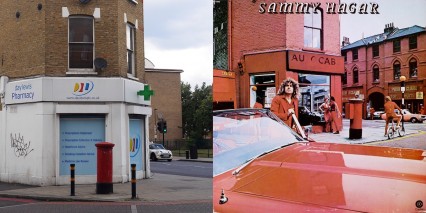
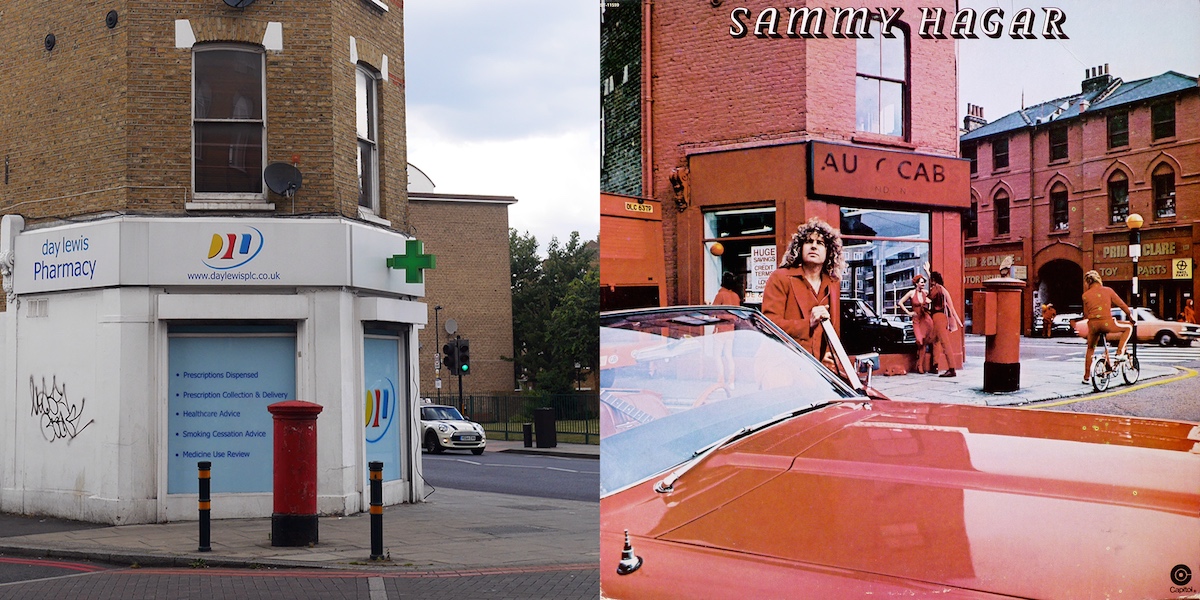
The corner of Railton Road and Effra Parade in 2012. The original building, that once housed Winifred Atwell's Salon and was burnt down in 1981.

The view down Railton Road from the other direction. Showing where the George pub once stood. 2012.

Various versions of Winifred playing Black and White Rag, which became the theme tune for BBC’s snooker series ‘Pot Black’.

Many thanks to Stephen Bourne whose book Black in the British Frame – The Black Experience in British Film and Television’ (Continuum, 2001) helped immensely in writing this post.


Share

Wimbledon, ‘Bare-leg’ Tennis, and the Bitter Rivalry Between Helen Wills and Helen Jacobs.

June 29th, 2012

Helen Wills - one of the greatest female tennis players of all time.

Charlie Chaplin once wrote that the most beautiful sight he had ever seen, and presumably he had seen a few, was ‘the movement of Helen Wills playing tennis’. Wills, a pretty 23 year old American, played the game with an unhurried and what seemed to be an effortless style and in 1929 was in her heyday when she walked out for the Wimbledon final against her fellow Californian and rival Helen Jacobs.

Vogue would have been talking about Wills when they wrote in their June issue that year:

One very noticeable thing about our girl champions at Wimbledon is their grace, distinctly the reverse of what some people have prophesied – that hard exercise and strain would thicken the ankles, coursen the complexion, and lead to general ungainliness.

Although Helen Wills was certainly never accused of ungainliness her composed and rather dispassionate on-court behaviour lent her the not always particularly affectionate nickname of ‘Little Miss Poker Face’. The designer and tennis player Teddy Tinling described her as the Garbo of tennis not only because of her undoubted beauty but that she “always wanted to be alone and away from her fellow competitors…”

The be-stockinged rivals Helen Jacobs and Helen Wills in 1929.

Wimbledon Championships, 1929

That year Miss Wills was appearing at the famous South London tennis tournament for the sixth time and was already five times Wimbledon singles champion. She wore a white sailor suit with pleated knee-length skirt, white shoes and the white visor she was famous for. The crowd were more than used to seeing her on the centre court by now but that year they took slightly more interest than normal in what she was wearing. Especially on her legs.

Earlier that summer there had been an enthusiastic debate in much of the press about the wearing, or more specifically the non-wearing, of stockings by female tennis players. The Lawn Tennis Association along with the All-England Club, organisations then as now not exactly known to be at the vanguard of modern fashion trends, quickly let it be known that they were considering prohibiting, what was known at the time as, ‘bare-leg tennis’.

The Daily Mail reported that some players were ‘indignant’ with the possible ban, notably the two American tennis stars – the Helens Wills and Jacobs. They were reported as surprised with the proposed veto as ‘bare-leg tennis’ was already popular in America and in France.

Helen wills and Helen Jacobs suitably wearing stockings at Wimbledon in 1929

In the end the committee of the All-England Club sensibly decided against a formal ban but made it be known that they would rely on the good taste and good sense of the players involved. Indeed Miss Wills stated in the London Evening News:

I definitely have decided to wear stockings in the Wimbledon tournament. As soon as I heard that the Wimbledon authorities might object to bare legs I reached a definite decision and I  shall not alter it.

Wills easily beat Jacobs 6-1, 6-2 and in fact the only singles match Helen Wills ever lost at Wimbledon was her first final when she lost against the British player Kitty Godfree in 1924 when she was only eighteen.

The stockings, or lack thereof, controversy was brought about by changes in the manufacturing of stockings during the previous thirty years or so. At the turn of the century 19 out of 20 pairs of stockings were black but with the relatively short skirts of the 1920s more and more stockings were made with finer knits and in a range of paler colours.

The stockings were held in place with a combination of suspenders and garters although the Frenchwoman Suzanne Lenglen, the first proper international female tennis celebrity, wore white silk stockings with the tops rolled over her garters in what was called the ‘American’ style. She was also the first major tennis player to play without a corset early in her career for which she was often known by many British tennis fans as ‘the French Hussy’.

American garters from 1930

Lord Aberdare in his Story of Tennis described when Lenglen first appeared at Wimbledon in 1919:

Suzanne acquired strength and pace of shot by playing with men, and for playing a man’s type of game she needed freedom of movement. Off came the suspender belt, and she supported her stockings by means of garters above the knee; off came the petticoat and she wore only a short pleated skirt; off came the long sleeves and she wore a neat short sleeved vest.

Her first appearance at Wimbledon caused much comment, but the success of her outfit led to its adoption by others. In her first championship, she wore a white hat but on subsequent occasions she wore a brightly coloured bandeau which was outstandingly popular until challenged by Miss Helen Will’s eyeshade in 1924.

The corsetless 'French Hussy' Suzanne Lenglen in 1924.

A portrait of Suzanne Lenglen from 1924. She often drank brandy while changing ends.

In fact Lenglen’s look: her bandeau (known to some as a ‘headache band’), rolled stockings, knee-length pleated skirts became the symbol of the flapper in the 1920s. It may have been the first time a sports figure influenced general fashion around the world.

Incidentally, Helen Wills and Suzanne Lenglen only played one match together, at a small tournament in Cannes in 1926. It was billed as Match of the Century and it was estimated that three thousand spectators crammed into the stands at the Carlton Club. Lenglen won in straight sets 6-3 8-6 but it seemed that she realised her reign was close to coming to an end and she turned professional soon after. They were never to play together again.

Helen Wills v Suzanne Lenglen in Cannes 1926

All of the women players wore stockings at the 1929 Wimbledon championships. Although, as far as tennis-playing women were concerned, it was now the beginning of the end for the restrictive garments.

Much against the newspaper’s will, the Daily Mail’s prurient eyes were turned away from the legs of female tennis players and later that summer they started to look at what men were wearing instead. After reporting that men were ‘shy creatures’ and would ‘rather die than wear anything unconventional in public’, on 31 August 1929 the Daily Mail wrote:

Now that the the highest lawn-tennis authority has decided that it has no power to forbid women to play that game bare-legged, it was inevitable that attention should be concentrated on the oddities of male dress. It seems to be universally agreed that male dress at the present time is the most unhygienic, inartistic, somber, and depressing form of costume that the mind could well imagine. But the difficulty is to get the idea of a brighter, more hygienic, and more picturesque attire into the mind of the mere male.

Recently the press had featured a photograph of a Dr Alfred Charles Jordan a renowned radiologist cycling to his office in Bloomsbury. What fascinated and what slightly horrified readers was that he wore shorts with his jacket. This was utterly unknown at the time for anybody working in a city – shorts were for scouts and maybe a hiking holiday; they weren’t even worn by men playing tennis at the time.

Members of the Men's Dress Reform Party including Dr Jordan on the far right. July 4th 1929.

Jordan was the honorary secretary of the Men’s Dress Reform Party which had announced its existence on 12 June 1929 just twelve days before the be-stockinged Helen Wills had walked out for her first round match on the centre court at Wimbledon. The organisation’s first aim was to improve men’s health by changing what they wore and in early MDRP literature it complained that:

Men’s dress has sunk into a rut of ugliness and unhealthiness from which – by common consent  – it should be rescued…Men’s dress is ugly, uncomfortable, dirty (because unwashable), unhealthy (because heavy, tight and unventilated)…it is desirable to guard against the danger of mere change for change’s sake, such as has often occurred in women’s fashion. All change should aim at improvement in appearance, hygiene, comfort and convenience.

An article in the tailoring magazine Tailor and Cutter probably reflected what the majority of men were thinking when confronted by the rather strange clothes worn by members of the MDRP. The anonymous author of the piece wrote that modern male dress depended on:

A loosening of the bonds will gradually impel mankind to sag and droop bodily and spiritually. If laces are unfastened, ties loosened and buttons banished, the whole structure of modern dress will come undone; it is not so wild as it sounds to say that society will also fall to pieces…Such restraints were not noxious: they were the foundation upon which civilisation rested and protected men from savagery and decadence.


Two men modelling ideas entered for a Dress Reform competition.

Members of the Men's Dress Reform Party in Great Russell Street.

The MDRP was an off-shoot, and shared premises with, the New Health Society formed in 1925 and situated at 39 Bedford Square in Bloomsbury. Dr Jordan was a founding member but the chairman of the organisation was another doctor, Caleb William Saleeby, who had originally chaired the Clothing sub-committee of the New Health Society but had also founded the Sunlight League in 1924. It was formed in London to educate the public about ‘Nature’s universal disinfectant, stimulant and tonic’ and advocated heliotherapy – direct exposure to the sun.

The League campaigned for a variety of causes including mixed sunbathing and the relaxation of the rules for appropriate attire for sunbathing. Towards the end of the 1920s new-fangled sunbathing clubs were opening around London including Finchley and Sidcup  while the Yew Tree Club devoted to physical culture and nudity opened in Croydon.

Compared with on the continent, especially in Germany, nudism remained a minority activity in England and it rarely strayed from its suburban, home-counties roots. The clubs had strict conventions and rules of etiquette designed to convince a doubting public that sex was the last thing on the nudists minds. And looking at some pictures maybe it was.

Dr Caleb Saleeby

Rather shy nudists sunbathing at the Yew Tree Camp in Croydon

The first nudist conference held in England by the Sunlight League

Dr Saleeby, as chairman of the MDRP, wrote a letter to the Lawn Tennis Association in 1929 encouraging it ‘to persuade men to give up the handicap of heavy trousers and play in shorts’. The first man to have famously worn shorts at Wimbledon was Henry ‘Bunny’ Austin (his nickname comes from a character in the comic strip Pip, Squeak and Wilfred). Except he wasn’t. In reality the first man to experience fresh air against his legs while playing tennis at Wimbledon was actually the relatively unknown English player Brame Hillyard who wore them on Court 10 a year after Dr Saleeby’s letter in 1930. Despite the freedom his shorts must have given him he promptly lost, and he was hardly ever heard of again.

Two years later  in 1932 Bunny Austin, born in 1908 in South Norwood, eight miles or so away from Wimbledon, but educated at Repton and Cambridge, became the first person to wear shorts on Centre Court and thus in front of the world’s press. He claimed that the traditional white flannels were heavy and restricting; John Kieran wrote about him in the New York Times that year:

“With his white linen hat and his flannel shorts, the little English player looked like an AA Milne production.”

Bunny Austin wearing shorts at Wimbledon in 1933

Bunny Austin, despite wearing shorts, lost in the final to the American Don Budge and the Englishman’s reward was a £10 gift voucher redeemable at a high-street jewellers (the winner of the Men’s and Women’s final will earn £1,150,000 this year). Austin was the last Briton to appear in a Wimbledon Singles Final when he was runner-up in 1938. During the war he became active in the Christian pacifist movement and was criticised in the press as a conscientious objector. It wouldn’t be until 1984 that Austin was again allowed to be a member of the All-England Club.

The MDRP, although pretty well forgotten these days, had some success in getting its message across during the first years of its existence. It held annual parties, in order to “give every man a chance to show how he can look and feel his best by the costume he will evolve for this unique occasion.” It was also possible to find MDRP approved clothing in some shops in London including the famous Austin Reed on Regent Street. It also had an official shop and a relatively successful mail-order service.

Some members of the Men's Dress Reform Party were more radical than others.

Realistically the MDRP did little to turn general male fashion around except maybe in holiday and athletic wear. A major shift in men’s clothing didn’t happen until after the war when new fabrics and the rise of American style, with its preoccupation with leisure-wear, radically changed men’s appearances in the 1960s.

In 1931, two women players flouted the unofficial clothing rules at Wimbledon. Joan Lycett, who was actually born Joan Austin and was the sister of Bunny, played without stockings, but by now the newspapers and the watching crowds, used to seeing stockingless players away from Wimbledon, seemed to hardly notice. Lycett’s opponent, however, did cause a sensation. Lili de Alvarez ‘the gay senorita’ from Spain played at Wimbledon wearing a ‘white trousered frock’. The Times on 24 June 1931 wondered, ‘which were the more wonderful things – divided skirts or bare legs?’  On the same day the Daily Sketch saw de Alvarez’s ‘trousered tennis frock’ as yet more evidence that women had a ‘masculine fixation’:

The claim of women to equality with men is understandable, but that so many of them should wish to imitate the appearance of the less beauteous sex is not so easy to understand. It began with bobbing, and reached its logical hirsute conclusion in the Eton crop. And, having lost her hair, many a girl is now making strenuous attempts to lose her curves. And concurrently with these changes the conquest of trousers had been steadily proceeding…although mere man may regret the lose of feminine furbelows more than he resents the theft of his trousers, he realises that it is useless to rail against the spirit of the age. Whether we like it or not, girls will be boys.

Joan Lycett and Lili de Alvarez wearing her 'trousered tennis frock' on Centre Court in 1931

Joan Lycett.

Lili de Alvarez playing at Wimbledon in 1926

Helen Wills and her Husband FS Moody

Helen Wills, who became known as Helen Wills-Moody after marrying the business man Frederick Moody in December 1929 (she had met him at the match with Suzanne Lenglen), went on to win 31 Grand Slam tournament titles during her career including eight single titles at Wimbledon. Incredibly she reached the final of every single Grand Slam singles event she entered but, as was common in those days, never played at the Australian Championships.

The rivalry between the two Californian Helens reached a head when they played against each other in the final of the 1933 US Championship at Forest Hills. Wills had always beaten Jacobs and had won seven US Championships out of seven but after being broken on serve twice and falling behind 3-0 in the final set, she suddenly advised the umpire that she could not continue citing a bad back. A reporter for the Associated Press called Will Grimsley wrote:

“The spectators were stunned. The newsmen were outraged. They called her a quitter and a poor sport. They accused her of depriving Miss Jacobs of her moment of glory.”

That wasn’t the only reason why their rivalry had turned so bitter; Helen Jacobs had controversially worn shorts that year at Forest Hills and Wills reputedly said that there was nothing more unflattering to the female form than shorts and that it was hard to distinguish whether the wearer was a man or a woman. It wasn’t a pleasant thing to say but it was also a very pointed comment as Wills would have known, unlike the great majority of the public, that Jacobs was gay.

Helen Jacobs and Helen Wills at Forest Hills in 1933

Helen Jacobs in her tailored shorts at Wimbledon with the Wightman Cup, 1934

Helen Jacobs in 1935

Helen Wills

Helen Wills. Photograph by Bassano in the late 1920s

Helen Jacobs in 1933

Helen Jacobs and Helen Wills-Moody having a 'Little Miss Poker-Face' competition before their women's singles finals match on Centre Court at Wimbledon, 1938

The final time the antagonistic Helens met was in the 1938 Wimbledon final. During the first set at 4-4 Jacobs strained her right achilles tendon straining to meet a passing shot from Wills-Moody. Jacobs didn’t win another game but bravely continued to the end of the match graciously, but maybe pointedly, allowing her opponent the full taste of victory in  Championship final which she herself hadn’t been given five years previously. After she had won the final point Wills ran up to the net and without exchanging a smile said ‘Too bad, Helen’ after beating her for the 11th time out of 12 matches.

Helen Jacobs became a writer while still playing tennis and wrote two tennis books but also fictional works such as the novel Storm against the Wind in 1944. She served as a Commander in the US Navy Intelligence during World War II one of only five women to reach this rank. She had a life-long companion called Virginia Gurnee and she died of heart-failure in East Hampton in 1997.

Helen Wills, if not always the audience’s favourite, was undoubtedly one of the greatest ever tennis players. She died aged 92 on New Years day 1998 and left her $10 million fortune to the University of California, where she is now remembered by the Helen Wills Neuroscience Institute.

Helen Wills holding her racquet.

Women’s Tennis 1923-1938

Lots of footage of the tennis matches described above

Helen Wills defeating Elizabeth Ryan 6-2, 6-2 in 1930.

Share